

Solar and wind distributed generation.
Summary
The existing Public Utilities Act imposes various duties and responsibilities on the Public Utilities Commission with respect to the purchase of electricity and requires the commission to review and adopt a procurement plan and a renewable energy procurement plan for each electrical corporation pursuant to the California Renewables Portfolio Standard Program. The program requires that a retail seller of electricity, including electrical corporations, community choice aggregators, and electric service providers, but not including local publicly owned electric utilities, purchase a specified minimum percentage of electricity generated by eligible renewable energy resources, as defined, in any given year as a specified percentage of total kilowatthours sold to retail end-use customers each calendar year. Under existing law the governing board of a local publicly owned electric utility is responsible for implementing and enforcing a renewables portfolio standard that recognizes the intent of the Legislature to encourage renewable resources, while taking into consideration the effect of the standard on rates, reliability, and financial resources and the goal of environmental improvement. Existing law relative to private energy producers requires every electric distribution utility or cooperative, as defined, upon request, to make available to an eligible customer‑generator, as defined, a standard contract or tariff for net energy metering on a first-come-first-served basis until the time that the total rated generating capacity used by eligible customer‑generators exceeds a specified amount. Existing law provides that where the electricity generated by the eligible customer-generator exceeds the electricity supplied by the electric distribution utility or cooperative during a 12-month period, the eligible customer-generator is a net electricity producer and the electric distribution utility or cooperative retains any excess kilowatthours generated and the customer-generator is not owed compensation for those excess kilowatthours unless the electric distribution utility or cooperative enters into a purchase agreement with the eligible customer-generator for those excess kilowatthours. This bill would replace the definition of "electric distribution utility or cooperative" in existing law relative to private energy producers with a definition of "electric utility." The bill would require the ratemaking authority, as defined, for the electric utility to adopt, by January 1, 2011, a net surplus electricity compensation valuation to compensate a net surplus customer-generator, as defined, for the value of net surplus electricity, as defined, generated by an eligible customer-generator and delivered to the grid that is in excess of the amount of electricity that is delivered from the grid to the eligible customer-generator. The bill would require the electric utility to offer a standard contract or tariff to eligible customer-generators that includes compensation for the value of net surplus electricity. The bill would require the electric utility, upon an affirmative election by the eligible customer-generator to receive service pursuant to this contract or tariff, to either: (1) provide net surplus electricity compensation for any net surplus electricity generated in the 12-month period, or (2) allow the eligible customer-generator to apply the net surplus electricity as a credit for kilowatthours subsequently supplied by the electric utility to the surplus customer-generator. The bill would, for an electric utility that is an electrical corporation or electrical cooperative, authorize the commission to adopt requirements for providing notice and the manner by which eligible customer-generators may elect to receive net surplus electricity compensation. The bill would provide that upon adoption of the net surplus electricity compensation rate and the eligible customer-generator electing to receive net surplus electricity compensation, any renewable energy credit, as defined, for net surplus electricity belongs to the electric utility purchasing the electricity and that net surplus electricity counts toward the electric utility's renewables portfolio standard purchasing requirements. This bill would incorporate additional changes in Section 2827 of the Public Utilities Code, proposed by AB 560, to be operative only if AB 560 and this bill are chaptered and become effective on or before January 1, 2010, and this bill is chaptered last. Under existing law, a violation of any order, decision, rule, direction, demand, or requirement of the commission is a crime. Because this bill would require action by the commission to implement certain of its requirements that expand the existing obligations of electrical corporations, a violation of these provisions would impose a state-mandated local program by expanding the definition of a crime. The California Constitution requires the state to reimburse local agencies and school districts for certain costs mandated by the state. Statutory provisions establish procedures for making that reimbursement. This bill would provide that no reimbursement is required by this act for a specified reason.
Bill status
signed
all 5 stages cleared
Introduction
Feb 2009
Committee Review
Sep 2009
Assembly Passage
Jun 2009
Senate Passage
Sep 2009
Signed into Law
Oct 2009
Introduced Feb 26, 2009
Signed Oct 11, 2009
Floor votes · Assembly Jun 1, 2009
How they voted
39–21
Passed · 2 other
Total votes 62
Jun 1, 2009
D
Democratic38
92% Yea
R
Republican24
83% Nay
Vote distribution
All Yea
All Nay
Mixed
No data
Full legislative history
Actions timeline
Total actions
28
Key actions
11
Committee
12
Amendments
2
Oct 11, 2009
Signed into law
Approved by the Governor.
legislature
Sep 12, 2009
Lower · Passed
Senate amendments concurred in. To enrollment. (Ayes 54. Noes 23. Page 3404.)
lower
Sep 12, 2009
Introduced
In Assembly. Concurrence in Senate amendments pending.
lower
Sep 9, 2009
Committee
Re-referred to Com. on RLS. pursuant to Senate Rule 29.10.
upper
Aug 31, 2009
Upper · Passed
From committee: Do pass. (Ayes 8. Noes 5.) (August 27).
upper
Aug 17, 2009
Upper · Passed
In committee: Placed on Appropriations suspense file.
upper
Jul 20, 2009
Upper · Passed
In committee: Set, first hearing. Hearing canceled at the request of author.
upper
Jul 8, 2009
Upper · Passed
From committee: Do pass, and re-refer to Com. on APPR. Re-referred. (Ayes 11. Noes 0.) (July 7).
upper
Jun 11, 2009
Committee
Referred to Com. on E., U., & C.
upper
Jun 1, 2009
Assembly · Passed
Assembly Vote: pass (39-21-2)
assembly
May 29, 2009
Lower · Passed
From committee: Do pass. (Ayes 12. Noes 5.) (May 28).
lower
May 6, 2009
Committee
In committee: Set, first hearing. Referred to APPR. suspense file.
lower
Apr 28, 2009
Lower · Passed
From committee: Do pass, and re-refer to Com. on APPR. Re-referred. (Ayes 6. Noes 3.) (April 27).
lower
Apr 21, 2009
Lower · Passed
From committee: Do pass, and re-refer to Com. on NAT. RES. Re-referred. (Ayes 11. Noes 3.) (April 20).
lower
Mar 26, 2009
Committee
Referred to Coms. on U. & C. and NAT. RES.
lower
Feb 27, 2009
Lower · Passed
From printer. May be heard in committee March 29.
lower
1 primary · 2 co-sponsors
Sponsors
Role
Legislator
Party
State
District
P
JW
Jared William Huffman
DDemocratic
Co

Loni Hancock
DDemocratic
Co
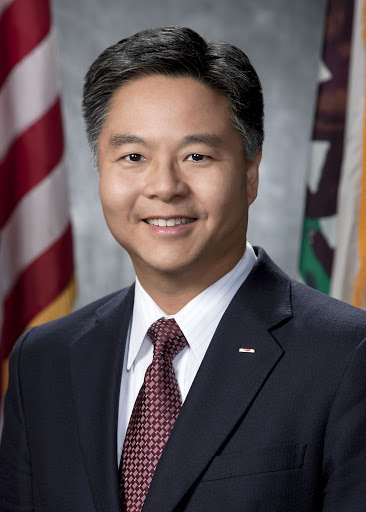
Ted Lieu
DDemocratic
Ask Maddy
·
AI policy assistant
Ask Maddy about AB 920
Scope: CA
Hi! I can help you understand AB 920. What would you like to know?
Try one of these
i
Maddy answers using official bill text and legislative records. Always verify before sharing.
Sources cited inline