

Interim appropriations.
Summary
(1) The California Constitution requires the Legislature to pass a budget bill by June 15 of each year for the fiscal year commencing on July 1. Existing law provides that no state officer or employee shall be deemed to have a break in service or to have terminated his or her employment, for any purpose, or to have incurred any change in his or her authority, status, or jurisdiction or in his or her salary or other conditions of employment, solely because of the failure to enact a Budget Act for a fiscal year prior to the beginning of that fiscal year. Under the California Constitution, money may be drawn from the Treasury only through an appropriation made by law and upon a Controller's duly drawn warrant. This bill would continuously appropriate from the General Fund and other specified funds to the Controller an amount necessary for the payment of compensation and employee benefits to state employees, as defined, for work performed on or after July 1 of a fiscal year for which no budget has been enacted. This bill would specify, if a memorandum of understanding is in effect that has been approved by the Legislature, that the compensation and contribution for employee benefits for represented state employees be at a rate consistent with the memorandum of understanding and, for state employees excluded from collective bargaining, at the rate approved by the Department of Personnel Administration prior to the commencement of the fiscal year for which a Budget Act has not been enacted. The bill would require, if a memorandum of understanding is not in effect for represented state employees and the department has not approved a compensation package for state employees excluded from collective bargaining, that the compensation and contribution for employee benefits for represented state employees and state employees excluded from collective bargaining be at the rate in effect at the expiration of the last fiscal year for which a budget was enacted. (2) Existing law establishes standards for the use of personal services contracts. Existing law prohibits the use of state funds to reimburse a state contractor for any costs incurred to assist, promote, or deter union organizing. For the purposes of that provision, "state contractor" is defined as any employer that receives state funds for supplying goods or services pursuant to a written contract with the state or any of its agencies. This bill would continuously appropriate from the fund from which a state contractor received compensation in the prior fiscal year to the Controller the amount necessary for payment of contract obligations to a state contractor that provides goods or services to the state until the Budget Act of that fiscal year is enacted. The bill would provide that if payments are made to a contractor pursuant to that provision, the first payment shall be made on July 15, with payments to be made on the 15th of each month thereafter until enactment of the Budget Act. (3) Under existing law, the California Department of Aging administers the federal Older Americans Act in California. Pursuant to this federal act and the Mello-Granlund Older Californians Act, the department allocates federal funds, in accordance with prescribed funding formulas, to area agencies on aging in order to provide an array of services to seniors. This bill would continuously appropriate from the General Fund, unallocated special funds, federal funds, and any other fund from which area agencies on aging are compensated to the Controller the amount necessary for the payment of the amount necessary to pay area agencies on aging the sums necessary for the administration of programs under their jurisdiction, including both state and federal funds used for the provision of services and program administration. The bill would provide that if payments are made to area agencies on aging pursuant to that provision, the first payment would be made on July 15, with payments to be made on the 15th of each month thereafter until enactment of the Budget Act. This bill would declare that it is to take effect immediately as an urgency statute.
Bill status
passed
3 of 5 stages cleared
Introduction
Feb 2010
Committee Review
Aug 2010
Assembly Passage
Jun 2010
Senate Failed
Aug 2010
Governor
Introduced Feb 1, 2010
Last action Aug 31, 2010
Floor votes · Senate Aug 31, 2010 · Assembly Jun 3, 2010
How they voted
21–10
Failed · 4 other
Threshold to pass 27
Total votes 35
Aug 31, 2010
D
Democratic23
86% Yea
R
Republican12
83% Nay
Vote distribution
All Yea
All Nay
Mixed
No data
Full legislative history
Actions timeline
Total actions
24
Key actions
6
Committee
9
Amendments
1
Aug 31, 2010
Vote failed
Senate Vote: fail (21-10-4)
senate
Aug 31, 2010
Introduced
From committee chair, with author's amendments: Amend, and re-refer to committee. Read second time, amended, and re-referred to Com. on RLS.
upper
Aug 31, 2010
Committee
Re-referred to Com. on RLS.
upper
Jul 15, 2010
Upper · Passed
From committee: Do pass. (Ayes 6. Noes 1.) (July 15).
upper
Jun 24, 2010
Upper · Passed
From committee: Do pass, and re-refer to Com. on APPR. Re-referred. (Ayes 4. Noes 1.) (June 23).
upper
Jun 10, 2010
Committee
Referred to Com. on P.E. & R.
upper
Jun 3, 2010
Assembly · Passed
Assembly Vote: pass (41-16-4)
assembly
May 28, 2010
Lower · Passed
From committee: Do pass. (Ayes 12. Noes 5.) (May 28).
lower
Apr 21, 2010
Committee
In committee: Set, first hearing. Referred to APPR. suspense file.
lower
Apr 7, 2010
Lower · Passed
From committee: Do pass, and re-refer to Com. on APPR. Re-referred. (Ayes 4. Noes 1.) (April 7).
lower
Feb 11, 2010
Committee
Referred to Com. on P.E.,R. & S.S.
lower
Feb 2, 2010
Lower · Passed
From printer. May be heard in committee March 4.
lower
1 primary · 12 co-sponsors
Sponsors
Role
Legislator
Party
State
District
P
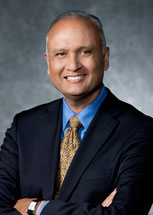
Ed Hernandez
DDemocratic
Co
AT
Alberto Torrico
DDemocratic
Co
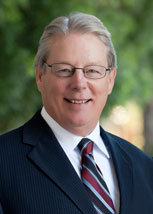
Bill Monning
DDemocratic
Co
BB
Bob Blumenfield
DDemocratic
Co
FM
Fiona Ma
DDemocratic
Co

Jim Beall
DDemocratic
Co
MH
Mary Hayashi
DDemocratic
Co
ME
Mike Eng
DDemocratic
Co

Nancy Skinner
DDemocratic
Co
NT
Norma Torres
DDemocratic
Co
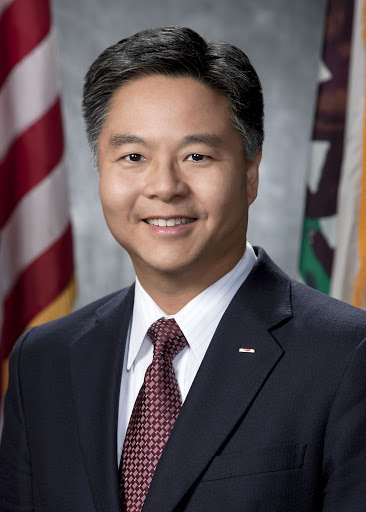
Ted Lieu
DDemocratic
Ask Maddy
·
AI policy assistant
Ask Maddy about AB 1699
Scope: CA
Hi! I can help you understand AB 1699. What would you like to know?
Try one of these
i
Maddy answers using official bill text and legislative records. Always verify before sharing.
Sources cited inline