

Mortgages: foreclosures.
Summary
Existing law requires that, upon a breach of the obligation of a mortgage or transfer of an interest in property, the trustee, mortgagee, or beneficiary record a notice of default in the office of the county recorder where the mortgaged or trust property is situated and mail the notice of default to the mortgagor or trustor. Existing law provides that, after not less than 3 months after the filing of the notice of default, the parties described above may give notice of sale, stating the time and place of the sale, as specified. Existing law requires, until January 1, 2013, a mortgagee, trustee, beneficiary, or authorized agent to contact the borrower, as defined, prior to filing a notice of default, in order to assess the borrower's financial situation and explore options for the borrower to avoid foreclosure. Existing law requires the notice of default to include a specified declaration from the mortgagee, beneficiary, or authorized agent regarding its contact with the borrower. This bill would, until January 1, 2013, require a mortgagee, trustee, beneficiary, or authorized agent, prior to the filing of a notice of default, to provide the borrower with an application for a loan modification and other foreclosure avoidance options and a specified notice regarding the borrower's rights during the foreclosure process, subject to specified exceptions. The bill would require an unspecified state entity to make that notice available in English and specified languages. This bill would prohibit the mortgagee, beneficiary, or authorized agent from combining collections activity with communication with the borrower about foreclosure avoidance options. The bill would delete the requirement that the notice of default contain a specified declaration, and would instead require the mortgagee, beneficiary, or authorized agent to, concurrently with the filing of a notice of default, record a declaration of compliance that attests to specified facts, and mail the borrower a notice stating that these requirements have been met. The bill would provide that failure to record a declaration of compliance, or recordation of a declaration of compliance that fails to meet the specified requirements, would constitute grounds for the borrower to bring an action to void the foreclosure, or to recover either treble damages or statutory damages in the amount of $10,000, whichever is greater, from the mortgagee, trustee, beneficiary, or authorized agent, if specified conditions exist. The California Constitution authorizes the Governor to declare a fiscal emergency and to call the Legislature into special session for that purpose. The Governor issued a proclamation declaring a fiscal emergency, and calling a special session for this purpose, on January 8, 2010. This bill would state that it addresses the fiscal emergency declared by the Governor by proclamation issued on January 8, 2010, pursuant to the California Constitution.
Bill status
failed
1 of 4 stages cleared
Introduction
Feb 2010
Committee Review
Floor Vote
Governor
Introduced Feb 8, 2010
Last action Mar 11, 2010
Floor votes
How they voted
No floor votes recorded yet.
Full legislative history
Actions timeline
Total actions
5
Key actions
1
Committee
2
Feb 11, 2010
Upper · Passed
Hearing postponed by committee.
upper
Feb 10, 2010
Committee
Re-referred to Coms. on B., F. & I. and JUD.
upper
Feb 8, 2010
Introduced
Introduced. Read first time. To Com. on RLS.
upper
1 primary · 2 co-sponsors
Sponsors
Role
Legislator
Party
State
District
P

Ellen Corbett
DDemocratic
Co
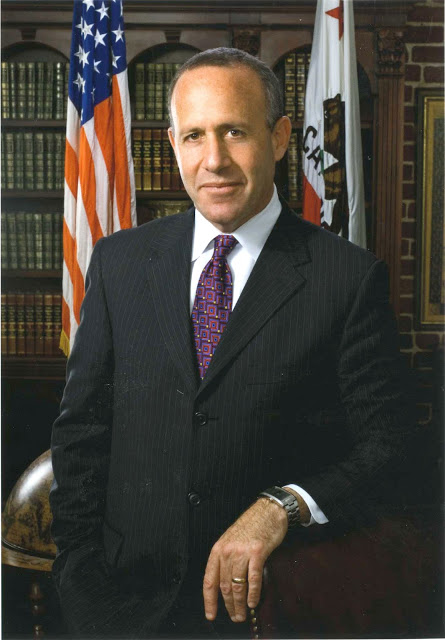
Darrell Steinberg
DDemocratic
Co
ML
Mark Leno
DDemocratic
Ask Maddy
·
AI policy assistant
Ask Maddy about SB 38
Scope: CA
Hi! I can help you understand SB 38. What would you like to know?
Try one of these
i
Maddy answers using official bill text and legislative records. Always verify before sharing.
Sources cited inline