

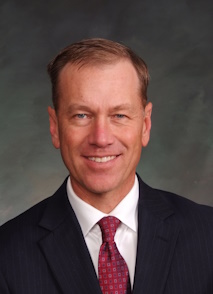
Photo of Barry Crago
R Wyoming Senate · District 22

Sen. Barry Crago

Compare
Total votes
2,619
all sessions
Attendance
94%
135 missed
Near the chamber average
With party
89%
of cast votes
Near the chamber average
Bipartisan score
7%
crosses aisle rarely
Lower than 78% of chamber peers
Sponsored
172
bills & resolutions
Higher than 90% of chamber peers
Committees
6
assignments
172 bills and resolutions

Sponsored bills

Total
172
Primary
26
Co-sponsor
146
This page
172
matching current filters
Co-sponsor SJ 9
Signed into law · Wyoming House · Co-sponsor
Keeping public lands protected and decisions local.

Maddy summaryWyoming's SJ 9 is a joint resolution urging Congress to protect the state's access to federal public lands while ensuring local communities have a say in land management decisions. It opposes broad or indiscriminate sales of public lands and demands federal agencies respect Wyoming's existing land-use plans, county-level input, and multiple-use frameworks that support recreation, agriculture, hunting, fishing, and resource development. The resolution also calls for funding to streamline efficient land exchanges under current laws when they benefit local communities and public access, without advocating for specific policy changes.

Signed into law Mar 9, 2026 1 co-sponsor
Co-sponsor SF 85
Signed into law · Wyoming Senate · Co-sponsor
RAVEN Act.

Maddy summaryWyoming's SF 85 (RAVEN Act) creates a dedicated funding account for the state's Internet Crimes Against Children (ICAC) task force, directly supporting law enforcement efforts to investigate and combat online child exploitation. The bill appropriates $1.6 million from the general fund (2026-2028) to sustain the ICAC program, with funds continuously available for investigations, victim assistance, and public education on internet safety. All money in the account must be used solely by the Division of Criminal Investigation to address internet crimes against children, with no funds allowed to lapse or transfer to other purposes. The account will accept additional grants or donations, ensuring stable, long-term resources for this critical law enforcement work.

Signed into law Mar 8, 2026 1 co-sponsor
Primary SF 113
Signed into law · Wyoming Senate · Lead sponsor
2026 election hand count comparison.

Maddy summaryWyoming's SF 113 requires county clerks to conduct hand counts of election ballots for the 2026 primary and general elections. Specifically, counties must physically examine approximately 5% of ballots for one federal race, one statewide race (selected by the state secretary of state), and all legislative races on the ballot. The hand count results must be compared to electronic tabulation results within nine days of the county canvass, with any discrepancies reported to the secretary of state. This bill directly affects county election officials who will implement the hand count audits. The law takes effect immediately upon becoming law, with reports due by May 1, 2027.

Signed into law Mar 8, 2026 0 co-sponsors
Co-sponsor HB 39
Signed into law · Wyoming House · Co-sponsor
Firearms rights-restoration amendments.

Maddy summaryWyoming's HB 39 clarifies that individuals who have had their firearm rights restored under the laws of another state may legally possess firearms in Wyoming. The bill amends statutes (W.S. 6-8-102 and 6-10-106) to explicitly recognize out-of-state rights restoration as valid for Wyoming residents convicted of felonies or violent misdemeanors. This directly affects people with prior convictions who had their firearm rights restored in another jurisdiction but faced uncertainty under Wyoming law. The change takes effect immediately upon becoming law, removing barriers for these individuals to legally own firearms in Wyoming.

Signed into law Mar 8, 2026 1 co-sponsor
Co-sponsor SF 55
Signed into law · Wyoming Senate · Co-sponsor
Special purpose depository institution-amendments.

Maddy summaryThis Wyoming bill (SF 55) amends regulations for Special Purpose Depository Institutions (SPDIs) - financial institutions that handle specific types of deposits, like those for government entities or nonprofits. It increases minimum capital requirements ($5 million), shortens the timeframe for SPDIs to begin operations from 6 months to 1 year, and creates a new "resolution fund" funded by supervisory fees to address failures. SPDIs must pay annual fees based on assets, with a portion deposited into this fund for resolution costs. The bill also revises application rules, appeal processes, and repeals outdated contingency account requirements for SPDIs.

Signed into law Mar 8, 2026 1 co-sponsor
Co-sponsor SF 54
Signed into law · Wyoming Senate · Co-sponsor
State banks and SPDI conversions.

Maddy summarySF 54 establishes a formal process for special purpose depository institutions (SPDIs) to convert into state banks and for state banks to convert into SPDIs. It requires institutions seeking conversion to submit detailed plans for handling assets and liabilities, obtain shareholder approval, and meet capital requirements before applying to the banking commissioner. The commissioner must review applications within 90 days and issue a certificate of authority for operation within 30 days of approval, with strict deadlines for denials or corrections. This bill directly affects SPDIs and state banks wishing to change their charter status under Wyoming law.

Signed into law Mar 8, 2026 1 co-sponsor
Co-sponsor SF 23
Signed into law · Wyoming Senate · Co-sponsor
Outpatient examination and commitment length.

Maddy summaryThis bill updates Wyoming's rules for involuntary mental health treatment. It expands the list of qualified professionals who can conduct initial examinations for individuals needing hospitalization, while requiring a licensed physician or psychologist to review findings if non-physician examiners are used. For outpatient commitment (where patients don't require hospitalization but need supervision), courts must set a maximum two-year period with mandatory court reviews every six months. These changes apply to all Wyoming courts handling mental health commitment cases.

Signed into law Mar 8, 2026 1 co-sponsor
Co-sponsor SF 105
Signed into law · Wyoming Senate · Co-sponsor
Real estate brokers-duties and disclosure amendments.

Maddy summarySF 105 redefines "customer" in Wyoming real estate law as a person who has not established an agency relationship with a broker, such as someone viewing properties without formal representation. It requires real estate licensees to provide written disclosures about agency relationships before discussing transactions, clarifying that customers do not need to sign agency agreements to tour properties and are not entitled to confidentiality. The bill specifies that these disclosures must include key details about the customer relationship and include a signature line for acknowledgment, though the acknowledgment alone does not create a binding contract. The changes take effect July 1, 2026, and apply to all new transactions after that date.

Signed into law Mar 6, 2026 1 co-sponsor
Co-sponsor SF 41
Signed into law · Wyoming Senate · Co-sponsor
Portable benefit accounts.

Maddy summaryWyoming's SF 41 creates "portable benefit accounts" to help independent contractors access benefits like health insurance or retirement savings. The bill allows hiring parties (companies or individuals) or contractors themselves to voluntarily contribute funds to these accounts, with strict rules requiring written opt-in agreements and clear disclosure. It prohibits using these contributions to determine employment status and mandates that accounts be managed by approved financial institutions. The law requires the Department of Workforce Services to create implementing rules and takes effect July 1, 2026. This directly affects independent contractors who currently lack employer-provided benefits.

Signed into law Mar 6, 2026 1 co-sponsor
Co-sponsor SF 56
Signed into law · Wyoming Senate · Co-sponsor
Kratom product regulation.

Maddy summaryThis bill regulates kratom products sold in Wyoming by banning certain types and requiring specific labeling. It prohibits selling kratom products containing more than 2% 7-hydroxymitragynine, designed to appeal to children (like candy-shaped products), or intended for vaporization. Retailers must label products with full ingredients, age restrictions (under 21), health warnings about potential addiction and medication interactions, and precise dosage information. Violations are misdemeanors punishable by up to one year in jail or a $1,000 fine, with repeat offenses risking business injunctions. The bill directly affects kratom retailers and consumers, particularly minors.

Signed into law Mar 6, 2026 1 co-sponsor
Showing 1 to 10 of 172 bills
1 2 3 18 Next