

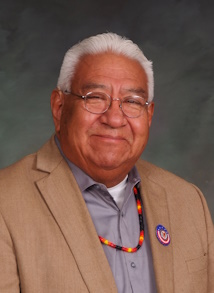
Photo of Ivan Posey
D Wyoming House · District 33 On the 2026 ballot

Rep. Ivan Posey

Compare
Total votes
1,001
all sessions
Attendance
95%
51 missed
Lower than 95% of chamber peers
With party
89%
of cast votes
Near the chamber average
Bipartisan score
11%
some cross-party votes
Near the chamber average
Sponsored
23
bills & resolutions
Near the chamber average
Committees
5
assignments
23 bills and resolutions

Sponsored bills

Total
23
Primary
2
Co-sponsor
21
This page
23
matching current filters
Co-sponsor SJ 9
Signed into law · Wyoming House · Co-sponsor
Keeping public lands protected and decisions local.

Maddy summaryWyoming's SJ 9 is a joint resolution urging Congress to protect the state's access to federal public lands while ensuring local communities have a say in land management decisions. It opposes broad or indiscriminate sales of public lands and demands federal agencies respect Wyoming's existing land-use plans, county-level input, and multiple-use frameworks that support recreation, agriculture, hunting, fishing, and resource development. The resolution also calls for funding to streamline efficient land exchanges under current laws when they benefit local communities and public access, without advocating for specific policy changes.

Signed into law Mar 9, 2026 1 co-sponsor
Co-sponsor HB 102
Signed into law · Wyoming House · Co-sponsor
Protecting kids from deepfakes and exploitative images.

Maddy summaryHB 102 prohibits the creation and distribution of AI-generated sexual images of children without consent (Section 6-4-307) and bans developing or distributing AI systems specifically designed to create or promote child sexual material (Section 6-4-308). It makes these acts felonies punishable by up to 10 years in prison and $10,000 fines, with harsher penalties for repeat offenses. The bill also clarifies that using AI to commit crimes isn’t a defense (Section 6-1-206) and provides limited immunity for AI developers who didn’t intend illegal use. It directly affects developers of AI tools, distributors of nonconsensual deepfakes, and individuals using AI to exploit children.

Signed into law Mar 8, 2026 1 co-sponsor
Co-sponsor HB 69
Signed into law · Wyoming House · Co-sponsor
Department of health-land transfers.

Maddy summaryHB 69 transfers two specific parcels of land from Wyoming's Department of Health to other entities. The first parcel (28.94 acres) in Fremont County is conveyed to the Wyoming Department of Transportation, and the second parcel (90.87 acres) is transferred to the City of Lander for residential housing use. The transfers involve only the surface estate, require no payment of consideration (though closing costs are paid by the recipient entities), and must comply with existing easements and restrictions. This bill is purely procedural, authorizing land conveyances without creating new policy or affecting broader state land management.

Signed into law Mar 8, 2026 1 co-sponsor
Primary HB 26
Signed into law · Wyoming House · Lead sponsor
Vehicle registration fees-tribal governments.

Maddy summaryHB 26 exempts vehicles owned by the Eastern Shoshone and Northern Arapaho tribes (Wind River Indian Reservation) from Wyoming's county and state vehicle registration fees. The bill amends existing law to explicitly include tribal government vehicles under the exemption list, which previously covered federal/state/local governments and certain districts. This change applies only to vehicles used for tribal operations, not commercial activity. The exemption takes effect July 1, 2026. The bill directly affects tribal governments' operational costs for their official vehicles.

Signed into law Mar 6, 2026 0 co-sponsors
Co-sponsor HB 130
Failed · Wyoming House · Co-sponsor
Second amendment protection act amendments.

Maddy summaryThis bill prohibits Wyoming state agencies and local law enforcement from using state funds to enforce federal gun regulations that conflict with Second Amendment rights. It creates criminal penalties (up to 1 year in jail or $2,000 fine) and civil penalties of $50,000 per violation for agencies that enforce such federal rules. The law specifically exempts cooperation with federal authorities on non-gun-related matters and defines key terms like "federal regulation" and "law abiding citizen."

Failed Mar 4, 2026 1 co-sponsor
Co-sponsor HB 67
died · Wyoming House · Co-sponsor
Eligibility for veterans property tax exemption-amendments.

Maddy summaryHB 67 expands Wyoming's property tax exemption to include additional veterans and military members. It provides a property tax break for honorably discharged veterans who served 18+ consecutive months in U.S. armed forces or Wyoming National Guard, active/reserve Wyoming National Guard members, and surviving spouses/parents of qualifying veterans. The exemption applies only to Wyoming residents who have lived in the state for at least three years (with one year immediately before applying). The changes take effect for taxes due in 2026.

died Feb 20, 2026 1 co-sponsor
Co-sponsor HB 138
Introduced · Wyoming House · Co-sponsor
Reproductive Freedom Act.

Maddy summaryHB 138, the "Reproductive Freedom Act," proposes to protect abortion access in Wyoming by prohibiting the state from interfering with a person's right to have an abortion before fetal viability (when the fetus can survive outside the womb) or to protect the person's life or health. It defines key terms like "abortion" and "viability," sets penalties for unauthorized abortions (misdemeanor with up to one year in jail or $5,000 fine), and ensures state regulations must be medically necessary and impose the least restrictions possible. The bill also allows healthcare providers and facilities to refuse participation in abortions without discrimination and prohibits state penalties for aiding abortion seekers. This proposed bill, introduced in February 2026 but not yet considered for debate, would replace current abortion laws if enacted.

Introduced Feb 14, 2026 1 co-sponsor
Co-sponsor HB 166
Introduced · Wyoming House · Co-sponsor
Marijuana-class III substance.

Maddy summaryHB 166 reclassifies marijuana as a Schedule III controlled substance under Wyoming law, directly affecting medical users and providers who previously relied on state-recognized prescriptions. The bill amends definitions to clarify that "edible products" containing THC (like gummies or baked goods) and "analog" substances with similar effects to marijuana are included in this classification. Crucially, it prohibits practitioners from prescribing or dispensing marijuana, tetrahydrocannabinol (THC), or synthetic equivalents - even for medical use - unless the substance has U.S. FDA approval (like dronabinol). This would effectively ban medical marijuana in Wyoming while maintaining existing penalties for possession under Schedule III rules. The bill is pending, having been assigned a number in 2026 but not yet considered for introduction.

Introduced Feb 14, 2026 1 co-sponsor
Co-sponsor HB 192
Introduced · Wyoming House · Co-sponsor
DUI penalties-refusal of a chemical test.

Maddy summaryWyoming's HB 192 proposes changes to penalties for drivers who refuse chemical tests after a DUI arrest when a search warrant has been obtained. The bill increases penalties for refusal to include up to six months in jail, a $750 fine, and mandatory license suspension (30 days to one year) for all drivers, including those under 21 and commercial drivers. It also allows refusal to be used as evidence in court and requires offenders to complete substance use disorder assessments and treatment at their own expense. The bill would take effect on July 1, 2026, if passed.

Introduced Feb 14, 2026 1 co-sponsor
Co-sponsor HB 183
Introduced · Wyoming House · Co-sponsor
Renters' property tax relief.

Maddy summaryHB 183 (Renters' Property Tax Relief) expands eligibility for Wyoming's property tax refund program to include renters of their principal residence, not just homeowners. To qualify, renters must meet income limits (not exceeding 145% of their county’s median household income), have total household assets under $150,000 (adjusted annually), and provide proof they are not behind on rent. The bill caps refunds at 75% of the prior year’s property tax paid or half the county’s median residential tax liability, whichever is lower. It becomes effective January 1, 2027, and requires the Department of Revenue to establish rules for implementation.

Introduced Feb 14, 2026 1 co-sponsor
Showing 1 to 10 of 23 bills