

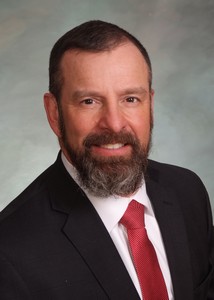
Photo of Eric Barlow
R Wyoming House · District 3

Rep. Eric Barlow

Compare
Total votes
792
all sessions
Attendance
100%
of floor votes
Higher than 78% of chamber peers
With party
85%
of cast votes
Near the chamber average
Bipartisan score
11%
some cross-party votes
Near the chamber average
Sponsored
214
bills & resolutions
Higher than 89% of chamber peers
Committees
0
assignments
214 bills and resolutions

Sponsored bills

Total
214
Primary
88
Co-sponsor
126
This page
214
matching current filters
Co-sponsor HB 137
Vetoed · Wyoming House · Co-sponsor
State land exchanges-public notice.

Maddy summaryHB 137 requires the Wyoming Board of Land Commissioners to post public notice online for any proposed exchange of state-owned land. It applies to anyone - including government agencies - seeking to swap state land, mandating the Board post notice within 30 days of receiving an application and keep it visible until a final decision is made. The notice must include how the public can access details and submit comments. The law took effect July 1, 2022, with rules to be established by the Board by that date.

Vetoed Mar 25, 2022 1 co-sponsor
Primary HB 123
Signed into law · Wyoming House · Lead sponsor
Mine reclamation-disposal of materials.

Maddy summaryHB 123 establishes rules for disposing of specific materials during mine reclamation. It requires mining operators to pay fees (25% for wind turbine blades/towers in coal mines, 10% for inert material in non-coal mines) to the state department, with fees credited to the general fund. The bill defines "inert material" as non-reusable waste and sets requirements like burying it below aquifers at minimum depths, removing mechanical parts, and following solid waste management standards. These rules apply to operators using such materials for backfilling reclamation sites in Wyoming, effective July 1, 2022.

Signed into law Mar 17, 2022 0 co-sponsors
Co-sponsor SF 114
died · Wyoming Senate · Co-sponsor
Employer COVID-19 vaccine mandates and exemptions.

Maddy summarySF 114, the "Employer Vaccination Mandate Law," prohibits Wyoming employers with two or more employees from requiring COVID-19 vaccines without offering specific exemptions. Employers must grant exemptions for medical reasons (with a healthcare provider's statement), religious beliefs (with a signed statement), documented immunity (via lab tests), regular testing (using FDA-approved tests), or use of employer-provided personal protective equipment. Employees who falsely claim an exemption face misdemeanor penalties, and employers cannot ban employees from receiving vaccines. The law excludes religious organizations and entities covered by federal rules, and requires employers to allow vaccine receipt without penalty.

died Mar 12, 2022 1 co-sponsor
Co-sponsor SF 43
Signed into law · Wyoming Senate · Co-sponsor
Community college district elections.

Maddy summarySF 43 adjusts the timing for community college district board elections in Wyoming, requiring the first regular election to occur in May during the first fiscal year a special mill tax is levied, rather than following a previous schedule. It clarifies that the first election will have four members serving four-year terms and three serving two-year terms, with all subsequent elections held on the Tuesday following the first Monday in November. The bill standardizes election dates and term start dates (beginning December 1) for all community college district boards, affecting how these boards are organized and elected across Wyoming. These changes apply directly to community college districts and their voters, streamlining the election process under state law.

Signed into law Mar 11, 2022 1 co-sponsor
Co-sponsor HB 110
Signed into law · Wyoming House · Co-sponsor
Board of psychology-behavior analyst regulation.

Maddy summaryHB 110 establishes a licensing system for behavior analysts and assistant behavior analysts in Wyoming. To obtain a license, applicants must hold a current certification from a recognized certifying entity (like a Board Certified Behavior Analyst) and meet board requirements, with exemptions for certain professionals like licensed psychologists or students under supervision. The bill also defines "behavior technicians" who must work under a licensed behavior analyst's supervision and cannot represent themselves as licensed. It directly affects behavior analysts, technicians, and related professionals practicing in Wyoming, ensuring standardized qualifications and oversight.

Signed into law Mar 10, 2022 1 co-sponsor
Co-sponsor HB 81
Signed into law · Wyoming House · Co-sponsor
Operation of motorcycles-disabled persons.

Maddy summaryWyoming's HB 81 allows people with disabilities to operate motorcycles with attached wheelchair or assistive devices by amending motorcycle operation rules. The bill removes a previous restriction on handlebar height and explicitly permits attaching assistive devices (as defined in state law) to motorcycles designed for such use. This directly affects disabled motorcycle riders who previously faced equipment limitations. The law took effect on July 1, 2022.

Signed into law Mar 10, 2022 1 co-sponsor
Co-sponsor HB 108
Signed into law · Wyoming House · Co-sponsor
Funeral service practitioner amendments.

Maddy summaryHB 108 clarifies the definition of embalming to exclude non-arterial disinfection or "setting features" for identification. It revises education requirements for funeral service practitioners, now requiring either 60 college credits plus an associate's degree in funeral service or a mortuary science diploma plus five years of experience. The bill also updates reciprocal licensing rules, allowing out-of-state practitioners with similar education to obtain licenses without additional training if they've practiced for at least three years. These changes apply to new license applications submitted on or after July 1, 2022, directly affecting funeral service professionals seeking licensure in Wyoming.

Signed into law Mar 10, 2022 1 co-sponsor
Co-sponsor HB 82
Signed into law · Wyoming House · Co-sponsor
Military discharge and benefits.

Maddy summaryHB 82 redefines "honorable discharge" in Wyoming law to include veterans discharged "general or other than honorable solely for refusing a COVID-19 vaccine." This directly affects Wyoming veterans who were discharged for vaccine refusal during the pandemic, allowing them to qualify for state benefits and exemptions they previously lost. The bill amends Wyoming Statute 8-1-102 by adding a specific definition to include these veterans under "honorable discharge" for benefit eligibility. It takes effect immediately upon becoming law, ensuring affected veterans can access state support without requiring additional legislative action.

Signed into law Mar 10, 2022 1 co-sponsor
Primary HB 147
Passed · Wyoming House · Lead sponsor
Annual cash based budget development.

Maddy summaryHB 147 changes Wyoming's state budget process by requiring that recommended spending for each two-year budget cycle cannot exceed two-thirds of the state's actual revenue from the previous three fiscal years. This limits how much the state can spend based on verified past revenue, excluding certain funds like pension reserves and unencumbered balances. The bill directly affects state budget planners, the governor's office, and the legislature when developing annual budgets. It repeals older budget rules about fund transfers and stabilization accounts, effective July 1, 2023. The key change is a new revenue-based spending cap to prevent budgeting based on projected or hypothetical revenue increases.

Passed Mar 9, 2022 0 co-sponsors
Co-sponsor HB 85
Failed · Wyoming House · Co-sponsor
Child endangering-controlled substance use while pregnant.

Maddy summaryHB 85 creates a new felony offense for pregnant individuals who knowingly use methamphetamine or certain narcotics (like heroin or fentanyl) without a prescription from a healthcare provider. It directly affects pregnant people using these substances without medical authorization, imposing penalties of up to five years in prison or a $5,000 fine. The law specifically targets non-prescribed use of Schedule I/II controlled substances during pregnancy, framing it as endangering the unborn child, and takes effect July 1, 2022. The bill does not address medical treatment or addiction support, focusing solely on criminal penalties for non-prescribed substance use.

Failed Mar 7, 2022 1 co-sponsor
Showing 1 to 10 of 214 bills
1 2 3 22 Next