

Maddy summaryWyoming's SJ 9 is a joint resolution urging Congress to protect the state's access to federal public lands while ensuring local communities have a say in land management decisions. It opposes broad or indiscriminate sales of public lands and demands federal agencies respect Wyoming's existing land-use plans, county-level input, and multiple-use frameworks that support recreation, agriculture, hunting, fishing, and resource development. The resolution also calls for funding to streamline efficient land exchanges under current laws when they benefit local communities and public access, without advocating for specific policy changes.

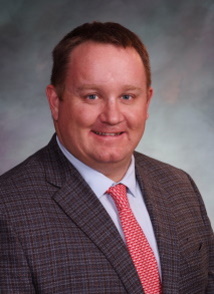
Rep. Andrew Byron
Sponsored bills
Maddy summaryWyoming's SF 113 requires county clerks to conduct hand counts of election ballots for the 2026 primary and general elections. Specifically, counties must physically examine approximately 5% of ballots for one federal race, one statewide race (selected by the state secretary of state), and all legislative races on the ballot. The hand count results must be compared to electronic tabulation results within nine days of the county canvass, with any discrepancies reported to the secretary of state. This bill directly affects county election officials who will implement the hand count audits. The law takes effect immediately upon becoming law, with reports due by May 1, 2027.
Maddy summaryHB 75 establishes licensing requirements for businesses operating virtual currency kiosks in Wyoming. It requires operators to either hold a Wyoming money transmitter license or be a licensed financial institution, prohibiting unlicensed operation. The bill creates penalties for violations, including up to 3 years in jail or a $10,000 fine, and directs the banking commissioner to create rules for kiosk operations. It takes effect July 1, 2026, directly affecting businesses seeking to offer virtual currency exchange services through physical kiosks in the state.
Maddy summarySF 107 creates a statewide electronic system for processing motor vehicle registrations and license plates in Wyoming. The Department of Transportation must implement this system by July 1, 2028, to handle all registration transactions (like renewals and transfers), plate issuance, and fee processing for registration, specialty plates, and sales taxes. County treasurers are required to use this system for their vehicle registration duties instead of older methods, and the state may charge a $5 transaction fee to cover system costs. The bill also mandates electronic record-sharing between counties and the state, with development part of replacing the existing revenue system.
Maddy summaryThis bill allows hunters who have shot a black bear to use one leashed blood-trailing dog to track and recover the animal within 72 hours of the shot. It directly affects hunters who harvest black bears in Wyoming, permitting this specific tracking method under defined conditions. The key provision requires the dog to remain leashed and limits tracking to wounded or killed bears within the 72-hour window. The law takes effect on July 1, 2026.
Maddy summaryThis bill appropriates $15 million from Wyoming's tourism reserve fund to support the development of a rodeo and cowboy museum and hall of fame in Wyoming. The funds will be distributed in three installments of $5 million each on July 1, 2026, 2027, and 2028, contingent on the Wyoming Tourism Board certifying that relocation efforts will boost tourism, jobs, and state revenue. Applicants must provide matching funds (at least $1 for every $1 granted) and relocate to Wyoming by June 30, 2028, or repay the grant. The Wyoming Office of Tourism must report annually on fund usage until 2036.
Maddy summarySF 92 creates Wyoming's False Claims Act, allowing the state to sue individuals or entities that knowingly submit false claims for payment. It imposes penalties of three times the state's damages plus $5,500-$11,000 per false claim, affecting contractors, grantees, and state employees who submit inaccurate claims or fail to repay overpayments. The law includes reduced penalties if the person reports violations within 30 days and fully cooperates with investigations. It defines key terms like "knowingly" and "false claim" to clarify when penalties apply.
Maddy summaryHB 150 creates a 13-member Wyoming Business Council Strategic Advisory Task Force to evaluate the state's existing Wyoming Business Council (WBC). The task force, including legislative members, business representatives from agriculture, manufacturing, oil/gas, tourism, and local government, will review the WBC's programs, duties, and operations - including those not specified in the Wyoming Economic Development Act - and compare them to other states. It must recommend changes to retain, modify, privatize, or eliminate WBC functions, develop a strategic direction for the council, and improve communication of its work to state leadership. The bill does not change the WBC's current operations but mandates this review process to inform potential future reforms.
Maddy summaryHB 144 clarifies and updates Wyoming law regarding fire protection districts' tax authority. It amends statutes to specify that districts may levy up to 3.10 mills (three ten mills) annually for operations, plus additional mills needed for debt payments on approved bonds, without exceeding limits set in other sections. This directly affects fire protection districts across Wyoming by defining their tax levy limits for funding operations and debt service. The bill makes no change to the existing mill levy cap but ensures consistent language in related statutes. It takes effect July 1, 2026.
Maddy summaryHB 115 requires all Wyoming school districts (including charter schools) to create and implement cardiac emergency response plans for general school settings and separate plans for athletic events. Key provisions mandate that schools place and maintain AEDs in unlocked, accessible locations (within 3 minutes), train staff in CPR and AED use per American Heart Association standards, and rehearse athletic venue protocols annually. The bill allocates $50,000 for reimbursement of implementation costs during the 2026-2027 and 2027-2028 school years, with priority for districts serving higher percentages of students eligible for free meals. It applies directly to school staff, students, and emergency medical providers by standardizing cardiac emergency protocols across all school properties and athletic events.