

Maddy summaryAB 1012 establishes a family and medical leave insurance program that would allow eligible workers to take up to 14 weeks of leave per year to care for a newborn, newly adopted child, or family member with a serious health condition, or to address certain family military needs. The bill would require employers with 50 or more employees to provide this leave, funded through a new family and medical leave insurance trust fund. It defines "family member" broadly to include spouses, domestic partners, parents, children, siblings, and other close relatives or people in close association with the employee. The legislation also sets specific limits on leave availability, including a maximum of 6 weeks for certain family situations and 8-14 weeks for combined reasons within a 12-month period.
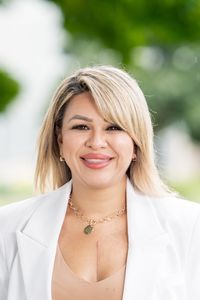
Rep. Priscilla Prado
Sponsored bills
Maddy summaryAB 269 creates "portable benefit accounts" for delivery drivers and transportation network drivers (e.g., app-based food or package delivery workers) who are classified as independent contractors. The bill defines key terms like "application-based driver" and specifies that these workers are not considered employees if companies avoid controlling their schedules or restricting work for other platforms. It also establishes a 10% penalty for workers who misuse funds from these benefit accounts and modifies insurance rules for accident/sickness coverage. The bill grants the Department of Financial Institutions authority to regulate these accounts and related insurance provisions. (Note: This bill was vetoed by the Governor on August 8, 2025.)
Maddy summaryThis bill proposes establishing an annual Education Foundation Day in Wisconsin on May 13, 2026, to recognize the role of over 350 education foundations in supporting public schools. The legislation aims to acknowledge how these foundations provide supplemental funding for programs, build community connections, and create endowments that traditional budgets cannot support. It does not create new funding or change existing laws, but rather designates a specific date to honor the contributions of these organizations. The measure was introduced in the 2026 Wisconsin Legislature but failed to advance after being referred to the Committee on Rules.
Maddy summaryAB 943 creates a new law (Section 941.236) prohibiting people from carrying firearms within 100 feet of polling places during voting hours (one hour before opening to one hour after closing). It directly affects voters, election workers, and anyone near polling locations during elections. The law applies to all individuals except law enforcement officers, qualified out-of-state officers, former officers, property owners on their own land, and security personnel acting in their official duties. Violating this provision is a serious misdemeanor charge.
Maddy summaryThis bill would create a tuition exemption for nonresident students attending University of Wisconsin System schools if they meet specific residency and immigration status requirements. To qualify, a student must have lived in Wisconsin for 12 consecutive months before registering for classes and must have approved deferred action status under the federal Deferred Action for Childhood Arrivals program. The exemption applies to students enrolling in the semester or session following the bill's effective date. This legislation is designed to provide financial relief to certain immigrant students by allowing them to pay in-state tuition rates despite not being Wisconsin residents. The bill was introduced in March 2026 and referred to the Committee on Colleges and Universities for review.
Maddy summaryAB 1060 allocates $450,000 annually for two fiscal years (2025-26 and 2026-27) to fund falls prevention awareness and initiatives in Wisconsin. The bill directs the Department of Health Services to award this grant specifically to the Wisconsin Institute for Healthy Aging. This funding supports statewide programs aimed at reducing fall-related injuries, primarily affecting older adults in the state. The bill makes a concrete budget adjustment to enable this grant without altering existing health service programs.
Maddy summaryAB 790 creates a dedicated "Water Fund for Our Future" with an initial $250 million transfer from the general fund. The fund establishes a rapid response account to cover clean water-related costs during natural disasters or public health emergencies, including remediation and assistance for affected individuals. A new joint committee oversees fund spending, reviewing requests for funding (excluding non-clean-water uses) and recommending approvals to the finance committee. All funds must be used exclusively for clean water activities, with specific rules for disbursement and oversight.
Maddy summaryThis bill establishes a comprehensive clean energy framework requiring Wisconsin to achieve 100 percent clean electricity production and net-zero carbon emissions by 2050. It creates a new Office of Sustainability and Clean Energy within the Department of Administration to develop and update an economy-wide decarbonization roadmap using sector-based modeling. The legislation sets specific interim targets for carbon-free electricity, including 50 percent by 2030, 65 percent by 2035, 80 percent by 2040, 90 percent by 2045, and full carbon-free status by 2050. State agencies must consider purchasing renewable energy from providers with long-term contracts, though the requirements do not apply if generation is not technically feasible or cost-effective. The bill also provides funding for technology implementation and defines carbon-free resources to include hydroelectric power alongside other renewable sources.
Maddy summaryAB 854 creates a grant program funded by taxes on vapor products to support violence prevention efforts. It directs $30,000 for fiscal year 2025-26 and $120,000 for 2026-27 toward local health departments or tribal health centers. These entities can use the funds to run violence prevention programs or award grants to community organizations, but they cannot distribute money to law enforcement agencies or any groups working with them. The bill specifies that applications for these grants must be submitted by June 30 each year.
Maddy summaryAB 759 allows individuals with deferred action under the federal DACA program to obtain state occupational licenses (like nursing or cosmetology credentials) if they have valid federal work permits. It requires state licensing agencies to verify DACA recipients' federal work authorization through official systems before issuing licenses. Licenses issued under this law expire when the federal work permit expires, and recipients must renew both simultaneously. The bill explicitly states it does not grant eligibility for public benefits beyond occupational credentials.