

Maddy summaryAB 1012 establishes a family and medical leave insurance program that would allow eligible workers to take up to 14 weeks of leave per year to care for a newborn, newly adopted child, or family member with a serious health condition, or to address certain family military needs. The bill would require employers with 50 or more employees to provide this leave, funded through a new family and medical leave insurance trust fund. It defines "family member" broadly to include spouses, domestic partners, parents, children, siblings, and other close relatives or people in close association with the employee. The legislation also sets specific limits on leave availability, including a maximum of 6 weeks for certain family situations and 8-14 weeks for combined reasons within a 12-month period.
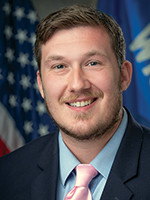
Rep. Clint Anderson
Sponsored bills
Maddy summaryAJR 11 is a ceremonial resolution honoring the late Wisconsin State Assembly Representative Jim Soletski (2006-2010). It recognizes his career in the energy industry, service as chair of the Assembly Energy and Utilities Committee, advocacy for Native American relations, and community involvement with groups like JOSHUA. The resolution expresses the legislature's condolences to his family and extends recognition of his public service. Passed by both chambers in October 2025, it was deposited with the Secretary of State as a formal commemoration, with no policy or financial impact.
Maddy summaryAB 80 would allow social workers, marriage and family therapists, and professional counselors licensed in this state to practice in other states that join the Social Work Licensure Compact without needing separate state licenses. The bill amends existing statutes to align state definitions and requirements with the compact framework, ensuring professionals certified under Chapter 457 can work across participating states. It directly affects licensed social work professionals seeking to practice in multiple states and changes how their credentials are recognized in statutes related to child welfare, mental health, and professional practice. The compact aims to streamline licensure for these professionals while maintaining state-specific standards.
Maddy summaryThis bill authorizes the creation of emergency services districts in Wisconsin and grants these districts the authority to levy property taxes and impose special charges to fund their operations. It also allows emergency services districts to issue debt to finance capital projects. The legislation amends state statutes to clarify how emergency services district board members are elected, specifying ballot procedures and candidate limits for these districts. Additionally, the bill outlines how election costs for emergency services districts are shared between the districts and local governments when voting occurs.
Maddy summaryThis bill would update Wisconsin election laws to implement ranked-choice voting for certain offices and establish procedures for resolving election ties. It directly affects state and local election officials, candidates, and voters by changing how votes are counted and how ties are handled. The bill creates new provisions allowing candidates to be ranked on ballots, grants rule-making authority to the Department of Justice for implementing ranked-choice voting systems, and provides funding to counties and municipalities to update equipment and software needed for administering the new voting method. Additionally, it establishes specific procedures for resolving ties when candidates receive equal numbers of votes, including the option for candidates to draw lots if present. The legislation also allows municipalities to combine voting wards to facilitate the use of common polling places.
Maddy summaryThis bill establishes a longevity bonus program for teachers in Wisconsin school districts, providing a $7,000 payment to educators who have been continuously licensed and employed by the same school board for five consecutive school years starting in the 2031-32 academic year. The program allows teachers to receive additional bonuses for each subsequent five-year period of continuous service, with school boards required to annually report eligible teacher names to the Department of Public Instruction. The legislation creates new statutory sections to authorize funding for these payments and defines eligibility requirements based on continuous licensure and employment history.
Maddy summaryThis bill creates a new Civic Information Consortium Board within the University of Wisconsin System to oversee a grant program that supports local journalism and media projects across the state. The board will consist of representatives from the university system, local media organizations covering print, online, radio, and television, and public members, with funding of $20 million initially allocated for grants and operations. The nonprofit corporation established to administer the grants must ensure recipients remain independent from state influence, direct at least 30% of funding to rural communities, and prioritize projects that address underserved populations and improve media literacy. The program aims to strengthen access to quality local news and civic engagement while requiring annual reports on how funds are spent and their impact on the public.
Maddy summaryThis bill creates a journalism fellowship program within the University of Wisconsin System to place recent journalism graduates into local newsrooms. The program would establish a selection committee made up of university faculty and journalism industry professionals to review applications from candidates with degrees in journalism, media, or communications. Each year, the program would award 25 one-year fellowships providing $40,000 in salary to selected fellows, with funding appropriated for the 2025-26 and 2026-27 fiscal years. The bill also authorizes 25 full-time equivalent positions within the university system to administer the program starting July 1, 2026.
Maddy summaryThis bill would create a tuition exemption for nonresident students attending University of Wisconsin System schools if they meet specific residency and immigration status requirements. To qualify, a student must have lived in Wisconsin for 12 consecutive months before registering for classes and must have approved deferred action status under the federal Deferred Action for Childhood Arrivals program. The exemption applies to students enrolling in the semester or session following the bill's effective date. This legislation is designed to provide financial relief to certain immigrant students by allowing them to pay in-state tuition rates despite not being Wisconsin residents. The bill was introduced in March 2026 and referred to the Committee on Colleges and Universities for review.
Maddy summaryAB 790 creates a dedicated "Water Fund for Our Future" with an initial $250 million transfer from the general fund. The fund establishes a rapid response account to cover clean water-related costs during natural disasters or public health emergencies, including remediation and assistance for affected individuals. A new joint committee oversees fund spending, reviewing requests for funding (excluding non-clean-water uses) and recommending approvals to the finance committee. All funds must be used exclusively for clean water activities, with specific rules for disbursement and oversight.