

Maddy summaryAB 211 creates a new exemption in Wisconsin law allowing "tobacco bars" to operate without adhering to the state's public smoking ban. To qualify, these establishments must have opened after June 4, 2009, allow only cigar and pipe smoking (not cigarettes), not be classified as food establishments, display clear signage about smoking, prohibit minors under 21 from entering, require employee acknowledgment of secondhand smoke exposure, and demonstrate adequate air filtration in licensing applications. The bill directly affects tobacco bars meeting these specific criteria, enabling them to operate with smoking permitted while imposing strict operational requirements. It does not change the general public smoking ban but establishes a defined exception for this narrow category of businesses.
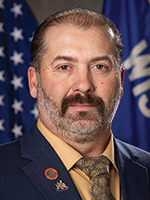
Rep. Treig Pronschinske
Sponsored bills
Maddy summaryAB 219 creates a 50% tax credit for eligible rail infrastructure spending in Wisconsin. It directly affects Class II/III railroads operating in the state and owners/lessees of rail sidings or industrial spurs, covering both new track construction (like spurs and sidings) and track maintenance (such as rail, ties, and safety systems). The credit applies to expenditures made after December 2024, with annual limits of $5,000 per mile of track owned and $2 million per project. Unused credits can be carried forward for up to five years, and credits may be transferred to other businesses subject to Wisconsin taxes.
Maddy summaryAB 1026 updates interest rate calculations for tax payments and refunds in Wisconsin. It sets a 1% monthly interest rate (12% annually) on underpaid estimated taxes due between June 15 and payment date, and requires 12% annual interest during tax filing extensions for corporations and pass-through entities. The bill also mandates that the Department of Revenue (DOR) pays 3% annual interest on tax overpayments. These changes affect taxpayers filing returns, including corporations, pass-through entities, and individuals who use federal tax extension periods. The bill clarifies existing interest rate provisions across multiple tax statutes without altering tax obligations.
Maddy summaryAJR 138 designates February 2026 as "Career and Technical Education Month" in Wisconsin to raise awareness about the value of these programs. It does not create new laws or funding but symbolically recognizes how career and technical education prepares students for jobs, citing that 92% of 2024 Wisconsin Technical College graduates were employed within six months and earned median salaries of $55,636 (for certificates) or $60,030 (for associate degrees). The resolution aims to encourage state residents to learn about CTE opportunities and their role in supporting Wisconsin's workforce. This is a ceremonial designation, not a policy change.
Maddy summaryThis bill increases penalties for individuals convicted of felony crimes targeting church occupants with intent to terrorize or intimidate them. It mandates a minimum one-year prison sentence (with no probation allowed) for such offenses and requires prosecutors to seek court approval before dismissing or amending charges. Additionally, it prohibits deferred prosecution programs for these cases and directs courts to verify the specific intent element during trials. The law applies to any felony where the defendant intended to terrorize two or more people inside a church.
Maddy summaryAJR 131 is a symbolic resolution designating March 2026 as Multiple Sclerosis (MS) Awareness Month in Wisconsin. It does not create new laws or funding but formally recognizes MS as a significant health issue affecting thousands in the state. The resolution encourages Wisconsin residents to learn about MS and support those impacted by the disease and their families. It was introduced by multiple legislators and co-sponsored by numerous colleagues as a gesture of awareness, not a policy change.
Maddy summaryAB 766 amends Wisconsin's commercial driver training grant program rules. It requires training providers to meet federal standards (49 CFR part 380), be listed on the Training Provider Registry (TPR), and deliver training at TPR-registered facilities. The bill also mandates that trainees obtain their initial Wisconsin commercial driver license (CDL) after March 23, 2024 (or a later date for non-training-providers), and prevents multiple grants for the same trainee. These changes directly affect training providers applying for state grants and individuals receiving training under the program.
Maddy summaryAB 70 creates a formal "affidavit of disclaimer" process for parents to voluntarily terminate parental rights in adoption cases. It sets strict timing rules (e.g., no execution before 120 hours post-birth or after the child's first birthday), requires mandatory counseling for minors, and specifies that mothers can revoke the disclaimer within 72 hours, while fathers can revoke until 72 hours after execution or 120 hours post-birth, whichever is later. The affidavit must include specific disclosures about legal rights, child support, and the child's status, and is irrevocable after set deadlines unless obtained through fraud or duress. This directly affects parents (including minors), adoption agencies, and courts handling adoption proceedings in Wisconsin.
Maddy summaryAJR 9 is a Wisconsin Assembly Joint Resolution honoring Bob Uecker, the longtime Milwaukee Brewers radio broadcaster and entertainer, for his 69-year career in baseball. The resolution recognizes his contributions as a broadcaster, actor (including "Mr. Belvedere" and "Major League"), philanthropist, and community figure, citing his 54-year tenure with the Brewers and his cultural impact. It does not create new laws or affect any policies - it is a symbolic tribute passed by the Wisconsin Legislature to memorialize his legacy. The resolution extends condolences to his family and acknowledges his widespread influence on baseball fans and Wisconsin.
Maddy summaryAB 172 creates a new consumer data protection law by defining key terms like "personal data," "biometric data," "sale of personal data," and "consumer" in section 100.80 of the statutes. This bill directly affects businesses that collect or process personal data of state residents, requiring them to follow standardized handling practices for such data. The law includes penalty provisions for violations, though specific penalty amounts and enforcement details are not provided in the available bill text.