

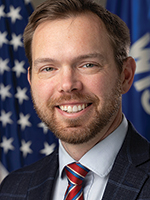
Photo of Adam Neylon
R Wisconsin House · District 15 On the 2026 ballot

Rep. Adam Neylon

Compare
Total votes
577
all sessions
Attendance
99%
6 missed
Near the chamber average
With party
99%
of cast votes
Near the chamber average
Bipartisan score
0%
crosses aisle rarely
Near the chamber average
Sponsored
266
bills & resolutions
Near the chamber average
Committees
6
assignments
266 bills and resolutions

Sponsored bills

Total
266
Primary
266
Co-sponsor
0
This page
266
matching current filters
Primary AJR 133
Signed into law · Wisconsin House · Lead sponsor
Relating to: legislative suspension of rules promulgated by state agencies (first consideration).

Maddy summaryAJR 133 proposes a constitutional amendment allowing the legislature to suspend any state agency rule through a joint resolution approved by a majority of all elected members in both houses. If enacted, the legislature could immediately halt the enforcement of agency rules (for a set period or indefinitely) without requiring governor approval or following standard lawmaking procedures. The suspension would make the rule unenforceable during the suspension period, shifting authority from agencies to the legislature regarding rule implementation. This change would require voter approval after legislative passage, as it modifies the state constitution.

Signed into law May 26, 2026 0 co-sponsors
Primary AB 955
Vetoed · Wisconsin House · Lead sponsor
Relating to: the rule-making authority of agencies. (FE)

Maddy summaryAB 955 limits state agencies' ability to interpret laws by requiring explicit statutory permission before creating rules that interpret statutes they enforce. It adds a new section (227.11(1m)) stating agencies cannot interpret laws without specific legislative authorization. The bill also repeals existing language that allowed broader agency interpretation authority and reorganizes related sections. This directly affects all state agencies that develop rules for enforcing or administering laws, ensuring they cannot interpret statutes without clear prior legislative permission. The change focuses on clarifying rule-making boundaries, not altering policy outcomes.

Vetoed May 13, 2026 0 co-sponsors
Primary AB 104
Vetoed · Wisconsin House · Lead sponsor
Relating to: prohibiting gender transition medical intervention for individuals under 18 years of age.

Maddy summaryAB 104 prohibits health care providers from performing or referring minors under 18 for medical interventions intended to change their physical characteristics to match a gender different from their biological sex. It specifically bans surgeries (like hysterectomy or orchiectomy), mastectomies, puberty-blocking drugs, and high-dose cross-sex hormone treatments. Exceptions apply for genetic disorders of sex development, treating complications from prior procedures, or immediate life-threatening conditions. Violations could result in license revocation for health care providers by the licensing board.

Vetoed May 13, 2026 0 co-sponsors
Primary AB 241
Vetoed · Wisconsin House · Lead sponsor
Relating to: required ratio of journeyworkers to apprentices in apprenticeship programs and contracts.

Maddy summaryAB 241 amends Wisconsin statute 106.015(1) to prohibit requiring more than one journeyworker for every two apprentices in apprenticeship programs or contracts. This directly affects apprenticeship programs, particularly those governed by collective bargaining agreements, by limiting the minimum journeyworker-to-apprentice ratio. The bill prevents state agencies from enforcing or authorizing stricter ratios (e.g., requiring two journeyworkers per apprentice) through rules, program approvals, or contracts. It takes effect for collective bargaining agreements when they expire or are modified, renewed, or extended. The legislation aims to standardize ratio requirements across apprenticeship programs statewide.

Vetoed May 13, 2026 0 co-sponsors
Primary AB 211
Vetoed · Wisconsin House · Lead sponsor
Relating to: exempting tobacco bars from the public smoking ban.

Maddy summaryAB 211 creates a new exemption in Wisconsin law allowing "tobacco bars" to operate without adhering to the state's public smoking ban. To qualify, these establishments must have opened after June 4, 2009, allow only cigar and pipe smoking (not cigarettes), not be classified as food establishments, display clear signage about smoking, prohibit minors under 21 from entering, require employee acknowledgment of secondhand smoke exposure, and demonstrate adequate air filtration in licensing applications. The bill directly affects tobacco bars meeting these specific criteria, enabling them to operate with smoking permitted while imposing strict operational requirements. It does not change the general public smoking ban but establishes a defined exception for this narrow category of businesses.

Vetoed May 13, 2026 0 co-sponsors
Primary AB 673
Vetoed · Wisconsin House · Lead sponsor
Relating to: banning the use of genetic software from foreign adversaries in medical and research facilities, the storage of any human genome sequencing data within the borders of a foreign adversary, and providing a penalty. (FE)

Maddy summaryAB 673 bans medical and research facilities receiving state or federal funds from using genetic software or sequencers developed by foreign adversaries (as defined by federal regulations). It also prohibits storing human genome data of state residents in foreign adversary countries, with exceptions for certain clinical trials. The law applies to facilities, companies, and nonprofits handling genetic data, requiring them to keep such data inaccessible to foreign adversaries. Violations carry a $10,000 penalty per offense, enforced by the state Attorney General.

Vetoed May 13, 2026 0 co-sponsors
Primary AB 957
Signed into law · Wisconsin House · Lead sponsor
Relating to: Internet crimes against children law enforcement and making an appropriation. (FE)

Maddy summaryAB 957 increases funding by $400,000 for each of the 2025-26 and 2026-27 fiscal years to support internet crimes against children law enforcement within the Department of Justice. This is a budget adjustment that directly affects the Department of Justice's resources for investigating and prosecuting online crimes targeting minors. The bill does not create new laws or change existing legal standards - it solely allocates additional state funds for enforcement efforts.

Signed into law Apr 9, 2026 0 co-sponsors
Primary AB 958
Signed into law · Wisconsin House · Lead sponsor
Relating to: position authorizations for Internet crimes against children law enforcement. (FE)

Maddy summaryAB 958 authorizes the Department of Justice to add three new positions specifically for its Internet Crimes Against Children (ICAC) unit: two criminal analyst roles, one outreach specialist, and one digital evidence examiner. These positions are funded through existing appropriations under section 20.455(2)(a). The bill directly affects the ICAC unit’s staffing capacity to investigate and respond to online crimes involving children. It does not create new laws or policies but adjusts personnel authorizations to support existing law enforcement efforts. The bill was introduced in the 2026 Legislature and referred to the Criminal Justice and Public Safety Committee.

Signed into law Apr 9, 2026 0 co-sponsors
Primary AB 992
Failed · Wisconsin House · Lead sponsor
Relating to: requirements for proposed administrative rules that impose costs. (FE)

Maddy summaryAB 992 revises cost thresholds for administrative rule reviews, lowering the trigger point from $10 million to $4 million in projected costs for businesses, local governments, and individuals over two years. It prohibits agencies from splitting a single rule into multiple rules to avoid this cost analysis requirement. Agencies must halt rulemaking if costs exceed the threshold unless they modify the rule to reduce costs, then re-evaluate. This directly affects state agencies creating regulations and entities bearing compliance costs.

Failed Apr 6, 2026 0 co-sponsors
Primary AB 1167
Failed · Wisconsin House · Lead sponsor
Relating to: prohibiting recovery of a rate of return on retired electric generating facilities; an exemption from certificate requirements for constructing a large electric generating facility; and a permit dashboard for applications for certificates of public convenience and necessity. (FE)

Maddy summaryThis bill addresses three main areas of electric utility regulation. First, it prevents electric companies from charging customers for the profits they made on power plants that have already been retired. Second, it creates a public online dashboard to track the status of applications for permits needed to build large electric generating facilities. Third, it adds requirements for new large power facilities to show they will use at least 70% of their electricity for manufacturing or mining at the same location, and to agree to pay for connecting to the public power grid. These changes directly affect electric utilities, customers who pay utility rates, and developers seeking to build new power generation projects.

Failed Apr 2, 2026 0 co-sponsors
Showing 1 to 10 of 266 bills
1 2 3 27 Next