

Home Wisconsin Committees Campaigns and Elections
House Committee
Committee

Campaigns and Elections

Roster

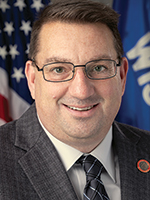
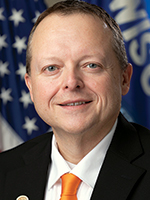
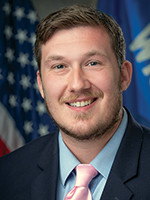
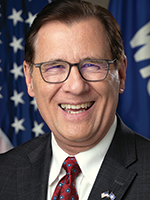
Members · 7

Legislation

Recent bills · 5

failed · Wisconsin · House May 1, 2026

AB 1165: Relating to: ranked-choice voting, granting rule-making authority, and making an appropriation. (FE)

This bill would update Wisconsin election laws to implement ranked-choice voting for certain offices and establish procedures for resolving election ties. It directly affects state and local election officials, candidates, and voters by changing how votes are counted and how ties are handled. The bill creates new provisions allowing candidates to be ranked on ballots, grants rule-making authority to the Department of Justice for implementing ranked-choice voting systems, and provides funding to counties and municipalities to update equipment and software needed for administering the new voting method. Additionally, it establishes specific procedures for resolving ties when candidates receive equal numbers of votes, including the option for candidates to draw lots if present. The legislation also allows municipalities to combine voting wards to facilitate the use of common polling places.
failed · Wisconsin · House May 1, 2026

AB 1141: Relating to: public financing of campaigns for the offices of justice of the supreme court, court of appeals judge, and circuit court judge, and making an appropriation. (FE)

This bill establishes a public financing system for judicial campaigns in Wisconsin, allowing candidates for supreme court justice, court of appeals judge, and circuit court judge positions to receive state funding if they meet specific contribution requirements. To qualify, candidates must collect at least 1,000 qualifying contributions totaling between $5,000 and $50,000 during a designated period, and they must file detailed receipts showing each contributor's name and address. The bill also limits anonymous contributions to $5 for public financing candidates and $10 for others, requiring any excess to be donated to schools or charities. Additionally, it creates a mechanism for transferring unspent public funds to replacement candidates when a vacancy occurs, with funds reverting to the state if no replacement is filed within seven days.
failed · Wisconsin · House May 1, 2026

AB 1212: Relating to: performing risk-limiting audits and eliminating the process for removing excess ballots from the vote count. (FE)

This bill modifies Wisconsin election procedures by replacing the random removal of excess ballots with risk-limiting audits for selected contests starting in 2026, expanding to all elections by 2027. It requires election officials to document ballot discrepancies in detail rather than randomly discarding surplus ballots, and mandates investigations if discrepancies exceed 0.5 percent of total ballots cast. The legislation also updates oath requirements for deputy election officials to include specific acknowledgments about absentee voting procedures and penalties for noncompliance. These changes directly affect election inspectors, canvassers, and the Wisconsin Elections Commission, which would oversee the implementation of audit standards and investigation protocols.
failed · Wisconsin · House Apr 21, 2026

AB 943: Relating to: going armed at a polling place and providing a penalty.

AB 943 creates a new law (Section 941.236) prohibiting people from carrying firearms within 100 feet of polling places during voting hours (one hour before opening to one hour after closing). It directly affects voters, election workers, and anyone near polling locations during elections. The law applies to all individuals except law enforcement officers, qualified out-of-state officers, former officers, property owners on their own land, and security personnel acting in their official duties. Violating this provision is a serious misdemeanor charge.
failed · Wisconsin · House Mar 24, 2026

AB 1144: Relating to: filling vacancies on a county board. (FE)

This bill updates Wisconsin state law to clarify how vacancies on county boards should be filled. It requires the board chairperson to publish a public notice inviting applications when a vacancy occurs, with the appointment made no earlier than 14 days after the notice is issued. The bill also establishes specific rules for when special elections may be ordered to fill vacancies, depending on the timing of the vacancy relative to the end of the term. These changes affect county board members, their chairs, and the residents of supervisory districts who may apply for or be appointed to fill vacant positions.