

Relating to: the use of artificial intelligence or other machine assisted translation in court proceedings and of telephone or live audiovisual interpretation in criminal trials. (FE)
This bill permits courts to use artificial intelligence translation tools instead of or alongside human interpreters in both civil and criminal court proceedings. It applies to all court settings requiring language assistance, including municipal courts and criminal trials. The key change is that courts no longer need to obtain waivers from parties to use AI translation, which differs from current rules for human interpreters. It directly affects non-English speakers accessing court services and court staff managing interpretation needs.
Bill status
failed
1 of 4 stages cleared
Introduction
May 2025
Committee Review
Floor Vote
Governor
Introduced May 30, 2025
Last action Mar 23, 2026
Floor votes
How they voted
No floor votes recorded yet.
Full legislative history
Actions timeline
Total actions
3
Key actions
0
Committee
0
May 30, 2025
Introduced
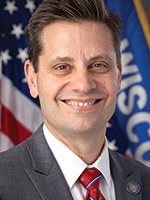
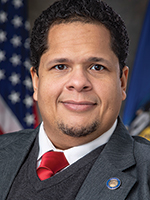
Introduced by Senators Kapenga and Bradley;
cosponsored by Representatives Maxey, Kitchens, Allen, Armstrong, Behnke, Brill, Dittrich, Donovan, Gundrum, Gustafson, Kaufert, Knodl, Kreibich, Melotik, Murphy, Mursau, Neylon, O'Connor, Penterman, Piwowarczyk and Wichgers
upper
2 primary · 0 co-sponsors
Sponsors
Ask Maddy
·
AI policy assistant
Ask Maddy about SB 295
Scope: WI
Hi! I can help you understand SB 295. What would you like to know?
Try one of these
i
Maddy answers using official bill text and legislative records. Always verify before sharing.
Sources cited inline