

Maddy summaryHB 2104 makes permanent a 2023 pilot program providing financial assurance for local and tribal fire departments in Washington to use certified aircraft (like planes dropping water or fire retardant) during the initial response to wildland fires. It removes the program’s expiration date, ensuring ongoing state funding to help fire departments deploy aviation resources quickly without waiting for state mobilization. This directly affects local fire departments by guaranteeing they can afford aircraft use when needed, especially during high-risk summer conditions with dry fuels. The bill requires that aviation deployment be directed by trained air operations commanders and aims to prevent small fires from growing large, protecting communities, natural resources, and air quality.
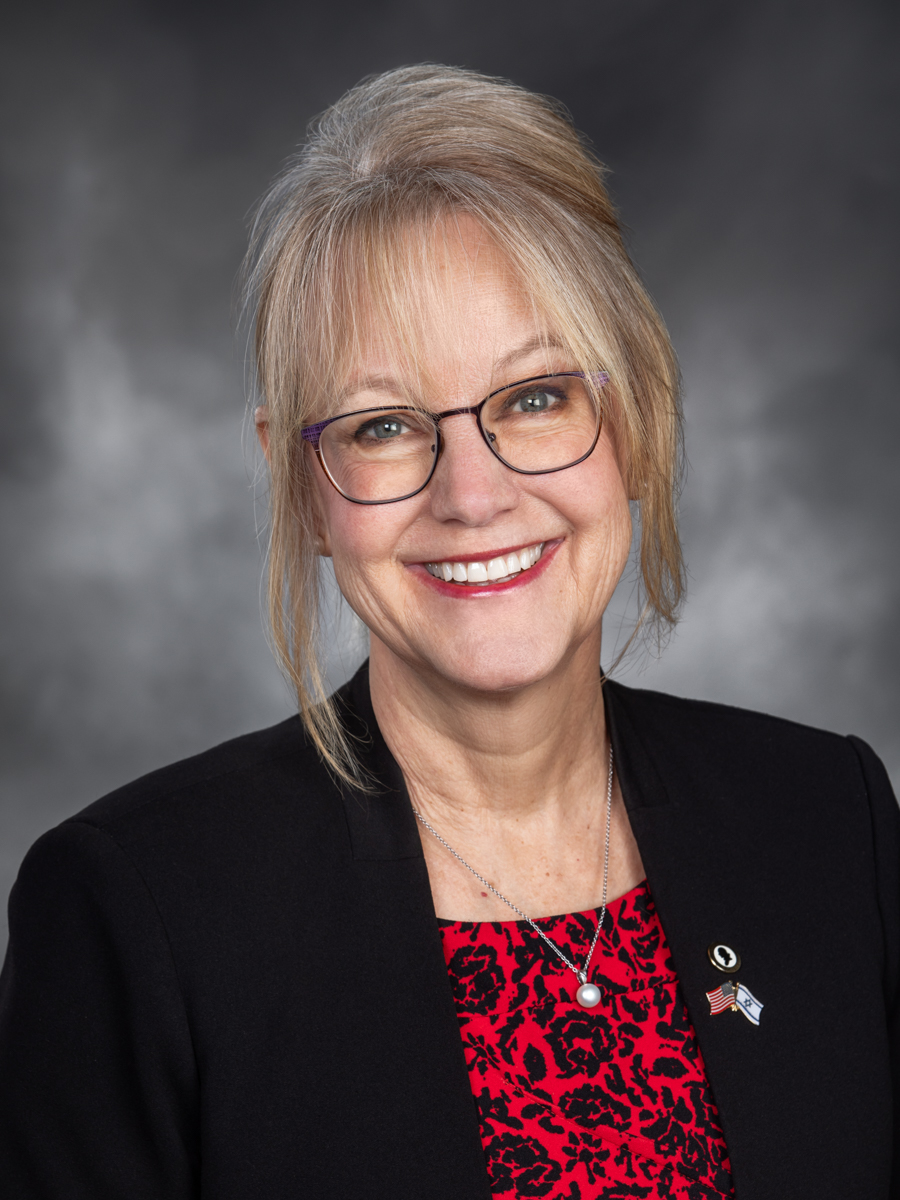
Rep. Mary Dye
Sponsored bills
Maddy summaryThis bill is a House resolution that formally recognizes Representative Virginia "Jenny" Graham for her public service in the Washington State House of Representatives. It highlights her eight-year tenure, her advocacy for public safety, and her work on community safety and veterans' issues. The resolution does not create new laws or policies but serves as an official acknowledgment of her contributions and legacy.
Maddy summaryThis bill is a House resolution that formally honors John Michael Sattgast for his 35 years of dedicated service as a communications professional for the House Republican Caucus in the Washington State Legislature. It recognizes his work producing over 4,000 radio stories and coordinating media coverage for state representatives, as well as his leadership roles with the National Conference of State Legislatures. The resolution acknowledges his contributions to sharing legislative history and public information, noting his receipt of the 2023 Legislative Staff Achievement Award. This measure serves as a commemorative tribute rather than establishing new policy or affecting government operations.
Maddy summaryThis bill formally acknowledges the service of Representative Steve Tharinger to his district and the Washington state legislature. It recognizes his long career in public service, including his time as a Clallam County Commissioner, his work on the House Capital Budget Committee, and his advocacy for environmental protection and healthcare. The resolution serves as a commemorative tribute to his contributions and personal qualities rather than establishing new laws or policies.
Maddy summaryHB 1175 requires cities in Washington to permit neighborhood stores (like mini-markets selling food, drinks, or household items) and neighborhood cafés (with at least 500 square feet) in residential zones, provided cafés serve food if they offer alcohol. Cities may still regulate parking (if feasible), operating hours (cafés must operate at least 12 consecutive hours), and maximum building size. The bill applies to all cities and code cities, mandating implementation by 2027 for cities updating comprehensive plans or within two years for others. It directly affects small business owners seeking to operate in residential areas and local governments managing zoning rules.
Maddy summaryHB 1742 creates a state Center for Sustainable Urban Design within the Department of Ecology to advance environmentally sustainable urban planning and architecture in Washington's cities. The center will coordinate design competitions (like one for a fire-damaged former beverage manufacturing site near the Capitol), award grants for projects reducing pollution (e.g., stormwater runoff, urban heat islands), and promote practices like green building and biophilic design. It directly affects first-class cities and urban developers by providing resources and policy guidance for projects meeting specific environmental and health criteria. The center must prioritize projects demonstrating measurable benefits, such as improved air quality, biodiversity, and reduced energy use, through competitive grant and design processes.
Maddy summaryThis bill formally recognizes the Consul General of Israel to the Pacific Northwest and expresses appreciation for their work in strengthening ties between Washington State and Israel. It highlights the consulate's role in providing consular services to Israeli Americans and visitors while promoting cultural exchanges and economic opportunities in technology, climate action, agriculture, biotechnology, and cybersecurity. The resolution acknowledges Ambassador Marco Sermoneta's service since 2022 and his efforts to build connections with political, business, and community leaders in the region. This is a commemorative measure that does not create new laws or funding but serves to honor diplomatic efforts between the two states.
Maddy summaryThis House resolution commemorates the 250th anniversary of the United States founding on July 4, 2026, specifically focusing on Washington State's role in that history. The bill formally recognizes the significance of the Declaration of Independence and encourages citizens, organizations, and businesses in Washington to participate in commemorative events celebrating American heritage and federalist principles. It does not create new laws or funding but serves as a symbolic acknowledgment of the nation's founding ideals and Washington's contributions to the country's development.
Maddy summaryHB 2743 reduces Washington state property taxes by $2.1 billion for 2027, applying to all property owners statewide. The bill amends tax code to cap the combined state property tax rate at $3.60 per $1,000 of assessed value and mandates this specific $2.1 billion reduction in the 2027 tax levy. It does not change tax rates for prior years but sets a permanent cap on future combined tax levies. This is a direct adjustment to the state's property tax collection amount, not a rate change for individual properties. The bill affects all taxable property within Washington, as the tax is statewide.
Maddy summaryHB 2742 creates an annual sales and use tax holiday in Washington for qualifying items priced at $500 or less per item. It exempts these items from both sales tax (under RCW 82.08) and use tax (under RCW 82.12) during a four-day period each year, specifically from 12:00 a.m. on the Friday after Thanksgiving through 11:59 p.m. on the Monday after Thanksgiving. The tax holiday directly affects all Washington residents purchasing qualifying items during this window, providing temporary financial relief on everyday goods like clothing, school supplies, or electronics. The Department of Revenue must establish administrative rules and provide taxpayer guidance to implement the holiday, consistent with existing tax agreements.