

Maddy summaryHR 5267, the American Franchise Act, clarifies when franchisors can be considered joint employers of franchisee employees under federal labor laws. It defines "substantial direct and immediate control" over essential employment terms like wages, benefits, hours, hiring, and discipline - requiring franchisors to actively set these terms to be deemed joint employers. The bill explicitly excludes routine brand standards, training, or minimal safety requirements from constituting such control. This directly affects franchisors and franchisees by limiting joint employer liability to cases where franchisors exert significant, ongoing influence over core employment decisions. The law applies prospectively to new cases after enactment, not past disputes.
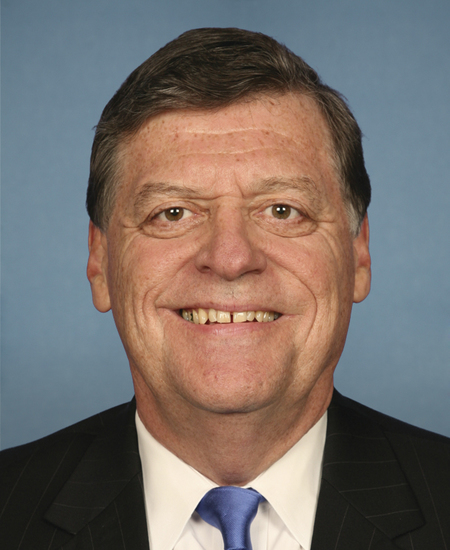
Rep. Tom Cole
Sponsored bills
Maddy summaryThis bill amends the Fair Labor Standards Act to clarify that direct sellers and qualified real estate agents (as defined under IRS rules) are not considered "employees" under federal labor law. It directly affects these workers by excluding them from FLSA protections like minimum wage and overtime pay. The key provision inserts a new definition into the law, changing how these professions are classified for labor rights purposes. This is a technical definitional change, not a new policy or program.
Maddy summaryThis House resolution congratulates the University of Oklahoma baseball team for winning its third national championship in the 2026 Men's College World Series. It highlights specific player achievements and notes that the unranked team set a record by defeating nine nationally seeded opponents during the postseason. The bill requests that an official copy of the resolution be presented to the university president, the director of athletics, and the head coach.
This bill confers jurisdiction to the U.S. Court of Federal Claims for the Miami Tribe of Oklahoma's land claim arising under the Treaty of Grouseland. The court must render judgement without regard to the statute of limitations or any delay-based defense. This jurisdiction expires unless such a claim is filed within one year. All other claims, including any future claims, of the tribe to land in Illinois are extinguished.
Maddy summaryThis House resolution formally honors the life and legacy of the late Representative Kay Granger from Texas, recognizing her historic achievements in public service. The bill highlights her roles as the first woman elected mayor of Fort Worth, the first Republican woman to represent Texas in the U.S. House, and the first Republican woman to chair the House Committee on Appropriations. It also acknowledges her contributions to national defense, including her work on the F-35 fighter jet program and the naming of a Navy ship for Fort Worth. The resolution expresses sympathy to Granger's family and directs the Clerk of the House to send an official copy of the document to her loved ones.
Maddy summaryThis bill reauthorizes and expands the Accelerating Access to Critical Therapies for ALS Act through 2031, extending funding for research into treatments for amyotrophic lateral sclerosis. It requires drug manufacturers to share interim clinical trial data with the FDA to better assess the progress of investigational drugs and clarifies that phase 3 clinical trial definitions include combined phase 2/3 trials and planned trials not yet enrolling participants. The legislation also mandates the FDA to publish an updated five-year action plan for ALS and other rare neurodegenerative diseases, including resource needs and coordination strategies with broader disease communities. Additionally, the bill requires the Government Accountability Office to submit a report on the program's implementation four years after enactment.
Continuing Appropriations Act, 2027 This bill provides continuing FY2027 appropriations for federal agencies and extends various expiring programs and authorities. Specifically, the bill provides continuing FY2027 appropriations to federal agencies through the earlier of December 4, 2026, or the enactment of the applicable appropriations act. It is known as a continuing resolution (CR) and prevents a government shutdown that would otherwise occur if the FY2027 appropriations bills have not been enacted when FY2027 begins on October 1, 2026. The CR funds most programs and activities at the FY2026 levels with several exceptions that provide funding flexibility or additional appropriations for various programs. For example, the bill includes exceptions for the Special Supplemental Nutrition Program for Women, Infants, and Children (WIC); Small Business Administration loan programs; the Federal Emergency Management Agency’s Disaster Relief Fund; the Indian Health Service; and wildfire suppression activities. In addition, the bill extends several expiring programs, authorities, and restrictions, including the Department of Agriculture’s livestock mandatory price reporting program, the National Flood Insurance Program, limits on pay increases for the Vice President and certain senior political appointees, the Temporary Assistance for Needy Families (TANF) program, the authority to waive certain pay limitations that apply to wildland firefighters and other wildland fire personnel, the authority for the District of Columbia to spend local funds, and the freeze on cost-of-living adjustments for Members of Congress. The bill also provides the customary payments to the beneficiaries of the late Representative David Scott and the late Senator Lindsey Graham.
Maddy summaryThis bill establishes the INCLUDE Project at the National Institutes of Health (NIH) to advance research on Down syndrome and related health conditions. It requires NIH to fund high-risk studies on trisomy 21, support inclusive clinical trials for people with Down syndrome across all ages, and investigate co-occurring conditions like Alzheimer’s disease and autoimmunity. The law mandates NIH coordination across its institutes, consultation with patient advocates, and biennial reports to Congress detailing funded research and its real-world applications. The project directly affects individuals with Down syndrome, their families, and medical researchers, aiming to improve diagnosis, treatment, and quality of life through targeted scientific efforts.
Maddy summaryThis bill requires Medicare Advantage plans to implement electronic pre-approval systems for medical services by 2028 and meet transparency reporting standards starting in 2027. Plans must publicly report data on approval/denial rates, appeal outcomes, response times, and technology use for pre-approval requests, including details on how denials relate to clinical criteria. It establishes a 24-hour response timeframe for certain requests and mandates annual reviews of pre-approval requirements based on data and input from seniors and providers. The law directly affects Medicare Advantage plans, seniors enrolled in these plans, and healthcare providers who submit pre-approval requests. These changes aim to make the pre-approval process faster, more transparent, and more accountable for seniors seeking covered medical services.
Maddy summaryHR 4398, the Veteran Burial Timeliness and Death Certificate Accountability Act, requires Veterans Affairs (VA) physicians or nurse practitioners to certify the death of a veteran who dies of natural causes within 48 hours of learning of the death. This directly affects veterans' families, who previously faced delays of up to eight weeks in burial and access to survivor benefits due to slow death certifications. The bill mandates annual reports to Congress on VA compliance with the 48-hour rule, including statistics on delays and their causes. The key change is establishing a strict timeline for death certification to prevent unnecessary delays in honoring veterans' final arrangements.