

Barrier crimes; eliminates certain crimes from the definition, etc.
Summary
Barrier crimes. Eliminates certain crimes from the definition of "barrier crime" and requires the State Board of Behavioral Health and Developmental Services, the Board of Education, the State Board of Health, and the State Board of Social Services to each adopt regulations that develop and implement a waiver process for individuals who have been convicted of a barrier crime and who serve in a position or seek to serve in a position with any qualified entity subject to the regulations of the board. The bill eliminates current exceptions and time limit mandates, as such information is required to be set out in each agency's waiver process. The bill sets out information to be included in the regulations of the individual boards. The bill also directs the Departments of Behavioral Health and Developmental Services, Education, Health, and Social Services to each publish information about the agency's waiver process in an easily accessible format on a website maintained by the department. The bill includes additional requirements for each waiver process, such as if an individual's application for a waiver is denied, the department must state the basis for denial in writing and provide such explanation to the individual. The bill provides that although a waiver granted to an individual by one department shall not be transferrable to a position under another department, proof of receipt of a waiver from one department shall be considered positively by another department when reviewing an application for a waiver. Additionally, each department is required to notify the Department of State Police when a waiver has been granted within 10 days of issuing the decision in writing to the person who was subject to the waiver. In cases where a waiver has been granted, the bill also prohibits any business screening service from disseminating information regarding the barrier crime conviction that was the subject of such waiver unless it is clearly indicated that the waiver was granted, and the bill sets out a penalty for any business screening service that violates that prohibition. The bill prohibits any qualified entity from discharging or otherwise discriminating against a person for any reason concerning solely the barrier crime conviction that was the subject of a waiver that has been granted. The bill also exempts all documents relating to a waiver application from the Virginia Freedom of Information Act except for an application cover sheet and whether the waiver has been granted or denied or if the application is pending. Additionally, the bill eliminates the state-level barrier crimes requirements for foster and adoptive parents and provides that a child-placing agency shall not approve a foster or adoptive home if any individual has been convicted of crimes prohibited under federal law or is the subject of a founded complaint of abuse or neglect as maintained in registries pursuant to state and federal law. The bill has a delayed effective date of the earlier of (i) the first day of the fourth month following notification of the Chairmen of the Senate Committee on the Judiciary and the House Committee for Courts of Justice by the Superintendent of State Police that the Department of State Police has implemented the necessary system upgrades as required by this act or (ii) July 1, 2025; however, the provisions related to foster and adoptive parents become effective on July 1, 2022. The bill requires the Boards of Behavioral Health and Developmental Services, Education, Health, and Social Services to promulgate regulations by December 1, 2024, to implement the provision of the bill. The bill also requires the Secretaries of Education, Health and Human Resources, and Labor to provide recommendations on the development of a navigation system no later than July 1, 2024, for assisting applicants in navigating the waiver processes across each department. Individuals with barrier crime convictions serving in a position pursuant to a currently existing exception, waiver, or screening process that the bill eliminates shall continue to be subject to such exception, waiver, or screening process and shall not be terminated upon enactment of the bill or required to apply for a barrier crime conviction waiver so long as he continues to be employed by the same employer. The bill also permits the boards to have a phased implementation of the regulations not to exceed two years after the bill's enactment in order to prevent overwhelming department resources for receiving applications and to ensure that applications are answered in a timely manner. The bill also directs the Department of State Police to implement any necessary enhancements to the Criminal History and Rap Back Information System by the effective date of the first enactment of this act.
Bill status
in committee
1 of 4 stages cleared
Introduction
Jan 2022
Committee Review
Floor Vote
Governor
Introduced Jan 12, 2022
Last action Feb 15, 2022
Floor votes
How they voted
No floor votes recorded yet.
Full legislative history
Actions timeline
Total actions
6
Key actions
1
Committee
3
Feb 3, 2022
Lower · Passed
Subcommittee recommends passing by indefinitely (5-Y 4-N)
lower
Jan 25, 2022
Committee
Assigned HWI sub: Subcommittee #2
lower
Jan 12, 2022
Committee
Referred to Committee on Health, Welfare and Institutions
lower
Jan 12, 2022
Introduced
Prefiled and ordered printed; offered 01/12/22 22101058D
lower
1 primary · 14 co-sponsors
Sponsors
Role
Legislator
Party
State
District
P

Cia Price
DDemocratic
Co

Betsy Carr
DDemocratic
Co

Delores McQuinn
DDemocratic
Co

Elizabeth Bennett-Parker
DDemocratic
Co

Irene Shin
DDemocratic
Co

Jeff Bourne
DDemocratic
Co

Kaye Kory
DDemocratic
Co

Kelly Fowler
DDemocratic
Co

Ken Plum
DDemocratic
Co
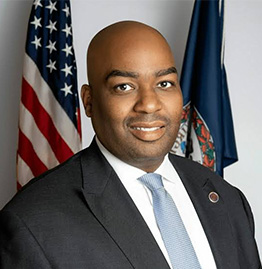
Lamont Bagby
DDemocratic
Co

Marcus Simon
DDemocratic




Ask Maddy
·
AI policy assistant
Ask Maddy about HB 805
Scope: VA
Hi! I can help you understand HB 805. What would you like to know?
Try one of these
i
Maddy answers using official bill text and legislative records. Always verify before sharing.
Sources cited inline