

HR 5339 United States House · 118th Congress

Protecting Americans’ Investments from Woke Policies Act

This bill amends the Employee Retirement Income Security Act (ERISA) to require retirement plan fiduciaries to prioritize financial factors - like risk and return - over non-financial goals (such as environmental or social impact) when making investment decisions. It directly affects retirement plan managers (e.g., for 401(k)s and pensions), prohibiting them from sacrificing investment returns or increasing risk to advance non-pecuniary objectives. The law allows limited use of non-financial factors only if fiduciaries document why financial factors alone couldn’t distinguish investments and show the choice aligns with participants’ financial interests. The changes take effect 12 months after enactment.
Bill status passed 3 of 5 stages cleared
Introduction
Sep 2023
Committee Review
Sep 2024
House Passage
Sep 2024
Senate Passage
President
Introduced Sep 5, 2023 Last action Sep 19, 2024
Maddy AI version diff · 1 comparison

What changed between versions

Introduced in House Engrossed in House · 7 edits · Sep 18, 2024
MODERATE
The bill was restructured from a single-division ESG limitation measure into a four-division package covering retirement plan governance. The short title was changed from 'Roll back ESG To Increase Retirement Earnings Act' to 'Protecting Americans' Investments from Woke Policies Act.' Three entirely new divisions were added: a non-discrimination requirement for selecting plan service providers, detailed proxy voting rules that prohibit using shareholder rights for non-pecuniary goals and create a safe harbor for not voting on small positions, and mandatory disclosure requirements for brokerage window investments in retirement plans.
SCOPE

The bill's short title was changed from 'Roll back ESG To Increase Retirement Earnings Act or the RETIRE Act' to 'Protecting Americans' Investments from Woke Policies Act,' broadening the framing beyond just ESG to all non-pecuniary investment considerations.

The bill was restructured from a single section into four divisions (A through D), expanding its scope from solely limiting ESG factors in fiduciary investment decisions to also covering service provider selection, proxy voting, and participant disclosures for brokerage windows.

REQUIREMENT

Division B (No Discrimination in My Benefits) adds a new requirement that plan fiduciaries must select, monitor, and retain any fiduciary, counsel, employee, or service provider without regard to race, color, religion, sex, or national origin.

Division C (Retirement Proxy Protection) establishes that fiduciaries exercising shareholder rights including proxy voting must act solely in the economic interest of the plan and may not promote non-pecuniary goals. It creates a safe harbor allowing fiduciaries to refrain from voting when the plan's assets in an issuer are below 5 percent of total plan assets, requires monitoring of investment managers and proxy advisory firms, and mandates recordkeeping of all proxy votes. Effective January 1, 2024.

Division D (Providing Complete Information to Retirement Investors) requires that before a participant directs an investment into a brokerage window or other non-designated investment arrangement, the plan must provide and obtain acknowledgment of a four-part notice explaining that such investments are not fiduciary-selected, may carry higher fees and risk, and includes a hypothetical graph showing projected balances at age 67 under 4, 6, and 8 percent annual returns. Effective January 1, 2025.

DEFINITION

A new definition of 'designated investment alternative' was added to ERISA Section 3, explicitly excluding brokerage windows, self-directed brokerage accounts, and similar arrangements that let participants select investments beyond those chosen by a plan fiduciary.

TECHNICAL

In the original ESG limitation provision (now Section 1002), the phrase 'a fiduciary of a plan shall be considered' was changed to 'a fiduciary shall be considered,' removing the redundant 'of a plan' language.

Floor votes · House Sep 18, 2024

How they voted

217206
Passed · 8 other
Total votes 431
Sep 18, 2024
D Democratic211
3 Yea 206 Nay 2
97% Nay
I Independent1
1 Yea
100% Yea
R Republican219
213 Yea 6
97% Yea
Vote distribution
All Yea All Nay Mixed No data
Full legislative history

Actions timeline

Total actions
22
Key actions
6
Committee
6
Amendments
1
Sep 19, 2024
Committee
Received in the Senate and Read twice and referred to the Committee on Banking, Housing, and Urban Affairs.
upper
Sep 18, 2024
Lower · Passed
On passage Passed by the Yeas and Nays: 217 - 206 (Roll no. 427). (text of amendment in the nature of a substitute: CR H5343-5345)
lower
Sep 18, 2024
Lower · Passed
Passed/agreed to in House: On passage Passed by the Yeas and Nays: 217 - 206 (Roll no. 427). (text of amendment in the nature of a substitute: CR H5343-5345)
lower
Sep 18, 2024
Lower · Passed
Mr. Kildee moved to recommit to the Committee on Education and the Workforce. (text: CR H5349-5350)
lower
Sep 17, 2024
Lower · Passed
Rules Committee Resolution H. Res. 1455 Reported to House. Rule provides for consideration of H.R. 3724, H.R. 4790, H.R. 5179, H.R. 5339, H.R. 5717, H.R. 7909 and H.J. Res. 136. The resolution provides for consideration of H.R. 3724 and H.R. 5717 under a structured rule and H.R. 4790, H.R. 5179, H.R. 5339, H.R. 7909, and H.J. Res. 136 under a closed rule. The resolution provides for one hour of general debate and one motion to recommit on each measure.
lower
Sep 26, 2023
Lower · Passed
Reported (Amended) by the Committee on Education and the Workforce. H. Rept. 118-225.
lower
Sep 14, 2023
Introduced
Ordered to be Reported (Amended) by the Yeas and Nays: 23 - 19.
lower
Sep 14, 2023
Lower · Passed
Committee Consideration and Mark-up Session Held
lower
Sep 5, 2023
Committee
Referred to the House Committee on Education and the Workforce.
lower
Sep 5, 2023
Introduced
Introduced in House
lower
1 primary · 1 co-sponsor

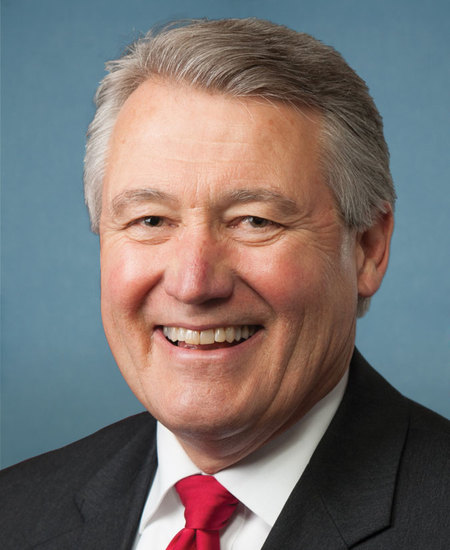
Sponsors