

Maddy summaryThis bill adds new federal district court judgeships to address growing case backlogs. It authorizes 66 permanent judgeships to be appointed starting in 2025 (with an additional 34 in 2029) across specific districts in Arizona, California, Texas, Florida, Georgia, New York, and others, based on current caseload data. It also creates temporary judgeships for Oklahoma districts (Eastern and Northern) that expire after five years if vacancies occur. The bill aims to reduce the average of 491 cases per judgeship by increasing staffing in overburdened courts, as identified by the Judicial Conference.

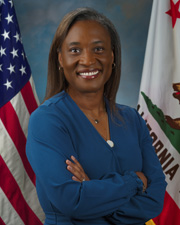
Sen. Laphonza R. Butler
Sponsored bills
Maddy summaryThe Truth and Healing Commission on Indian Boarding School Policies Act of 2024 would establish a federal commission to investigate and document the historical impacts of Indian boarding school policies on American Indian, Alaska Native, and Native Hawaiian communities. The Commission would hold public hearings for survivors, families, and tribal representatives, work to locate unmarked graves and document records from these schools, and develop recommendations for healing and preventing similar practices today. It would include 10 diverse members representing tribal communities, experts in boarding school history, and healing practitioners, with an Advisory Committee composed of tribal organizations and survivors. The Commission would issue an initial report within three years and a final report within five years, making recommendations for federal action to address historical trauma and support mental health and cultural healing. This bill focuses on documenting the government's role in cultural termination and developing concrete steps for acknowledgment and healing.
Maddy summaryThis bill (S 4077) renames a United States Postal Service facility at 180 Steuart Street in San Francisco, California, as the "Dianne Feinstein Post Office." It directly affects the physical building and all official references to it (such as maps, documents, and records) by replacing its current designation with the new name. The bill does not change postal services, funding, or policies - it is a commemorative naming resolution honoring former Senator Dianne Feinstein. The change became effective upon the bill's approval on December 23, 2024.
Maddy summaryThe Federal Judiciary Stabilization Act of 2024 makes permanent 10 temporary federal district court judgeships in specific judicial districts, including Hawaii, Kansas, and multiple districts across Alabama, Arizona, California, Florida, Missouri, New Mexico, North Carolina, and Texas. It achieves this by amending federal law to treat these positions as permanent, so current judges in those roles will now hold their positions under permanent authority rather than temporary appointments. The bill also updates the official U.S. Code table listing authorized judgeships to reflect these new permanent numbers for each district. This directly affects the federal courts in the specified districts by ending the temporary status of these judgeships and providing long-term stability to their staffing.
Maddy summaryThis bill transfers approximately 172 acres of land in San Diego County, California, held in fee simple by the Jamul Indian Village, into federal trust for the tribe's benefit. The land, described in four specific parcels totaling 172.10 acres, becomes part of the tribe's reservation and will be managed under standard federal trust regulations. The bill explicitly prohibits using this land for any class II or III gaming under federal law. This transfer directly affects the Jamul Indian Village, a federally recognized tribe, by securing their land ownership under federal trust status.
Maddy summaryThis bill redesignates the existing César E. Chávez National Monument in Keene, California, as the César E. Chávez and the Farmworker Movement National Historical Park. It authorizes the inclusion of three additional sites - The Forty Acres in Delano, California; Santa Rita Center in Phoenix, Arizona; and McDonnell Hall in San Jose, California - into the park boundary, subject to land acquisition or management agreements. The National Park Service will manage the park under existing federal laws, including preparing a general management plan within three years. The bill directly affects the park’s administration, site boundaries, and management of historic resources tied to César Chávez and the farmworker movement.
Maddy summaryThe Good Samaritan Remediation of Abandoned Hardrock Mines Act of 2024 establishes a pilot program allowing qualified individuals or organizations (defined as "Good Samaritans") to remediate historic mine residue at abandoned hardrock mine sites without facing liability for their actions. The Environmental Protection Agency would grant up to 15 permits for projects that address pollution from abandoned mines, with applicants required to demonstrate they meet specific eligibility criteria (not being responsible owners/operators, having no role in creating the residue, and possessing adequate resources). The program includes liability protection for permitted activities, requires detailed remediation plans with baseline condition assessments, public notice, and environmental reviews, and establishes a fund for long-term operations and maintenance. This 7-year pilot program would directly affect communities near abandoned mine sites and qualified remediation groups seeking to address environmental contamination.
Maddy summaryThis bill amends the federal disaster relief law to expand how communities prepare for disasters. It directly affects state and tribal governments by requiring FEMA to issue guidance within one year on using funds to support local community emergency response teams and non-governmental organizations that provide disaster assistance. Key provisions include adding funding for mutual aid agreements between teams, training programs, and outreach to strengthen local resilience against storms, wildfires, and other disasters. The changes become effective 180 days after the bill is signed into law.
Maddy summaryThis bill authorizes the posthumous award of a Congressional Gold Medal to Shirley Chisholm, the first African-American woman elected to Congress (1968-1982) and the first African American to seek a major party's presidential nomination (1972). The bill directs the Secretary of the Treasury to design and strike a gold medal featuring Chisholm's image and name, which will be presented to her family by congressional leaders. After presentation, the medal will be displayed at the Smithsonian Institution for public viewing and research. The bill also authorizes the production and sale of bronze duplicates to cover costs. This is a commemorative measure honoring Chisholm's historic contributions to American politics and civil rights.
Maddy summaryThe Forgotten Heroes of the Holocaust Congressional Gold Medal Act (S. 91) authorizes the award of a single Congressional Gold Medal to 60 diplomats who risked their careers and safety to save Jewish lives during the Holocaust. These diplomats, representing countries including Sweden, Switzerland, Spain, Portugal, and others, issued visas and provided safe passage to Jews fleeing Nazi persecution despite strict orders from their home governments. The medal will be presented collectively to the next of kin of each diplomat, along with representatives from their home countries, and then permanently displayed at the United States Holocaust Memorial Museum. The act recognizes these individuals' bravery without implying they represent all who performed similar humanitarian acts during the Holocaust. The medal serves as a permanent tribute to their sacrifice and will be available for public display and research.