

Maddy summaryThe Consumer Financial Protection Accountability and Reform Act of 2026 significantly restructures the Bureau of Consumer Financial Protection by subjecting it to the regular federal appropriations process and establishing an independent Inspector General appointed by the President. The bill restricts the Bureau's supervisory authority over banks and credit unions with assets under $30 billion, allowing these institutions to elect to remain under their existing prudential regulators instead. It also introduces a safe harbor for small-dollar loans of $3,500 or less that meet specific structural requirements, shielding compliant lenders from civil money penalties and private damages. Additionally, the legislation creates federal standards for earned wage access services, requiring providers to offer a no-cost option for early wage access and prohibiting them from treating these services as credit or debt under federal law.
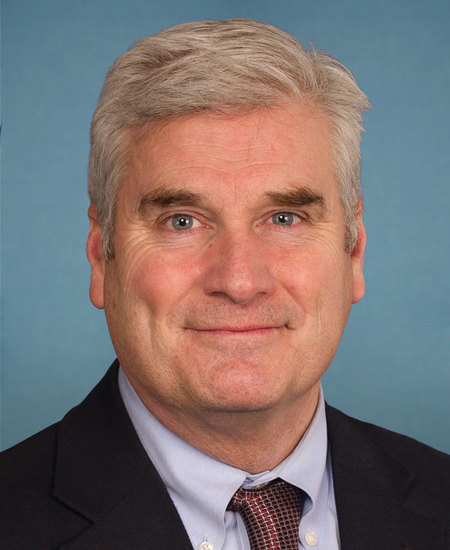
Rep. Tom Emmer
Sponsored bills
Maddy summary# Summary of Digital Commodities and Blockchain Technology Regulatory Framework This comprehensive legislation establishes a new regulatory framework specifically for digital commodities and blockchain technology, creating a balanced approach that protects investors while fostering innovation. ## Key Components 1. **New Regulatory Structure**: - Creates new categories for digital commodity exchanges, brokers, and dealers under the Commodity Futures Trading Commission (CFTC) - Establishes "qualified digital asset custodians" as a new regulatory category - Defines "mature blockchain systems" with special regulatory treatment 2. **Core Requirements**: - Mandates segregation of customer assets and strict custody requirements - Requires robust risk management systems - Sets capital requirements for digital commodity brokers and dealers - Establishes new disclosure and reporting obligations - Defines "blockchain control persons" with special restrictions on selling digital commodities 3. **Innovation-Focused Provisions**: - Creates a "Strategic Hub for Innovation and Financial Technology" (FinHub) at the SEC - Establishes "LabCFTC" as a dedicated innovation lab within the CFTC - Provides exemptions for SEC-registered entities from certain CFTC requirements - Includes provisions for expedited hiring of digital commodities experts 4. **Studies and Research**: - Mandates studies on decentralized finance (DeFi) - Requires a study on non-fungible tokens (NFTs) - Directs a study on financial literacy among digital commodity holders - Requires a study on tokenized securities and derivatives 5. **Exclusions**: - Excludes decentralized finance activities from regulation - Excludes certain blockchain-related activities from regulatory requirements The legislation aims to create a functional regulatory framework that acknowledges the unique benefits and risks of digital commodities while ensuring investor protection, preventing market manipulation, and promoting the responsible development of this emerging technology within the United States. It seeks to prevent the shift of digital commodity development to less regulated countries by establishing a clear, balanced regulatory path.
Maddy summaryThis bill authorizes the President to award the Medal of Honor to Earl L. Nolte for his acts of valor while serving in the Army during World War II. It specifically waives standard time limits that typically restrict when such military decorations can be granted. The legislation recognizes that Nolte was previously awarded the Silver Star for these same actions, effectively upgrading his highest honor to the nation's most prestigious military decoration.
Maddy summaryThe Main Street Capital Access Act reduces regulatory burdens for smaller banks, particularly those with less than $10 billion in assets. Key provisions include a 3-year phase-in period for new banks to meet capital requirements, lower leverage ratio requirements for rural banks (7.5% for the first 2 years), and a 30-day review process for business plan deviations. The bill also establishes an Office of Independent Examination Review, sets specific timelines for examinations (270 days) and reports (90 days), and creates a "least cost exception" for bank resolutions to prevent excessive concentration of the banking system. These changes aim to promote new bank formation, improve regulatory efficiency, and support community banking while maintaining financial stability.
Maddy summaryThe FRAUD Act requires state governors and officials who manage federal funds to report specific fraud warnings to the FBI within 180 days. To receive federal funding in the future, state leaders must certify that their officials have complied with this reporting requirement. Officials who knowingly fail to report these warnings or obstruct fraud investigations face criminal penalties, including fines and up to 10 years in prison. Additionally, agencies overseeing federal funds can ban convicted officials from managing those funds, though the law explicitly states it does not allow for the removal of elected state officials.
Maddy summaryHR 4398, the Veteran Burial Timeliness and Death Certificate Accountability Act, requires Veterans Affairs (VA) physicians or nurse practitioners to certify the death of a veteran who dies of natural causes within 48 hours of learning of the death. This directly affects veterans' families, who previously faced delays of up to eight weeks in burial and access to survivor benefits due to slow death certifications. The bill mandates annual reports to Congress on VA compliance with the 48-hour rule, including statistics on delays and their causes. The key change is establishing a strict timeline for death certification to prevent unnecessary delays in honoring veterans' final arrangements.
Maddy summaryHR 5437, the *Protection of Lawful Commerce in Stone Slab Products Act*, prohibits lawsuits against manufacturers and sellers of stone slab products (like countertops) for injuries caused by silica dust exposure during third-party fabrication (e.g., cutting or grinding by fabricators). It directly affects stone slab manufacturers and sellers by shielding them from civil liability when injuries result from fabricators violating workplace safety laws. The bill’s key provision bans such lawsuits in federal or state courts and requires dismissal of pending cases. It aims to protect this industry, which employs thousands, from claims they cannot control, emphasizing that safety regulations apply to fabricators - not the original sellers.
This bill designates the facility of the United States Postal Service located at 200 1st Avenue Southeast in Austin, Minnesota, as the "John Madden Memorial Post Office".
Maddy summaryHR 3234, the "Keeping Deposits Local Act," amends the Federal Deposit Insurance Act to adjust how banks calculate reciprocal deposits that don't count as "funds obtained through a deposit broker." It establishes tiered percentage thresholds based on a bank's total liabilities: 50% for banks under $1 billion, decreasing to 40% for $1-10 billion, 30% for $10-250 billion, 20% for $250 billion-$1 trillion, and 2% for banks over $1 trillion. This change directly affects commercial banks, particularly smaller institutions, by allowing them to hold a larger share of deposits without triggering stricter broker-related regulations. The bill aims to simplify compliance for community banks while maintaining oversight for larger financial institutions.
Maddy summaryHR 7320, the Minnesota Voter Integrity Act of 2026, requires the Minnesota Secretary of State to submit specific voting records to the Attorney General before the state can receive federal funds under the Help America Vote Act of 2002. It mandates the submission of records related to same-day voter registrations, votes cast under those registrations, and other specified voting records under Minnesota law. This bill does not change voting procedures but ties federal funding eligibility to the disclosure of these administrative records. The requirement directly affects Minnesota's state election administration by imposing a documentation condition for accessing federal election funds.