HR 7892 United States House · 119th Congress

No Aid for Ghost Students Act of 2026

HR 7892, the "No Aid for Ghost Students Act of 2026," requires the U.S. Department of Education to implement an identity fraud detection system for federal student aid applications starting October 1, 2026. The system flags applications showing potential identity fraud, notifying both applicants and their designated colleges. Colleges must then verify applicants' identities in person or via live video call before disbursing aid, and maintain records of this verification. The bill also mandates annual reports to Congress on the system's effectiveness and requires the Department to establish verification guidelines by October 2026. This directly affects students applying for federal financial aid and the colleges administering those funds.
Bill status passed 3 of 5 stages cleared
Introduction
Mar 2026
Committee Review
Jun 2026
House Passage
Jun 2026
Senate Passage
President
Introduced Mar 12, 2026 Last action Jun 11, 2026
Maddy AI version diff · 1 comparison

What changed between versions

Introduced in House Engrossed in House · 7 edits · Jun 10, 2026
MODERATE
The Engrossed version of HR 7892 makes several substantive changes: it allows institutions to outsource identity verification to third-party providers, expands acceptable verification methods beyond just in-person and live video to include NIST IAL2-compliant digital verification and combinations of methods, removes the requirement that applicants be told the basis for a fraud suspicion flag, adds a rule of construction permitting use of pre-existing systems, and introduces an entirely new program review priority category targeting institutions with patterns of disbursing aid to suspected ghost students.
REQUIREMENT

Institutions may now carry out identity verification 'directly or through a contracted third-party service provider,' allowing them to outsource the process rather than performing it in-house.

Applicants flagged for reasonable suspicion of identity fraud are no longer notified of 'the basis for such determination.' They are only told that the determination was made.

ELIGIBILITY

The list of acceptable identity verification methods expanded from two (in-person or live synchronous audiovisual) to five: in-person, live video, NIST IAL2-compliant digital verification or equivalent successor, any Secretary-approved method providing equal or greater assurance, and combinations of two or more methods.

TECHNICAL

A new rule of construction (section 483(e)(4)) clarifies that the Secretary may satisfy the identity fraud detection system requirements using a capability or system already in use before the date of enactment, rather than being required to build a new system from scratch.

ENFORCEMENT

A new section 3 adds a program review priority category under Section 498A(a)(2) for institutions that have demonstrated a pattern of disbursing federal financial aid to students whose applications presented reasonable suspicion of identity fraud. Institutions can avoid this designation by demonstrating compliance with the verification requirements in section 487(a)(15)(B).

DEFINITION

The identity fraud detection system is now described as screening and assessing applications 'based on one or more indicators associated with suspected fraud risk,' providing a clearer standard for how the system operates.

TIMELINE

Added explicit timing requirement that institutions must complete identity verification and notify the Secretary 'before the disbursement of such aid.'
Floor votes · House Jun 10, 2026

How they voted

249172
Passed · 10 other
Total votes 431
Jun 10, 2026
D Democratic212
36 Yea 172 Nay 4
81% Nay
I Independent1
1 Yea
100% Yea
R Republican218
212 Yea 6
97% Yea
Vote distribution
All Yea All Nay Mixed No data
Full legislative history

Actions timeline

Total actions
17
Key actions
5
Committee
5
Amendments
2
Jun 11, 2026
Committee
Received in the Senate and Read twice and referred to the Committee on Health, Education, Labor, and Pensions.
upper
Jun 10, 2026
Lower · Passed
On passage Passed by the Yeas and Nays: 249 - 172 (Roll no. 217).
lower
Jun 10, 2026
Lower · Passed
Passed/agreed to in House: On passage Passed by the Yeas and Nays: 249 - 172 (Roll no. 217).
lower
Jun 9, 2026
Introduced
Considered under the provisions of rule H. Res. 1333. (consideration: CR H4037-4044; text of amendment in the nature of a substitute: CR H4037-4038)
lower
Jun 3, 2026
Lower · Passed
Rules Committee Resolution H. Res. 1333 Reported to House. Rule provides for consideration of H.R. 8646, H.R. 7726, H.R. 7892 and H.R. 8872. The resolution provides for consideration of H.R. 8646 under a structured rule and H.R. 7726, H.R. 7892, and H.R. 8872 under a closed rule, with one hour of general debate on each bill. The resolution provides for one motion to recommit on each bill.
lower
May 26, 2026
Lower · Passed
Reported (Amended) by the Committee on Education and Workforce. H. Rept. 119-669.
lower
Mar 17, 2026
Introduced
Ordered to be Reported (Amended) by the Yeas and Nays: 30 - 3.
lower
Mar 17, 2026
Lower · Passed
Committee Consideration and Mark-up Session Held
lower
Mar 12, 2026
Committee
Referred to the House Committee on Education and Workforce.
lower
Mar 12, 2026
Introduced
Introduced in House
lower
1 primary · 4 co-sponsors

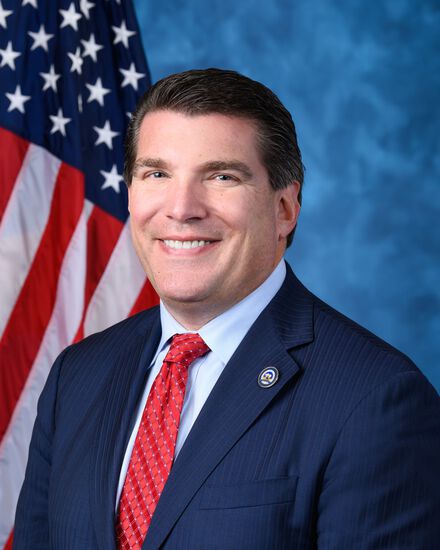
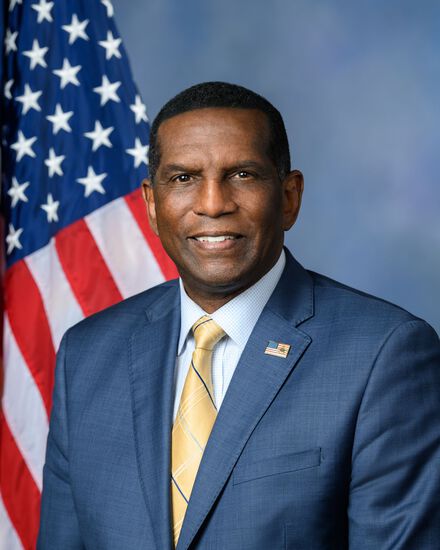
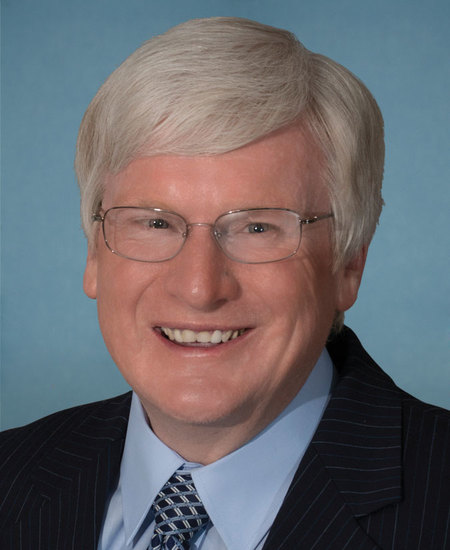
Sponsors