

Made in America Jobs Act of 2026
This bill amends the 1965 Public Works and Economic Development Act to expand how federal grants can be used. It adds two specific purposes: (1) facilitating the relocation of jobs from outside the U.S. to American workers, and (2) supporting growth in the manufacturing sector. Grants for public works, economic development planning, training, and economic adjustment must now include these new objectives. The changes apply to state and local governments receiving these federal funds, directing them to prioritize domestic job relocations and manufacturing expansion. The bill modifies existing grant program rules but does not create new funding.
Bill status
passed
3 of 5 stages cleared
Introduction
Feb 2026
Committee Review
Mar 2026
House Passage
Mar 2026
Senate Passage
President
Introduced Feb 4, 2026
Last action Mar 25, 2026
Maddy AI version diff · 1 comparison
What changed between versions
Introduced in House
→
Engrossed in House
·
2 edits
·
Mar 24, 2026
MINOR
The engrossed version of HR 7342 (Made in America Jobs Act of 2026) removes one of three new grant purposes that was added in the introduced version. Specifically, the provision allowing training and technical assistance grants for 'assessment, marketing, and establishment of business clusters' was dropped. The remaining two new purposes - facilitating relocation of employment from outside the United States and facilitating growth of the manufacturing sector - are retained.
SCOPE
Removed the provision in Section 2(c) that would have allowed training, research, and technical assistance grants to be used for 'assessment, marketing, and establishment of business clusters.' This was one of three new subparagraphs added in the introduced version; only two remain in the engrossed version.
TECHNICAL
The redesignation of existing subparagraph (I) changed from being redesignated as (L) to being redesignated as (K), reflecting the removal of one inserted subparagraph. All other changes are formatting and whitespace only.
Floor votes
How they voted
This bill passed the House by voice vote (no roll call recorded).
Full legislative history
Actions timeline
Total actions
16
Key actions
5
Committee
7
Amendments
3
Mar 25, 2026
Committee
Received in the Senate and Read twice and referred to the Committee on Environment and Public Works.
upper
Mar 24, 2026
Introduced
On motion to suspend the rules and pass the bill, as amended Agreed to by voice vote. (text: CR H2652-2653)
lower
Mar 24, 2026
Lower · Passed
Passed/agreed to in House: On motion to suspend the rules and pass the bill, as amended Agreed to by voice vote.
lower
Mar 24, 2026
Introduced
Mr. Taylor moved to suspend the rules and pass the bill, as amended.
lower
Mar 20, 2026
Lower · Passed
Committee on Financial Services discharged.
lower
Mar 20, 2026
Lower · Passed
Reported (Amended) by the Committee on Transportation and Infrastructure. H. Rept. 119-567, Part I.
lower
Feb 11, 2026
Introduced
Ordered to be Reported (Amended) by Voice Vote.
lower
Feb 11, 2026
Lower · Passed
Committee Consideration and Mark-up Session Held
lower
Feb 11, 2026
Lower · Passed
Subcommittee on Economic Development, Public Buildings, and Emergency Management Discharged
lower
Feb 5, 2026
Committee
Referred to the Subcommittee on Economic Development, Public Buildings, and Emergency Management.
lower
Feb 4, 2026
Committee
Referred to the Committee on Transportation and Infrastructure, and in addition to the Committee on Financial Services, for a period to be subsequently determined by the Speaker, in each case for consideration of such provisions as fall within the jurisdiction of the committee concerned.
lower
Feb 4, 2026
Introduced
Introduced in House
lower
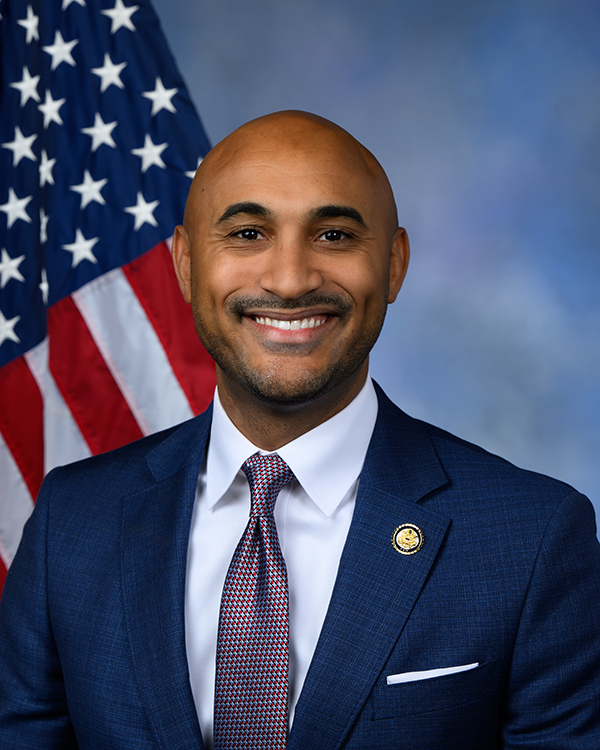
1 primary · 1 co-sponsor
Sponsors

Ask Maddy
·
AI policy assistant
Ask Maddy about HR 7342
Scope: US
Hi! I can help you understand HR 7342. What would you like to know?
Try one of these
i
Maddy answers using official bill text and legislative records. Always verify before sharing.
Sources cited inline