HR 7022 United States House · 119th Congress

Mystic Alerts Act

HR 7022, the Mystic Alerts Act, gives commercial mobile service providers (like phone companies) the option to send emergency alerts via satellite to subscribers. If a provider chooses satellite transmission, it must file this election with the FCC, agree to technical standards, and inform subscribers about the choice. The bill also requires providers to allow subscribers to opt out of receiving these satellite alerts, similar to existing mobile alert opt-out rules. The FCC must establish technical rules for satellite alerting within 12 months of the bill's enactment.
Bill status passed 3 of 5 stages cleared
Introduction
Jan 2026
Committee Review
Apr 2026
House Passage
Apr 2026
Senate Passage
President
Introduced Jan 12, 2026 Last action Apr 21, 2026
Maddy AI version diff · 1 comparison

What changed between versions

Introduced in House Engrossed in House · 8 edits · Apr 20, 2026
MODERATE
The Engrossed version of HR 7022 (Mystic Alerts Act) substantially restructures the bill to narrow its scope to a newly defined class of 'covered service providers' (those with both WARN Act election and satellite voice/data capability), adds a prohibition on charging fees for satellite alerts, extends the final rule deadline from 12 to 18 months, introduces a complex effective-date mechanism that could delay implementation by up to 36 months after publication, and adds a broad liability shield for providers. These changes make the bill more provider-friendly while adding consumer protections around pricing.
DEFINITION

New definition of 'covered service provider' limits the Act's scope to providers that both voluntarily elect WARN Act alerts AND make satellite voice and data communications available to subscribers. This excludes providers without satellite capability from the Act entirely.

SCOPE

Throughout the bill, references to 'subscribers or users' were narrowed to just 'subscribers,' reducing the population of people whose devices must be considered for alert delivery.

REQUIREMENT

New subsection (a)(5) prohibits providers from imposing any separate or additional charge for satellite emergency alert transmission or capability, ensuring consumers cannot be charged extra for this safety feature.

The rulemaking scope was changed from specific 'technical standards, protocols, procedures, interoperability requirements' to the broader but vaguer phrase 'any requirements necessary to facilitate the satellite alerting capability.' New subsection (b)(2) adds that rules must consider satellite and device capabilities and minimize impact on other communications including 9-1-1.

TIMELINE

The deadline for the FCC to issue a final rule was extended from 12 months after enactment to 18 months after enactment, giving regulators more time.

A new effective-date provision (subsection b(4)) sets the rule's effective date as the later of 36 months after Federal Register publication OR 12 months after DHS and FEMA implement supporting standards. This could delay actual implementation by several years beyond the rule's issuance.

The filing deadline for provider elections was tied to the rulemaking process: providers must file within 60 days after the effective date of the final rule, rather than having no specified deadline as in the introduced version.

ENFORCEMENT

A new limitation-of-liability section (subsection c) shields covered service providers and their officers, directors, employees, vendors, and agents from liability for acts or omissions related to satellite alert transmission or failure to transmit, as well as for releasing subscriber information to government agencies and public safety entities. It also states that electing not to transmit by satellite is not itself a basis for liability.

Floor votes

How they voted

This bill passed the House by voice vote (no roll call recorded).
Full legislative history

Actions timeline

Total actions
16
Key actions
5
Committee
7
Amendments
3
Apr 21, 2026
Committee
Received in the Senate and Read twice and referred to the Committee on Commerce, Science, and Transportation.
upper
Apr 20, 2026
Introduced
On motion to suspend the rules and pass the bill, as amended Agreed to by voice vote. (text: CR H2970)
lower
Apr 20, 2026
Lower · Passed
Passed/agreed to in House: On motion to suspend the rules and pass the bill, as amended Agreed to by voice vote. (text: CR H2970)
lower
Apr 20, 2026
Introduced
Mr. Allen moved to suspend the rules and pass the bill, as amended.
lower
Apr 15, 2026
Lower · Passed
Reported (Amended) by the Committee on Energy and Commerce. H. Rept. 119-616.
lower
Mar 25, 2026
Introduced
Ordered to be Reported (Amended) by the Yeas and Nays: 52 - 0.
lower
Mar 25, 2026
Lower · Passed
Committee Consideration and Mark-up Session Held
lower
Jan 15, 2026
Lower · Passed
Forwarded by Subcommittee to Full Committee by Voice Vote.
lower
Jan 15, 2026
Lower · Passed
Subcommittee Consideration and Mark-up Session Held
lower
Jan 12, 2026
Committee
Referred to the Subcommittee on Communications and Technology.
lower
Jan 12, 2026
Committee
Referred to the House Committee on Energy and Commerce.
lower
Jan 12, 2026
Introduced
Introduced in House
lower
1 primary · 4 co-sponsors

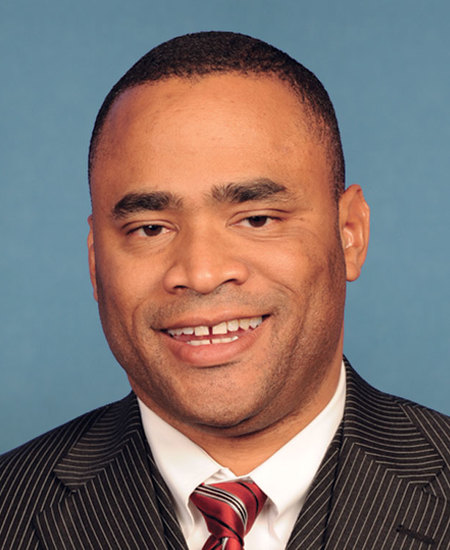
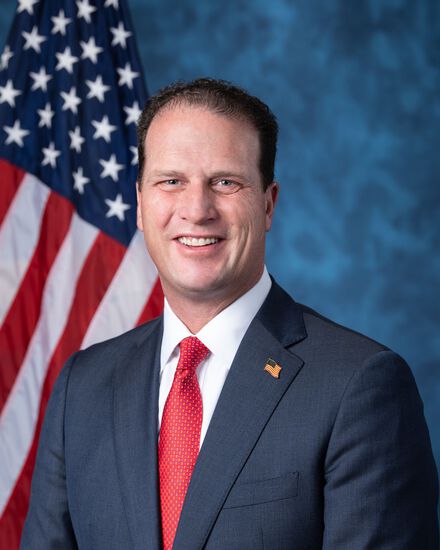
Sponsors