

Failing Bank Acquisition Fairness Act
HR 6556, the Failing Bank Acquisition Fairness Act, modifies rules for merging failing banks to prevent financial instability. It allows regulators to bypass standard concentration limits (which restrict bank size) when merging banks in default or danger of default, but only if they prove the merger is necessary to avoid economic disruption and no "qualified bid" exists from a well-capitalized, well-managed institution. The bill requires regulators to submit detailed justifications to Congress within 30 days for such waivers, including analysis of alternative bids. It also prohibits considering bids that would violate these new rules when calculating the least costly resolution for the Deposit Insurance Fund. This directly affects the FDIC, bank regulators, and financial institutions involved in resolving failing banks.
Bill status
passed
3 of 5 stages cleared
Introduction
Dec 2025
Committee Review
Jul 2026
House Passage
Jul 2026
Senate Passage
President
Introduced Dec 10, 2025
Last action Jul 15, 2026
Maddy AI version diff · 1 comparison
What changed between versions
Introduced in House
→
Engrossed in House
·
3 edits
·
Jul 14, 2026
MINOR
The engrossed version makes two substantive changes to the Failing Bank Acquisition Fairness Act. First, Section 4 was rewritten to change the treatment of bids that would violate concentration limits from a discretionary prohibition (the FDIC 'may not consider' them) to a mandatory exclusion (such bids 'shall not be considered a possible method' under the least-cost framework). Second, a new Section 5 was added reducing the Federal Reserve's discretionary surplus fund by $2 million, effective September 1, 2036. The remaining changes are formatting and a minor grammatical fix.
ENFORCEMENT
Section 4 was rewritten so that bids violating concentration limits are now mandatorily excluded from the FDIC's least-cost analysis as a 'possible method' under section 13(c)(4)(A), rather than merely being something the Corporation 'may not consider.' This makes the exclusion structural and non-discretionary within the statutory framework.
FISCAL
New Section 5 reduces the dollar amount in section 7(a)(3)(A) of the Federal Reserve Act (the discretionary surplus fund) by $2,000,000, effective September 1, 2036.
TECHNICAL
Removed an extra comma in Section 2(a)(1)(B): 'The responsible agency, may' corrected to 'The responsible agency may.'
Floor votes
How they voted
This bill passed the House by voice vote (no roll call recorded).
Full legislative history
Actions timeline
Total actions
14
Key actions
4
Committee
5
Amendments
3
Jul 15, 2026
Committee
Received in the Senate and Read twice and referred to the Committee on Banking, Housing, and Urban Affairs.
upper
Jul 14, 2026
Introduced
On motion to suspend the rules and pass the bill, as amended Agreed to by voice vote. (text: CR H4438-4440)
lower
Jul 14, 2026
Lower · Passed
Passed/agreed to in House: On motion to suspend the rules and pass the bill, as amended Agreed to by voice vote.
lower
Jul 14, 2026
Introduced
Mr. Hill (AR) moved to suspend the rules and pass the bill, as amended.
lower
Feb 2, 2026
Lower · Passed
Reported (Amended) by the Committee on Financial Services. H. Rept. 119-475.
lower
Dec 17, 2025
Introduced
Ordered to be Reported (Amended) by the Yeas and Nays: 51 - 0.
lower
Dec 17, 2025
Lower · Passed
Committee Consideration and Mark-up Session Held
lower
Dec 16, 2025
Lower · Passed
Committee Consideration and Mark-up Session Held
lower
Dec 10, 2025
Committee
Referred to the House Committee on Financial Services.
lower
Dec 10, 2025
Introduced
Introduced in House
lower
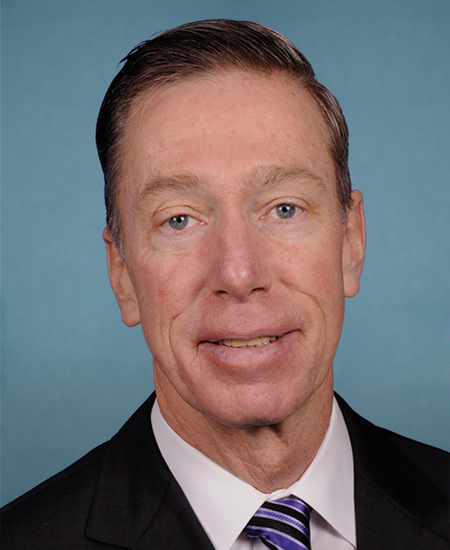
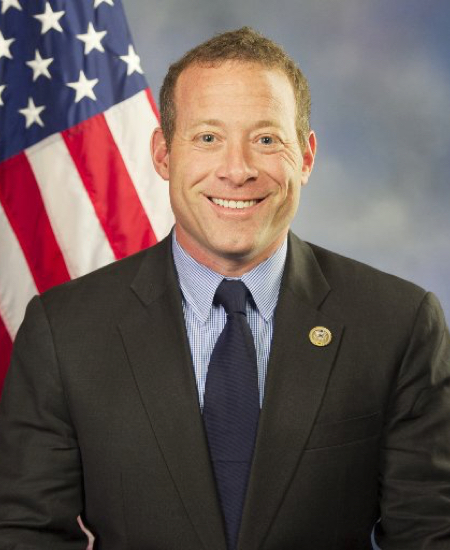
1 primary · 1 co-sponsor
Sponsors
Ask Maddy
·
AI policy assistant
Ask Maddy about HR 6556
Scope: US
Hi! I can help you understand HR 6556. What would you like to know?
Try one of these
i
Maddy answers using official bill text and legislative records. Always verify before sharing.
Sources cited inline