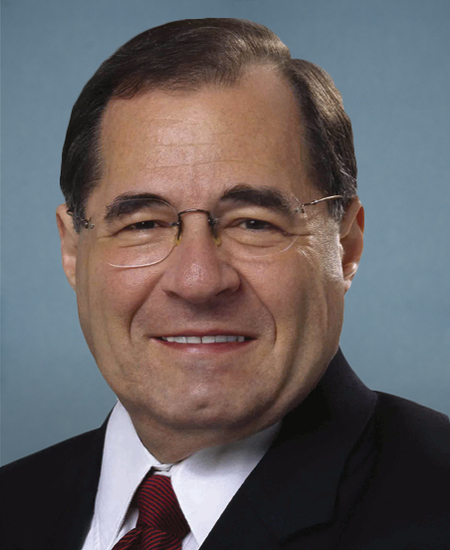
HR 6048 United States House · 119th Congress

NDO Fairness Act of 2025

The NDO Fairness Act modifies federal law to establish a new court order process allowing law enforcement to delay notifying individuals when seeking electronic communications data (like emails or messages) under existing warrants or subpoenas. Courts must issue written findings showing specific, serious risks (such as endangering safety or destroying evidence) and limit delays to 90 days (or up to one year for child exploitation cases), with strict requirements for narrow tailoring. The bill mandates annual reports to Congress tracking usage, including how often delays are granted and whether they affect media or First Amendment activities. After delays expire, individuals can request copies of disclosed information within 180 days, though sensitive materials like child exploitation evidence may be redacted.
Bill status passed 3 of 5 stages cleared
Introduction
Nov 2025
Committee Review
Nov 2025
House Passage
Aug 2026
Senate Passage
President
Introduced Nov 17, 2025 Last action Aug 31, 2026
Maddy AI version diff · 1 comparison

What changed between versions

Introduced in House Engrossed in House · 4 edits · Aug 31, 2026
MODERATE
The engrossed version makes two substantive policy changes to the NDO Fairness Act: it removes a condition requiring the government to notify the court of a material change in circumstances as a prerequisite for the one-year nondisclosure period in child exploitation cases, and it limits the automatic stay on disclosure when a provider challenges an NDO order from an indefinite period to just 72 hours. The remaining changes are cross-reference corrections and formatting.
REQUIREMENT

The condition for the one-year nondisclosure period in child pornography and sexual exploitation of children cases was simplified. The introduced version required the government to notify the court of a material change in circumstances as a condition; the engrossed version removes that requirement, making the one-year period available based solely on the nature of the offense.

ENFORCEMENT

The automatic stay on disclosure when a provider files a challenge to an NDO order was changed from an indefinite stay pending resolution to a fixed 72-hour stay. Additionally, either the provider or the government (not just the government as before) can now request that the court extend or lift the stay.

TECHNICAL

Multiple internal cross-references were corrected from 'paragraph (2)' to 'paragraph (1)' throughout sections 3 through 10, fixing errors in the introduced version's numbering scheme.

The short title was updated to include 'of 2025' for standard legislative naming convention.
Floor votes

How they voted

This bill passed the House by voice vote (no roll call recorded).
Full legislative history

Actions timeline

Total actions
11
Key actions
3
Committee
3
Amendments
3
Aug 31, 2026
Introduced
On motion to suspend the rules and pass the bill, as amended Agreed to by voice vote. (text: CR H5266-5267)
lower
Aug 31, 2026
Lower · Passed
Passed/agreed to in House: On motion to suspend the rules and pass the bill, as amended Agreed to by voice vote.
lower
Aug 31, 2026
Introduced
Mr. Fitzgerald moved to suspend the rules and pass the bill, as amended.
lower
Nov 20, 2025
Introduced
Ordered to be Reported (Amended) by Voice Vote.
lower
Nov 20, 2025
Lower · Passed
Committee Consideration and Mark-up Session Held
lower
Nov 18, 2025
Lower · Passed
Committee Consideration and Mark-up Session Held
lower
Nov 17, 2025
Committee
Referred to the House Committee on the Judiciary.
lower
Nov 17, 2025
Introduced
Introduced in House
lower
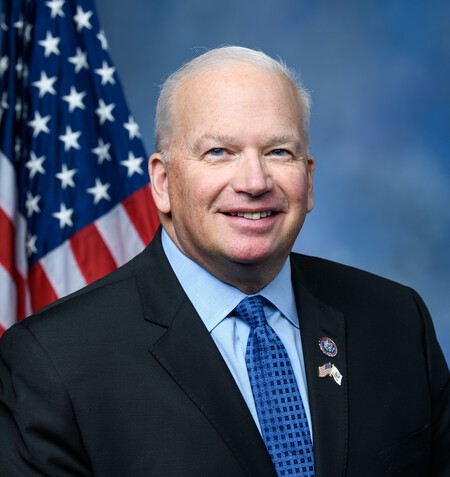
1 primary · 1 co-sponsor

Sponsors