

S 4181 United States Senate · 118th Congress

Federal Emergency Mobilization Accountability (FEMA) Workforce Planning Act

This bill requires the Federal Emergency Management Agency (FEMA) to create and regularly update a detailed workforce plan focused on staffing and skills. Specifically, FEMA must develop a human capital plan every three years, including analysis of current staffing gaps, projected workforce needs (like retirement trends), and specific recruitment/retention strategies for critical roles. The plan must track progress toward goals, detail workforce composition by role and location, and address issues like attrition and diversity efforts. FEMA must submit these plans to Congress, and the Government Accountability Office (GAO) will review them for compliance. The bill directly affects FEMA's internal workforce management and accountability for meeting mission-critical staffing needs.
Tags: Emergency Management
Bill status passed 3 of 5 stages cleared
Introduction
Apr 2024
Committee Review
Dec 2024
Senate Passage
Dec 2024
House Passage
President
Introduced Apr 18, 2024 Last action Dec 18, 2024
Maddy AI version diff · 1 comparison

What changed between versions

Introduced in Senate Engrossed in Senate · 7 edits · Dec 17, 2024
MODERATE
The engrossed version adds three major new requirements to the human capital plan: a comprehensive cost analysis, strategies for increasing cost-efficiency in workforce operations, and a detailed explanation of how staffing goals were determined. It also inserts a new requirement for strategies to address politically motivated discriminatory actions in workforce decisions, and adds a no-new-funds provision that prohibits additional appropriations to carry out the Act.
REQUIREMENT

New paragraph (3) requires a comprehensive analysis of the projected costs associated with implementing the plan.

New paragraph (4) requires strategies and practices to increase cost-efficiency in workforce operations, including reducing overhead costs, improving resource utilization, and avoiding unnecessary expenditures.

New paragraph (5) requires a detailed analysis of how the Agency determined its current overall staffing goals.

New paragraph (7)(E) requires specific strategies for identifying, addressing, preventing, and mitigating discriminatory actions or decisions based on political affiliation in workforce matters.

FISCAL

New subsection (f) states that no additional funds are authorized to be appropriated for carrying out the Act, effectively making it a no-new-funds bill.

DEFINITION

Terminology changed from 'critical skills, critical and emerging' to 'critical and emerging skills' throughout, removing redundancy and standardizing the phrase.

TECHNICAL

Paragraphs renumbered from (3)-(5) to (6)-(8) to accommodate the three new paragraphs inserted before them; cross-references updated accordingly.
Floor votes

How they voted

This bill passed the Senate by voice vote (no roll call recorded).
Full legislative history

Actions timeline

Total actions
12
Key actions
5
Committee
4
Dec 17, 2024
Upper · Passed
Passed Senate with an amendment by Unanimous Consent. (text: CR S7094-7095)
upper
Dec 17, 2024
Upper · Passed
Passed/agreed to in Senate: Passed Senate with an amendment by Unanimous Consent.
upper
Dec 17, 2024
Upper · Passed
The committee substitute as amended agreed to by Unanimous Consent.
upper
Nov 12, 2024
Upper · Passed
Committee on Homeland Security and Governmental Affairs. Reported by Senator Peters with an amendment in the nature of a substitute. With written report No. 118-236.
upper
May 15, 2024
Upper · Passed
Committee on Homeland Security and Governmental Affairs. Ordered to be reported with an amendment in the nature of a substitute favorably.
upper
Apr 18, 2024
Committee
Read twice and referred to the Committee on Homeland Security and Governmental Affairs.
upper
Apr 18, 2024
Introduced
Introduced in Senate
upper
1 primary · 1 co-sponsor

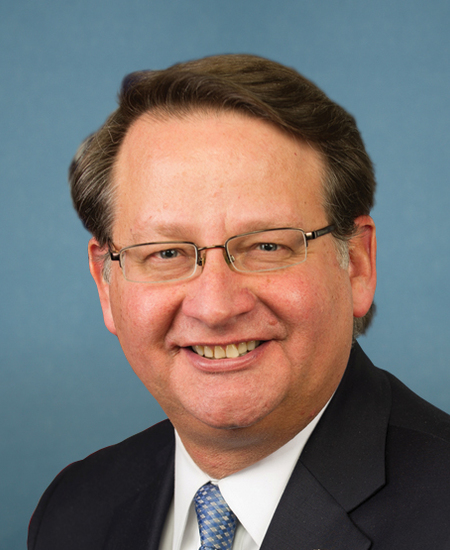
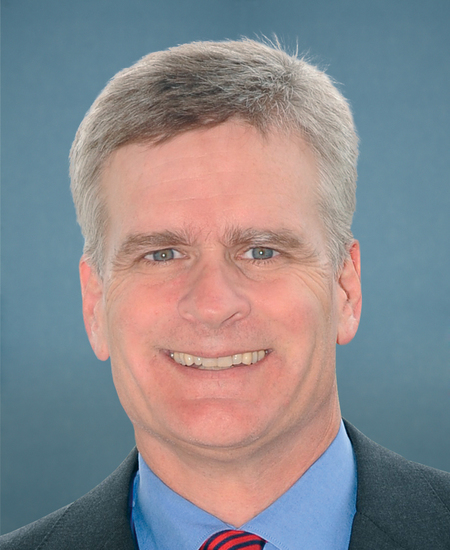
Sponsors