

HR 7188 United States House · 118th Congress

Shandra Eisenga Human Cell and Tissue Product Safety Act

This bill requires the U.S. Department of Health and Human Services to launch a national education campaign about the risks and benefits of human cell and tissue transplants (including infectious disease risks like tuberculosis and sepsis) for both the public and healthcare providers. The campaign must be evidence-based, developed with input from experts like the CDC, and can fund nonprofit organizations to run public awareness activities. It also sets civil penalties of up to $20,000 per violation (or per day for ongoing violations) with a $10 million cap for safety rule breaches by transplant product providers. Additionally, the bill mandates a congressional report within two years on improving safety regulations and a review of donor eligibility guidance within three years.
Bill status passed 3 of 5 stages cleared
Introduction
Feb 2024
Committee Review
Nov 2024
House Passage
Dec 2024
Senate Passage
President
Introduced Feb 1, 2024 Last action Dec 17, 2024
Maddy AI version diff · 1 comparison

What changed between versions

Introduced in House → Engrossed in House · 6 edits · Dec 16, 2024
MODERATE
The Engrossed version of HR 7188 significantly restructured the bill, replacing the broad public awareness campaign with a narrower educational materials provision, narrowing civil penalties to specific regulatory subparts and adding a written notice requirement for continuing violations, giving the Secretary discretion on whether to update donor eligibility guidance, and adding an entirely new section on streamlining regulatory oversight that includes public reporting requirements, stakeholder education, a public docket, and a 2026 report to Congress on modernizing human cell and tissue product regulation.
Scope change
The bill shifted from a focus on public education and enforcement toward regulatory modernization and transparency. The new oversight section adds ongoing reporting obligations, stakeholder engagement mechanisms, and a structured process for reconsidering how human cell and tissue products are regulated, while the civil penalty provision was narrowed to cover only specific subparts of the existing regulations.
SCOPE

The public awareness campaign was drastically scaled back. The original required a national evidence-based education campaign with grants to nonprofits, stakeholder expert input, and multimedia campaigns (TV, radio, social media, etc.). The new version only requires the Secretary to support development and dissemination of educational materials about organ/tissue/eye donation approaches, donor screening test availability, and other relevant aspects of donation.

A new Section 6 on streamlining regulatory oversight was added. It requires FDA to publish Tissue Reference Group information and best practices on its website, publish annual data on registrations, inspections, inquiries, and response times for 4 years, conduct stakeholder education workshops, establish a public docket within 60 days for comments on modernizing HCT/P regulation (including minimal manipulation and homologous use), and submit a report to Congress by September 30, 2026 with recommendations on regulating HCT/Ps considering regulatory burden, scientific developments, access, and public health.

ENFORCEMENT

Civil penalties were narrowed in scope. Originally applied to any violation of section 361 of the PHS Act or all of part 1271 of title 21 CFR. Now applies only to violations of subparts C or D of section 1271. Additionally, per-day penalties for continuing violations now require that the Secretary first provide written notice to the violator before the daily penalty accrues.

REQUIREMENT

The guidance update requirement was made discretionary. Originally the Secretary was required to issue updated donor eligibility guidance within 3 years. Now it says 'if appropriate' - if the Secretary determines updating is not appropriate, they must provide a written explanation to the House Energy and Commerce Committee and Senate HELP Committee.

DEFINITION

The definition of 'human cell and tissue establishment' was removed from the bill. A new definition for 'Tissue Reference Group' (the Tissue Reference Group of FDA) was added in its place.

FISCAL

The grant program allowing the Secretary to award grants to nonprofit organizations for public awareness activities, as well as the provision for multimedia campaigns through contracts or grants, was removed entirely.
Floor votes

How they voted

This bill passed the House by voice vote (no roll call recorded).
Full legislative history

Actions timeline

Total actions
16
Key actions
5
Committee
6
Amendments
3
Dec 16, 2024
Introduced
On motion to suspend the rules and pass the bill, as amended Agreed to by voice vote. (text: CR H7167-7168)
lower
Dec 16, 2024
Lower · Passed
Passed/agreed to in House: On motion to suspend the rules and pass the bill, as amended Agreed to by voice vote. (text: CR H7167-7168)
lower
Dec 16, 2024
Introduced
Mr. Bucshon moved to suspend the rules and pass the bill, as amended.
lower
Nov 22, 2024
Lower · Passed
Reported (Amended) by the Committee on Energy and Commerce. H. Rept. 118-766.
lower
Sep 18, 2024
Introduced
Ordered to be Reported (Amended) by the Yeas and Nays: 40 - 0.
lower
Sep 18, 2024
Lower · Passed
Committee Consideration and Mark-up Session Held
lower
May 16, 2024
Lower · Passed
Forwarded by Subcommittee to Full Committee (Amended) by the Yeas and Nays: 27 - 0.
lower
May 16, 2024
Lower · Passed
Subcommittee Consideration and Mark-up Session Held
lower
Feb 2, 2024
Committee
Referred to the Subcommittee on Health.
lower
Feb 1, 2024
Committee
Referred to the House Committee on Energy and Commerce.
lower
Feb 1, 2024
Introduced
Introduced in House
lower
1 primary · 1 co-sponsor

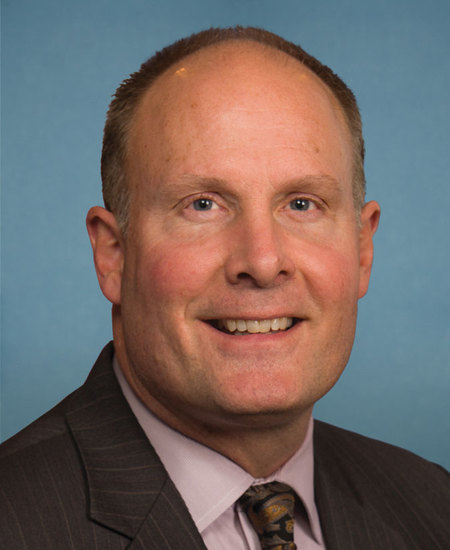
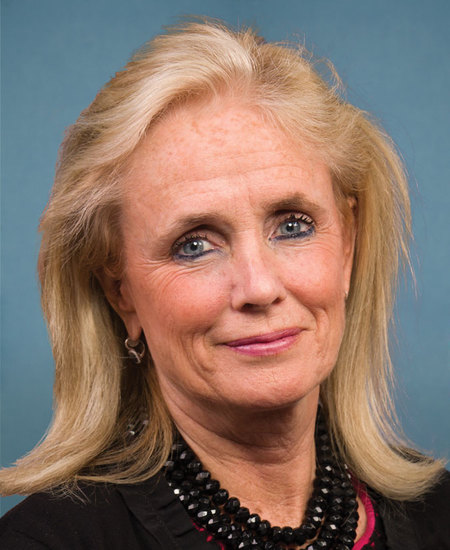
Sponsors