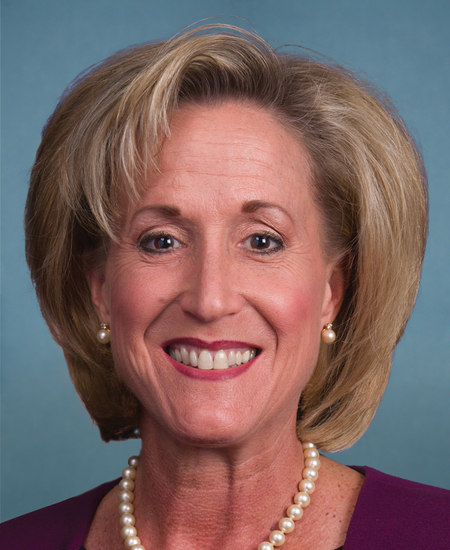
HR 7151 United States House · 118th Congress

Export Control Enforcement and Enhancement Act

HR 7151, the Export Control Enforcement and Enhancement Act, streamlines the process for adding or removing entities from the U.S. Entity List (which restricts exports to foreign entities deemed a national security risk). It requires the End-User Review Committee to vote on proposed changes within 30 days (with limited exceptions for additional information), and mandates a "presumption of denial" for exports to entities on the list or to embargoed countries - meaning exporters must prove their request won’t risk misuse. The bill also clarifies that exceptions to the denial rule require explicit committee approval and requires congressional notification for such exceptions. This directly affects U.S. exporters seeking licenses for controlled items (like technology or equipment) destined for listed entities or embargoed nations.
Bill status passed 3 of 5 stages cleared
Introduction
Jan 2024
Committee Review
Sep 2024
House Passage
Sep 2024
Senate Passage
President
Introduced Jan 30, 2024 Last action Sep 10, 2024
Maddy AI version diff · 1 comparison

What changed between versions

Introduced in House Engrossed in House · 7 edits · Sep 9, 2024
MODERATE
The Engrossed version of HR 7151 significantly restructures how entities are added to the Entity List, shifting from an executive-branch-initiated process (where Cabinet-level secretaries submit proposals through the Secretary of Commerce) to a committee-member-driven process where any End-User Review Committee member can directly propose additions. It also moves the presumption-of-denial licensing policy from a standalone section into the addition criteria itself and replaces the old exception mechanism (requiring unanimous Committee agreement plus clear and convincing evidence) with a simpler majority-vote exception among the members who voted to add the entity.
REQUIREMENT

Proposals for Entity List additions can now be submitted by any member of the End-User Review Committee directly to the Committee, rather than only by the Secretaries of State, Defense, or Energy (or other agency heads) through the Secretary of Commerce. This removes the intermediary step and broadens who can initiate listings.

New explicit criteria for adding an entity: the End-User Review Committee must determine by majority vote that the entity has engaged, is engaged, or is at risk of engaging in activities contrary to U.S. national security or foreign policy interests.

The presumption of denial for exports to Entity List entities is now embedded in the addition process itself (Section 2(4)(B)) rather than being a separate standalone requirement in Section 3. The old Section 3 licensing requirements were removed entirely.

ELIGIBILITY

The exception to the presumption of denial changed substantially. Previously, the Secretary had to concur with ALL Committee members and the recipient had to demonstrate by clear and convincing evidence that items would not be diverted. Now, a majority vote of only the members who voted to add the entity can apply a different licensing policy for all or specific types of items.

TIMELINE

The suspension period for additional information is now capped at 15 days (previously unlimited), and requires concurrence of the Committee member who submitted the proposal rather than the head of the submitting Federal agency.

ENFORCEMENT

New administrative provisions establish that each Committee member has exactly one vote, the chairperson cannot override voting decisions, and the chair can only suspend the 30-day voting period if all members unanimously agree to postpone.

SCOPE

Section 3 was restructured from a substantive section on licensing and presumption of denial requirements into a definitions-only section. The Commerce Control List definition was removed from Section 3 (it had been used in the old licensing requirements that no longer exist there).

Floor votes

How they voted

This bill passed the House by voice vote (no roll call recorded).
Full legislative history

Actions timeline

Total actions
12
Key actions
3
Committee
4
Amendments
3
Sep 10, 2024
Committee
Received in the Senate and Read twice and referred to the Committee on Banking, Housing, and Urban Affairs.
upper
Sep 9, 2024
Introduced
On motion to suspend the rules and pass the bill, as amended Agreed to by voice vote. (text: CR H5083)
lower
Sep 9, 2024
Lower · Passed
Passed/agreed to in House: On motion to suspend the rules and pass the bill, as amended Agreed to by voice vote. (text: CR H5083)
lower
Sep 9, 2024
Introduced
Mrs. Wagner moved to suspend the rules and pass the bill, as amended.
lower
Jul 11, 2024
Introduced
Ordered to be Reported (Amended) by Voice Vote.
lower
Jul 11, 2024
Lower · Passed
Committee Consideration and Mark-up Session Held
lower
Jul 10, 2024
Lower · Passed
Committee Consideration and Mark-up Session Held
lower
Jan 30, 2024
Committee
Referred to the House Committee on Foreign Affairs.
lower
Jan 30, 2024
Introduced
Introduced in House
lower
1 primary · 2 co-sponsors

Sponsors