

Maddy summaryThis House resolution formally recognizes suicide as a serious public health problem in the United States and expresses support for designating September 2026 as National Suicide Prevention Month and September 10, 2026, as World Suicide Prevention Day. The bill cites data from the CDC, SAMHSA, and the VA to highlight that suicide is a leading cause of death among young people, veterans, and during the postpartum period, while also noting the significant economic costs associated with it. It declares suicide prevention a national priority and emphasizes that mental health is as important as physical health. The resolution supports the development of strategies to improve access to quality mental health, substance abuse, and suicide prevention services for all communities.
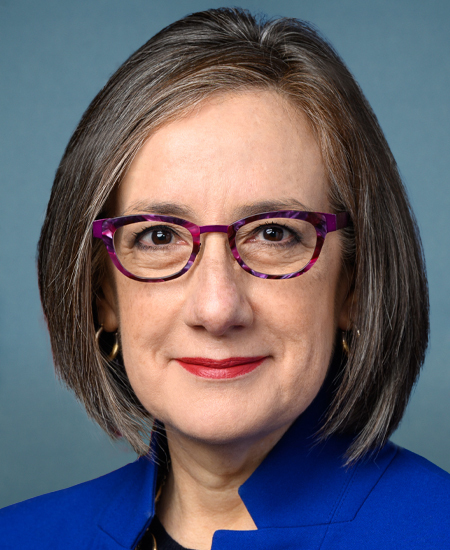
Rep. Andrea Salinas
Sponsored bills
Maddy summaryThis House resolution marks the 25th anniversary of the September 11, 2001 terrorist attacks by formally honoring the memory of the nearly 3,000 victims and recognizing the sacrifices made by first responders, military personnel, and the passengers of United Airlines Flight 93. The bill acknowledges the ongoing health challenges faced by survivors and responders, highlighting the role of the World Trade Center Health Program in providing long-term medical support. It also credits charitable organizations and community groups that have continued to assist victims' families and veterans over the past two decades. Finally, the resolution urges the American public to observe the anniversary with ceremonies and reaffirms Congress's commitment to remembering the events and lessons of that day.
Maddy summaryThe 9-8-8 Implementation Act of 2026 expands federal funding and mandates insurance coverage for behavioral health crisis services, directly affecting individuals experiencing mental health or substance use emergencies as well as the providers who serve them. The bill authorizes grants to upgrade local lifeline call centers, build new crisis stabilization facilities, and train a larger workforce of behavioral health professionals. It requires Medicare, Medicaid, private group health plans, TRICARE, and other federal insurance programs to cover crisis response services with financial terms no more restrictive than standard medical care. Additionally, the legislation establishes a federal panel to develop training protocols for 9-1-1 dispatchers to better connect callers to appropriate crisis care rather than law enforcement responses.
Maddy summaryThe Taxpayer Relief from Big Oil Act would eliminate existing royalty relief programs for oil and gas companies operating in the Gulf of Mexico and Alaska, requiring these firms to pay full royalties on their production. The bill also mandates that the Department of Interior establish standardized transportation cost deductions for calculating royalties on federal lands and offshore waters, capping these deductions at either 30 percent of the total value of production or actual reasonable costs, whichever is lower. Additionally, the legislation requires the Bureau of Land Management and the Bureau of Ocean Energy Management to submit annual reports to Congress detailing the number of royalty relief applications processed, approved wells, and estimated impacts on government revenue.
Maddy summaryThe Penalties for Polluters Act significantly increases the maximum civil penalties for violations of federal mineral leasing, oil and gas royalty management, and offshore lands laws to better account for inflation. These higher fines apply to companies and individuals who fail to comply with regulations regarding natural resource extraction and environmental protection. The bill also establishes a Penalty Revenue Reinvestment Fund that collects the additional revenue generated by these increased penalties. Half of this fund is distributed to states, Indian tribes, and local governments harmed by violations, while the other half supports federal agencies in enforcing compliance and safety standards.
Maddy summaryThe GUARD Act of 2026 requires U.S. national security agencies to evaluate whether humanoid or quadruped robots made by foreign entities pose a risk to national security. If a robot is determined to be unsafe or comes from a country of concern, the Federal Communications Commission will add it to a banned list, preventing its use in U.S. communications networks. The law mandates that agencies report their findings to Congress within specific timeframes, ensuring transparency about these security assessments. Importantly, the rule does not apply to allies such as NATO members or designated Major Non-NATO Allies.
Maddy summaryThis House resolution formally recognizes August as Chicano/Chicana Heritage Month to celebrate the historical contributions of Mexican Americans to the United States. It highlights specific achievements in science, civil rights, labor, and arts, while acknowledging ongoing challenges such as discrimination and underrepresentation in public and private sectors. The bill encourages the observation of this month through appropriate events and activities but does not create new laws or funding mechanisms.
National Law Enforcement Officers Remembrance, Support and Community Outreach Act. [ sic ] This bill temporarily directs the Department of the Interior to award a grant to the National Law Enforcement Officers Memorial Fund for the expenses associated with operating and enhancing the community outreach, public education, and officer safety and wellness programs of the National Law Enforcement Museum.
Maddy summaryThe Lifeline for First Responders Act establishes a new federal grant program administered by the National Highway Traffic Safety Administration to support the mental health and well-being of first responders. The program provides funding to eligible entities, including fire services, emergency medical services agencies, and dispatch centers, at all levels of government. Grant funds may be used for evidence-based stress reduction, suicide prevention, confidential counseling, family support services, and outreach programs aimed at reducing stigma. The bill authorizes $7.5 million in appropriations annually for fiscal years 2028 through 2032 to carry out these initiatives.
Maddy summaryThe Data Center Community Reinvestment Act of 2026 imposes a federal excise tax of one cent per kilowatt-hour on electricity consumed by data centers with a peak power load exceeding one megawatt. The revenue generated from this tax is divided equally among five specific government funds: the Land and Water Conservation Fund, the Housing Trust Fund, the Hazardous Substance Superfund, the Highway Trust Fund, and a newly established Energy Technology Trust Fund. This legislation directly affects large-scale data center operators by adding a cost to their energy usage, while directing the collected funds toward infrastructure, environmental cleanup, housing, and energy technology initiatives.