

Maddy summaryHB 1718 requires Tennessee's Department of Correction to study the cost of providing body cameras to correctional officers and prison contractor employees working at Trousdale Turner Correctional Facility. The study must cover facilities meeting specific criteria: located on public property housing inmates under contractor care, in a county with a 2020 census population between 11,600 and 11,616. The department must submit findings to legislative committee chairs by July 1, 2026, detailing the financial impact of this equipment. This bill does not mandate body cameras but mandates a cost analysis for a specific facility.

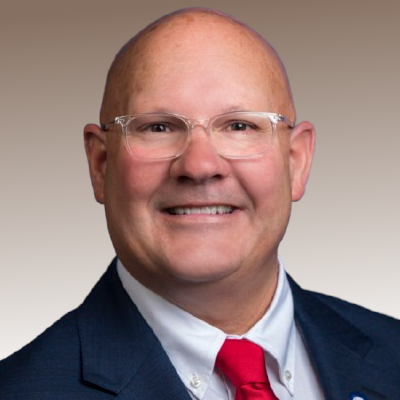
Rep. Fred Atchley
Sponsored bills
Maddy summaryHB 2215 allows Tennessee's wildlife agency to partner with local police to enforce wildlife laws, specifically for public safety issues like bear feeding. It directly affects residents and visitors in areas where officials have posted notices prohibiting bear feeding. The bill creates a Class B misdemeanor for intentionally feeding black bears in these designated zones, punishable by a $250 fine, while unintentional feeding due to unsecured food results in a warning for first offenses and a $250 fine for repeat violations. Key mechanisms include requiring detailed reporting by police when enforcing these rules and limiting enforcement agreements to specific wildlife safety concerns. The law takes effect July 1, 2026.
Maddy summaryThis bill officially names a bridge in Pigeon Forge the "Loveday Family Bridge" to honor Jere Loveday, a local farmer who collaborated with officials on road planning. The resolution recognizes his decades of work on his land near Middle Creek and his contributions to the community. It serves as a formal commemoration of his life and character rather than establishing new laws or policies.
Maddy summaryThis bill honors Judge Rex Henry Ogle on the occasion of his retirement from the Fourth Judicial District bench after thirty-six years of service. It formally recognizes his extensive contributions to the legal system, including his leadership roles in domestic violence prevention and foster care commissions, as well as his community involvement. The resolution expresses gratitude for his career and extends best wishes for his future, serving as a commemorative tribute rather than establishing new laws or policies.
Maddy summaryThis bill is a House Joint Resolution that formally honors country music icon Dolly Parton by recognizing her contributions to Tennessee and the world. It acknowledges that a segment of U.S. Highway 411 and U.S. Highway 25W in Sevier and Cocke counties has already been named the Dolly Parton Parkway. The resolution serves as a tribute to her philanthropy, cultural impact, and legacy rather than creating new laws or policies.
Maddy summaryHB 1644 prohibits vape shop retailers from selling nitrous oxide (commonly known as "laughing gas") at retail. It directly affects vape shops and their distributors, wholesalers, or importers who sell nitrous oxide as part of their business. The bill imposes escalating civil fines: $500 for a first violation, up to $1,000 for a second violation (with a 30-day license suspension), and up to $1,500 for a third violation (with license revocation), plus additional penalties for manufacturers. The law takes effect July 1, 2026.
Maddy summaryHB 1871 amends Tennessee law to require that anyone convicted of second-degree murder (specifically for knowingly killing another) must receive a minimum sentence of Range II, the second-lowest sentencing range for criminal offenses. This directly affects individuals convicted of second-degree murder under the specified circumstances, setting a floor for their sentencing. The bill changes sentencing guidelines by prohibiting judges from imposing a sentence below Range II for these convictions, though sentences could still fall within Range III if deemed appropriate. The law applies to offenses committed on or after July 1, 2026.
Maddy summaryHB 590 would increase the frequency of required communication between non-custodial parents and their children in Tennessee. Specifically, it amends state law to allow parents without physical custody to have unimpeded phone or video calls with their child three times per week (up from twice weekly), provided both parties have access to the necessary technology. This change directly affects parents and children involved in custody arrangements under Tennessee Code Annotated Titles 36 and 37. The bill focuses solely on adjusting communication frequency without altering other custody or support provisions.
Maddy summaryHB 1542 would make it a crime to use a phone, computer, or other telecommunication device to fraudulently take someone else's property without their consent, with the intent to deprive them of it. This law directly affects individuals attempting to commit fraud through digital means, such as scams involving online transactions or phone calls. The bill specifies that telecommunication fraud would be punished as theft under existing Tennessee law, but with a minimum penalty of a Class E felony (the least severe felony classification). It amends Tennessee's theft statutes to explicitly cover this type of fraud, effective July 1, 2026, if passed. The bill does not create new penalties but ensures these digital frauds are treated as serious theft offenses.
Maddy summaryThis bill is a House Joint Resolution that formally recognizes and honors Rose Gainey, the Clinical Director of Safe Harbor Child Advocacy Center, on the occasion of her retirement. The resolution acknowledges her nearly fifteen years of service providing trauma-focused therapy to children and adolescents who have experienced abuse in Sevier, Cocke, Grainger, and Jefferson counties. During her tenure, Gainey oversaw the growth of the therapy program from one to seven team members and conducted more than 23,000 therapy sessions, helping survivors heal and find hope. The resolution expresses appreciation for her dedication to the community and extends best wishes for her retirement.