

Maddy summaryHB 1264 eliminates the Agricultural Land Assessment Implementation and Oversight Advisory Task Force, which previously reviewed recommendations about agricultural land valuation methods. Instead, the Department of Revenue will directly receive recommendations from entities like South Dakota State University and provide an annual report to the legislature's Taxation Committees. The bill does not change the existing valuation process, which uses eight years of crop and livestock data (discarding the highest and lowest years and averaging the remaining six) to determine agricultural land values. This affects the Department of Revenue and entities submitting recommendations, but leaves assessment methods unchanged.

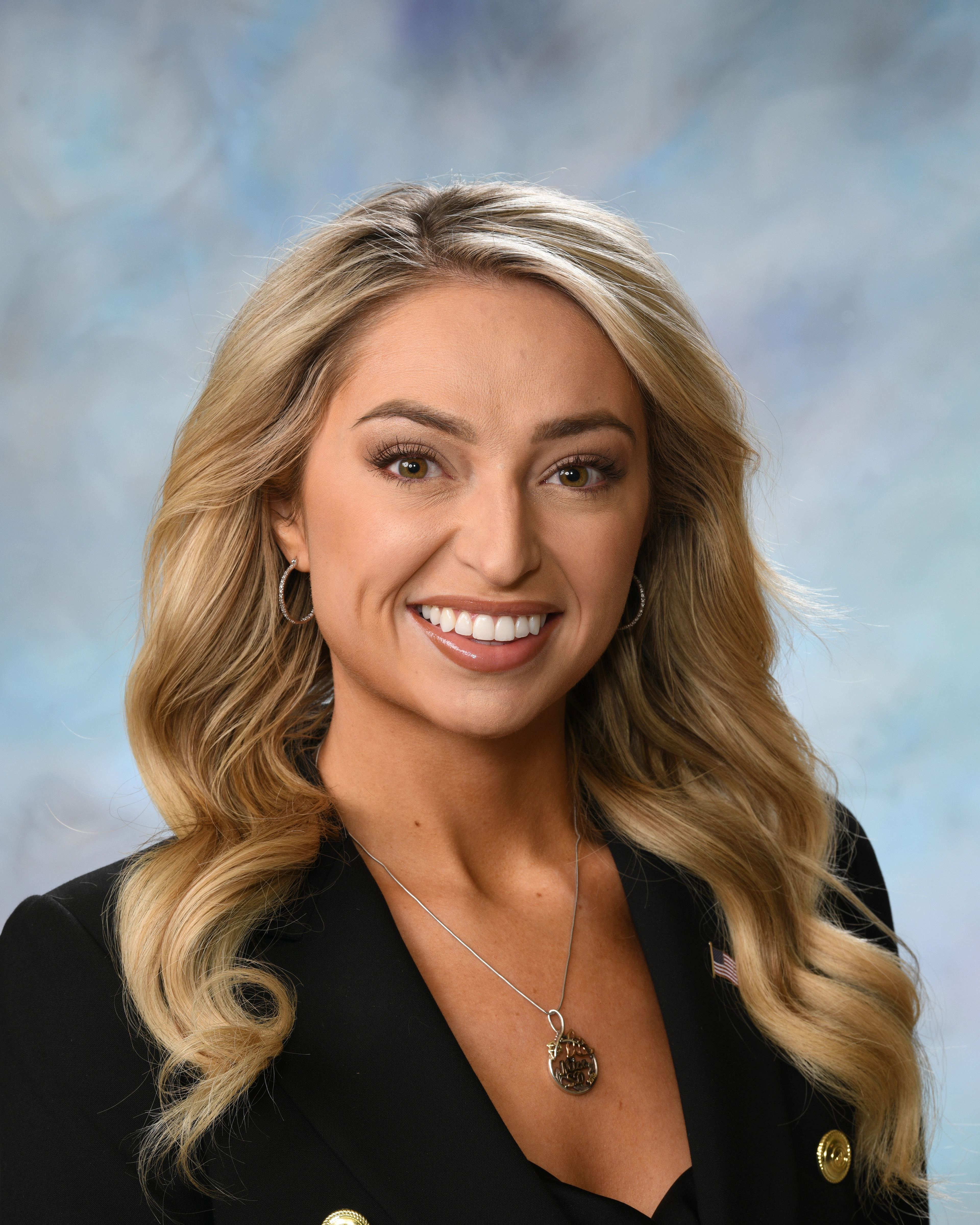
Sen. Amber Hulse
Sponsored bills
Maddy summaryThis bill exempts victims of human trafficking or domestic abuse from specific clemency notice requirements when applying for clemency. It directly affects individuals in these victim categories who are seeking clemency by removing a requirement to receive certain notices. To qualify, applicants must submit their own affidavit confirming victim status (citing specific statutes) plus affidavits from two professionals (e.g., law enforcement, mental health providers, or victim advocates) who verify the claim. The professionals must represent different agencies to ensure independent verification.
Maddy summaryHB 1298 prohibits publishing a judicial or law enforcement officer's home address, date of birth, or social security number online without their consent if done with the intent to cause fear for the officer's safety or their immediate family's safety. The law applies only to electronic publications and targets individuals who share such sensitive personal information under these specific conditions. Violating this prohibition is classified as a Class 6 felony. The bill directly protects officers by restricting the online dissemination of their personal details that could enable threats or harassment.
Maddy summarySB 231 creates a Water Infrastructure Development Fund to support rural water projects in South Dakota. The fund, initially seeded with $3 million from the state general fund (Section 2), provides grants (up to 10% of project costs) and loans (up to 50% of project costs) managed by the Board of Water and Natural Resources (Section 1). It directly affects rural communities needing upgrades to water infrastructure, such as new systems or repairs. The bill declares an emergency to allow immediate implementation upon passage (Section 3).
Maddy summarySB 132 amends South Dakota law (§ 1-46A-5) to clarify the composition and consultation process of the South Dakota Veterans Council. The bill specifies that the Council must include one representative each from eight designated veterans organizations, such as the American Legion, Disabled American Veterans, and Veterans of Foreign Wars, plus a representative from Vietnam Veterans of America chapters 1054 and 959. It requires the Department of Veterans Affairs to consult with the Council quarterly on veteran-related matters and mandates the Council provide recommendations on budgets, legislation, policies, and programs affecting veterans and their dependents. This bill directly affects the Council's membership structure and its formal role in advising state veterans' affairs.
Maddy summarySouth Dakota Senate Bill 137 creates a legal process to quickly dismiss lawsuits that target free speech on public issues. It allows people sued for protected expression - like criticizing government actions or speaking on matters of public concern - to file a special motion asking a court to dismiss the case within 60 days. If filed, the court must pause all other legal proceedings related to the lawsuit until the motion is decided, with limited discovery allowed only for specific evidence. The bill does not apply to lawsuits by or against government entities enforcing public safety laws or to routine commercial disputes.
Maddy summarySB 107 amends South Dakota law to explicitly include licensed and registered child care programs within the definition of "community safety zone." This means the 500-foot buffer zone around such facilities - including day care centers, group family day care homes, and registered family day care - will now be covered by the same restrictions on sex offender residence as schools, shelters, and public parks. The bill clarifies that all licensed and registered child care programs are explicitly included under existing definitions without adding new facilities to the list. This change directly affects sex offenders required to register under South Dakota law, as they are barred from residing within these zones without specific exemptions.
Maddy summaryHB 1095 modifies South Dakota's rules for submitting nominating petitions for municipal elections. It clarifies that petitions sent by registered mail are considered filed if received by March 31 (for June elections) or August 31 (for November elections), rather than requiring mailing by those dates. The bill also updates withdrawal deadlines, requiring candidates to withdraw by 5 p.m. local time on the first Thursday after the petition filing deadline. These changes directly affect candidates seeking local municipal office who must file petitions. The bill does not alter petition content requirements or signature rules.
Maddy summarySB 154 clarifies how garages and related structures on a property qualify for owner-occupied tax classification in South Dakota. It amends tax code sections to explicitly include all garages and ancillary structures used with a primary residence as part of the owner-occupied dwelling, rather than requiring separate classification. The bill also updates rules for contractors, limiting them to classifying no more than four newly built homes as owner-occupied and restricting this classification to no more than two consecutive years. These changes aim to reduce confusion in property tax assessments for both homeowners and developers. The bill directly affects property owners with multiple structures and contractors building single-family homes for sale.
Maddy summaryHB 1194 requires South Dakota's Cosmetology Commission to allow out-of-state cosmetology, nail technology, and esthetics license applicants to count relevant work experience toward their education hour requirements. Specifically, the bill mandates that two hours of work experience equals one hour of required education, but only for experience gained after the applicant's initial license, and work experience cannot cover more than half the total education hours needed. Applicants must provide documentation of their work history, and the commission may require a safety course if the experience is over five years old or deny a license if competence is in question. This change directly affects individuals seeking to transfer licenses from other states or countries who have practical experience but lack full in-state education hours.