

0 co-sponsors
Total votes
3,795
all sessions
Attendance
99%
19 missed
Near the chamber average
With party
75%
of cast votes
Lower than 89% of chamber peers
Bipartisan score
14%
some cross-party votes
Higher than 91% of chamber peers
Sponsored
786
bills & resolutions
Higher than 94% of chamber peers
Committees
7
assignments
786 bills and resolutions
Sponsored bills
Total
786
Primary
786
Co-sponsor
0
This page
786
matching current filters
revise a provision related to service of process for boards of county commissioners.
Maddy summaryHB 1320 clarifies how legal documents must be served on county boards of commissioners in South Dakota. It revises two sections of state law: first, specifying that appeals against board decisions must be served on board members or affected parties (§7-8-29), and second, updating service rules to state that delivering documents to any county administrator, auditor, commissioner, executive, or registered agent of the county or board constitutes valid service (§15-6-4(d)(2)(i)). This change directly affects individuals filing appeals against county board decisions and legal professionals handling such cases. The bill streamlines the service process for county government entities without altering substantive legal rights.
Signed into law Mar 30, 2026
0 co-sponsors
require education in prenatal human growth and development.
Maddy summaryThis bill requires South Dakota public schools to teach prenatal human growth and development in health or science classes using specific materials. It mandates that schools use resources recommended by the state Board of Education, including at least three minutes of high-definition ultrasound videos showing organ development or computer-generated animations of prenatal growth from fertilization to birth. The law prohibits using any materials from entities that perform, promote, or refer to abortion services. This directly affects K-12 public school curricula in South Dakota, altering required health/science content.
Signed into law Mar 30, 2026
0 co-sponsors
amend provisions pertaining to the publication of the statewide voter registration file.
Maddy summarySB 214 requires South Dakota's Secretary of State to post weekly updates to the statewide voter registration file every Monday by 11:59 p.m. Central Time. It also establishes a rolling five-year historical archive of this data on the Secretary's website, making it freely available. The bill prohibits public access to sensitive personal information like Social Security numbers, driver license numbers, and birth dates within these files. Additionally, it bans selling or using voter data for commercial purposes (with exceptions for political polling), while allowing fees for paper copies of voter lists.
Signed into law Mar 30, 2026
0 co-sponsors
revise the season in which a nonprofit organization may host a special pheasant hunt for disabled veterans and Purple Heart recipients.
Maddy summarySB 131 clarifies the timing for nonprofit-hosted pheasant hunts benefiting disabled veterans and Purple Heart recipients. It revises the law to specify these hunts may occur "before or during the regular pheasant season" (removing confusing prior language about the "private shooting preserve season"). The bill directly affects nonprofit organizations hosting these events and the disabled veterans/Purple Heart recipients participating. Key provisions maintain that no fees may be charged to participants and require the Game, Fish and Parks Commission to create rules for administering these hunts. The bill does not change eligibility criteria for participants or alter the no-fee requirement.
Signed into law Mar 30, 2026
0 co-sponsors
revise requirements pertaining to the minimum age for marriage.
Maddy summarySB 159 raises South Dakota's minimum marriage age to 18, eliminating the previous exception allowing 16- to 17-year-olds to marry with parental consent. It requires court approval for any minor under 18 to marry, mandating an in-person hearing where the court assesses the minor's safety, maturity, and whether the marriage is voluntary, with written findings required. Alternatively, two parents' notarized consent (instead of one parent's) may be submitted, but the marriage license cannot be issued until 30 days after judicial approval. The bill also increases penalties for officiants who solemnize marriages without proper consent, classifying violations as a Class 1 misdemeanor. This directly affects minors aged 16-17 seeking marriage, their parents/guardians, and marriage officiants.
Signed into law Mar 30, 2026
0 co-sponsors
define man and woman throughout the state.
Maddy summaryHB 1184 defines "female" in South Dakota law as "an individual who naturally has, had, will have, or would have, but for a congenital anomaly or intentional or unintentional disruption, the reproductive system that produces, transports, and utilizes eggs for fertilization." This definition applies to all state laws, regulations, and programs. The bill prohibits state funding for any program, service, or policy that contradicts this definition of "female." It directly affects state agencies, healthcare providers, schools, and any entity receiving state funds that use gender-related terms.
Signed into law Mar 30, 2026
0 co-sponsors
make an appropriation for grants to support the purchase of personal protective equipment by volunteer fire departments and to declare an emergency.
Maddy summaryThis bill appropriates $5 million from the general fund to provide grants for volunteer fire departments in South Dakota to purchase safety gear (like helmets and suits) for their firefighters. It specifically targets departments where at least 70% of firefighters volunteer, prioritizing those with the greatest equipment needs. The Department of Public Safety will distribute funds based on application timing and need, with unspent funds reverting by June 2030. An emergency declaration allows the funding to take effect immediately upon passage.
Budget & TaxesSupports Budget & TaxesAppropriates $5M from general fund for essential fire department PPE grants, advancing public safety funding through direct budget allocation.
Labor & EmploymentSupports Labor & EmploymentFunds PPE for volunteer firefighters, directly improving workplace safety standards for a specific labor group under Labor & Employment policies.
Signed into law Mar 30, 2026
0 co-sponsors
authorize counties and municipalities to issue a license for a cigar bar.
Maddy summaryHB 1215 allows South Dakota counties and municipalities to issue licenses for cigar bars, directly affecting business owners seeking to operate such establishments and local governments responsible for licensing. The bill requires cigar bars to have a humidor, be fully enclosed with proper ventilation, generate at least 10% of income from cigar sales, and prohibit all tobacco products except cigars. Local governments must hold public hearings for applications and report annual cigar sales income to the Department of Revenue, while also posting clear smoking restrictions. The law explicitly excludes these venues from other liquor license limits and prohibits transferring licenses to new owners.
Signed into law Mar 30, 2026
0 co-sponsors
authorize the salvage of certain bird eggs.
Maddy summaryHB 1265 creates an "Avian Special Purpose Salvage Permit" allowing landowners or farmers to legally salvage, incubate, and release eggs from non-migratory bird nests accidentally destroyed during normal agricultural or lawful activities. The permit, valid annually until December 31, requires a $10 fee and authorizes three specific actions: salvaging eggs, incubating them, and banding/releasing the birds at an appropriate developmental stage. The South Dakota Game, Fish and Parks Commission will establish rules for release criteria, documentation, and the permit process. This bill directly affects landowners whose operations unintentionally disturb non-migratory bird nests, providing a legal pathway to salvage eggs instead of facing misdemeanor charges under existing law.
Signed into law Mar 12, 2026
0 co-sponsors
Ask Maddy
·
AI policy assistant
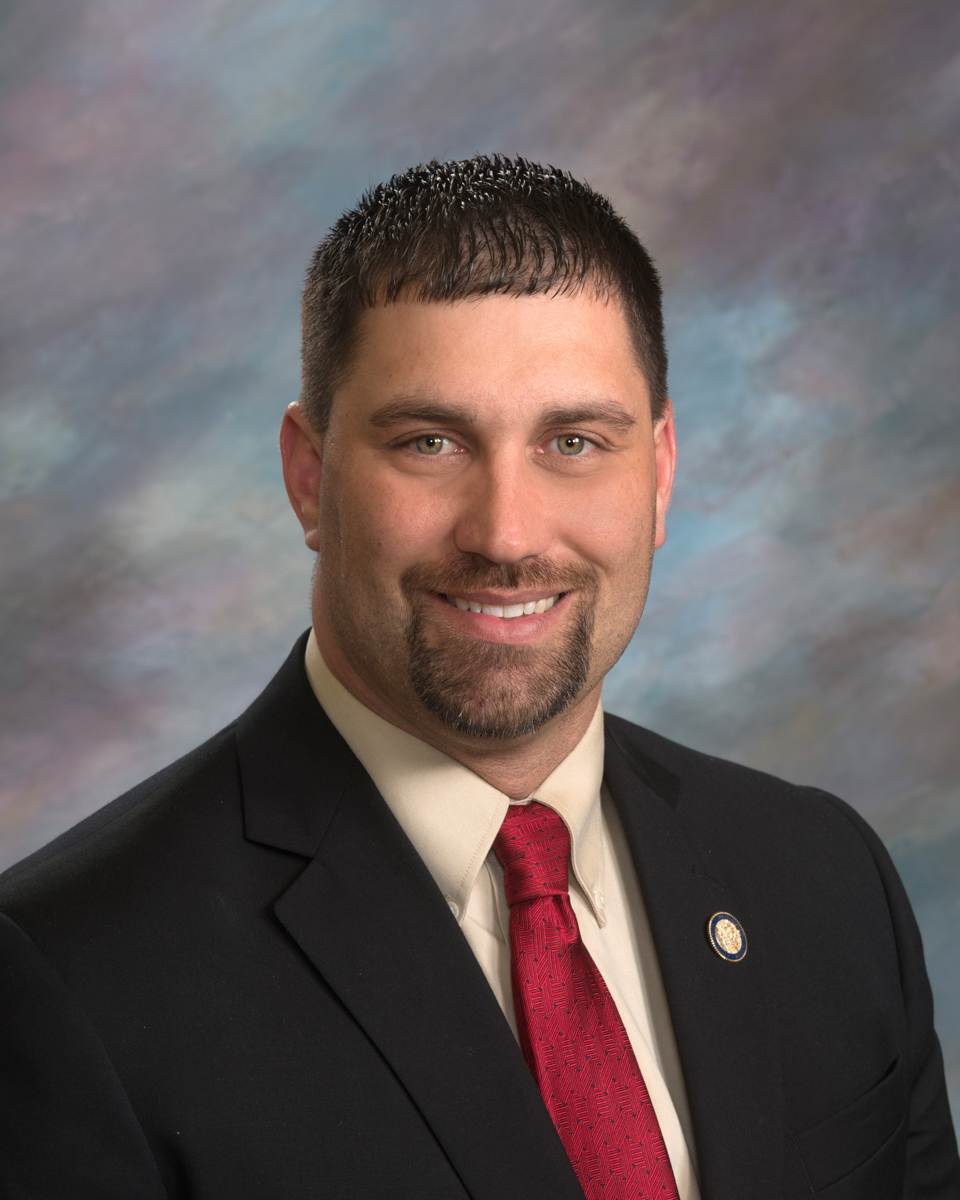
Ask Maddy about Tom Pischke
Scope: south-dakota
Hi! I can help you understand Tom Pischke's legislative record. What would you like to know?
Try one of these
i
Maddy answers using official bill text and legislative records. Always verify before sharing.
Sources cited inline