

Maddy summaryHB 1264 eliminates the Agricultural Land Assessment Implementation and Oversight Advisory Task Force, which previously reviewed recommendations about agricultural land valuation methods. Instead, the Department of Revenue will directly receive recommendations from entities like South Dakota State University and provide an annual report to the legislature's Taxation Committees. The bill does not change the existing valuation process, which uses eight years of crop and livestock data (discarding the highest and lowest years and averaging the remaining six) to determine agricultural land values. This affects the Department of Revenue and entities submitting recommendations, but leaves assessment methods unchanged.

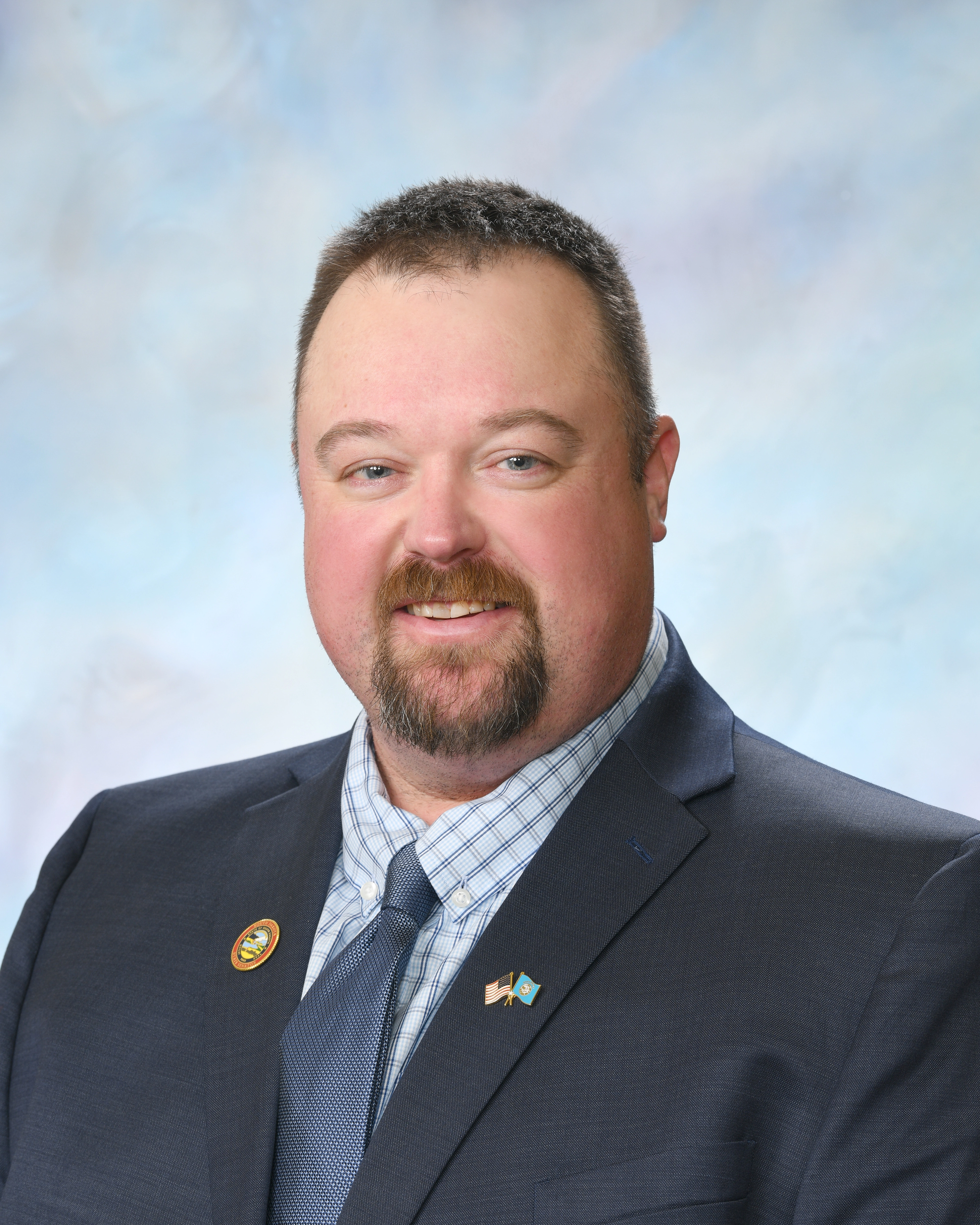
Sen. Mark Lapka
Sponsored bills
Maddy summarySB 135 requires data center operators to pay all electricity costs associated with their facilities, preventing utilities from raising residential rates to cover these expenses (Section 3). It also prohibits tax exemptions for data centers (Section 5) and ensures local governments retain authority to regulate data center development (Section 4). The bill mandates data centers to report projected water usage to local providers and the Board of Water Management before operation, with annual reports on actual consumption (Sections 6-7), ensuring water allocation prioritizes residential and essential services. This directly affects data center operators, utilities, and South Dakota residents by limiting cost-shifting and protecting local resource management.
Maddy summarySB 88 clarifies the process for entities seeking to examine private property for public projects (like utility lines) without the owner's permission. It requires such entities to provide 30 days' written notice detailing the property area, timing, and purpose, and pay for any damage caused - $500 upfront for common carrier projects. Property owners can challenge the examination in court within 30 days of receiving notice. The bill applies only to projects needing a siting permit (e.g., utilities), not state entities, and defines "examination" as a minimally invasive inspection causing minor soil disturbance.
Maddy summarySB 124 bans the manufacture, sale, and distribution of products containing cell-cultured protein in South Dakota from July 1, 2026, through June 30, 2036. It directly affects food businesses, restaurants, and retailers selling such products, defining "cell-cultured protein" as any human food product grown from animal cells outside a live animal (excluding fermented foods, pharmaceuticals, and similar non-meat products). Violations are classified as Class 2 misdemeanors, with the state department authorized to inspect food establishments, issue stop-sale orders, and potentially suspend business licenses upon conviction. The law creates a 10-year temporary prohibition without specifying broader regulatory changes beyond this ban.
Maddy summarySJR 508 proposes amending South Dakota's constitution to remove the lieutenant governor's role as presiding officer of the Senate. If approved by voters, the lieutenant governor would no longer serve as Senate president (currently outlined in Article IV, Section 5), though they would retain other duties delegated by the governor. The bill also repeals a related constitutional provision (Article XVI, Section 6) regarding the lieutenant governor's role in gubernatorial impeachment trials. This change would require voters to approve the constitutional amendment at the next general election. The amendment directly affects the lieutenant governor's official duties and Senate procedural rules.
Maddy summaryThis bill proposes a constitutional amendment that would prohibit South Dakota governments from using eminent domain to transfer private property to private companies or non-governmental entities solely for economic development or increased tax revenue. It would require any property transfer to serve a clear public purpose, such as infrastructure or public services, rather than benefiting private interests. The amendment would apply to all state and local government actions involving property takings and must be approved by voters at the next general election. If adopted, it would change how governments can acquire property for development projects.
Maddy summarySB 225 directs that 4% of the interest earnings from South Dakota's unclaimed property trust fund (without touching the principal) be distributed annually to school districts starting in fiscal year 2026. The funds will be apportioned to school districts based on their student enrollment, following the existing method used for other school funding. This adds a new source of revenue for school districts through the trust fund's interest, calculated using the fund's market value as of December 31 each year. The bill modifies existing statutes to implement this distribution, ensuring the funds are added to the general fund before being allocated to schools under current apportionment rules.
Maddy summarySB 199 creates a Property Tax Relief Fund in the state treasury to help reduce property taxes for homeowners and businesses. The fund is funded by transferring 25% of the annual increase in the state's general fund revenue each August into the account, starting in 2026. Local governments (political subdivisions) can use these funds to lower property tax levies on real property within their jurisdictions. The Department of Revenue administers the fund, and deposits automatically adjust based on state revenue changes each year. This provides a structured, ongoing mechanism for property tax relief tied to state budget growth.
Maddy summaryHB 1076 revises restrictions on where sex offenders can live near community safety zones (areas near schools, parks, or shelters). It adds two new exceptions allowing offenders to reside there: if they established their home before July 1, 2024, or if the school/park was built after they moved in. The bill expands existing exceptions for offenders in prison, halfway houses, homeless shelters, or healthcare facilities. Violations remain felonies, with repeat offenses carrying harsher penalties. The bill also declares an emergency to take immediate effect.
Maddy summaryHB 1064 allows South Dakota livestock producers to sell meat they raised and processed directly to end consumers in the state, pending federal legalization of such sales. The bill requires meat to be raised, slaughtered, and processed entirely within South Dakota, sold only to final consumers (not resold), and labeled with a warning that it’s uninspected and cannot be redistributed. It becomes effective only after the attorney general certifies that federal law permits such sales, either through new federal legislation or a court ruling declaring the current federal prohibition unconstitutional. This bill does not change current federal restrictions but prepares South Dakota for future direct-to-consumer sales once federal barriers are lifted.