

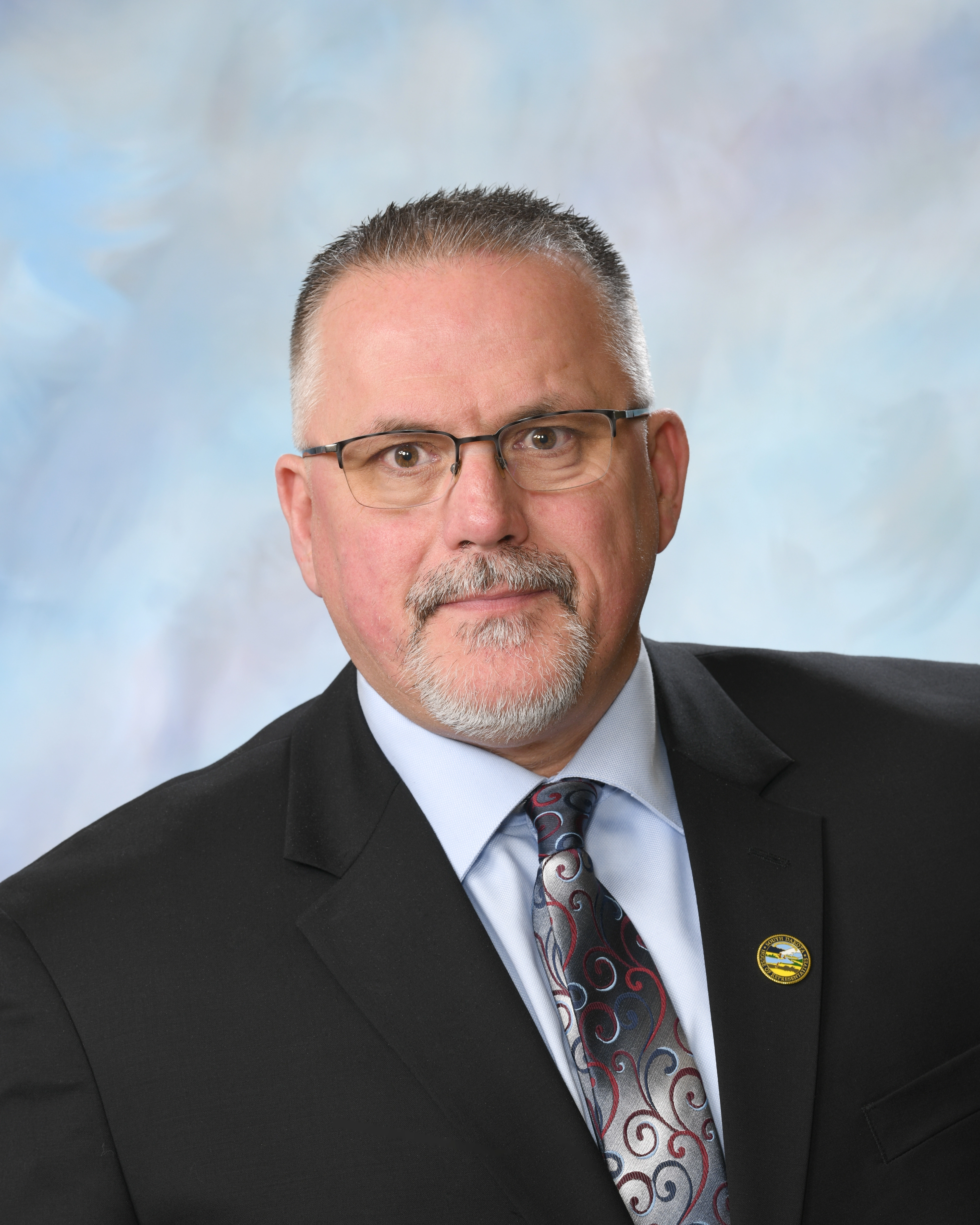
Photo of Tim Walburg
R South Dakota House · District 8

Rep. Tim Walburg

Compare
Total votes
836
all sessions
Attendance
98%
13 missed
Near the chamber average
With party
88%
of cast votes
Higher than 82% of chamber peers
Bipartisan score
8%
crosses aisle rarely
Lower than 86% of chamber peers
Sponsored
79
bills & resolutions
Near the chamber average
Committees
2
assignments
79 bills and resolutions

Sponsored bills

Total
79
Primary
79
Co-sponsor
0
This page
79
matching current filters
Primary HB 1300
Signed into law · South Dakota House · Lead sponsor
except victims of human trafficking or domestic abuse from certain clemency notice requirements.

Maddy summaryThis bill exempts victims of human trafficking or domestic abuse from specific clemency notice requirements when applying for clemency. It directly affects individuals in these victim categories who are seeking clemency by removing a requirement to receive certain notices. To qualify, applicants must submit their own affidavit confirming victim status (citing specific statutes) plus affidavits from two professionals (e.g., law enforcement, mental health providers, or victim advocates) who verify the claim. The professionals must represent different agencies to ensure independent verification.

Signed into law Mar 30, 2026 0 co-sponsors
Primary HB 1066
Signed into law · South Dakota House · Lead sponsor
revise a provision related to theft by a contractor, subcontractor, or supplier.

Maddy summaryHB 1066 revises South Dakota's theft statute to clarify that contractors, subcontractors, or suppliers do not commit theft by withholding payment proceeds until work is completed and approved. The bill amends Section 44-9-13 to explicitly state that holding funds pending final work approval is not a violation of the theft law. This directly affects construction industry professionals who handle project payments and must pay for labor or materials before using funds. The key change removes ambiguity about when withholding payment constitutes theft, specifically excluding legitimate holds for completed work. The amendment maintains existing penalties for actual theft but clarifies the legal boundary for payment management.

Signed into law Mar 30, 2026 0 co-sponsors
Primary SB 89
Signed into law · South Dakota Senate · Lead sponsor
create a task force to study the provision of emergency medical services as an essential service and the funding thereof.

Maddy summarySB 89 requires all South Dakota counties and municipalities to ensure a minimum level of emergency medical services (including response times, staffing, and treatment protocols) are available within their boundaries for prehospital care. It directs the state health department to create rules defining these minimum standards, covering aspects like ambulance response and required personnel. The bill also establishes a legislative task force to study funding mechanisms for these services and report recommendations by November 2026. The law would take effect on July 1, 2028, impacting local governments responsible for emergency medical service provision.

Signed into law Mar 30, 2026 0 co-sponsors
Primary HB 1082
Signed into law · South Dakota House · Lead sponsor
establish parameters for the reimbursement of school districts that provide free or reduced-price meals to students.

Maddy summaryHB 1082 requires South Dakota school districts to provide free or reduced-price meals to eligible students without charging them, as defined by federal programs (National School Lunch Program and School Breakfast Program) starting January 1, 2026. The bill mandates that the South Dakota Department of Education reimburse school districts for costs incurred on these meals, after subtracting any federal reimbursement received. This directly affects school districts serving students qualifying for federal meal programs and ensures state funding covers the gap between federal support and actual meal costs. The law amends Section 13-35-2 of South Dakota law to clarify these reimbursement parameters.

Signed into law Mar 30, 2026 0 co-sponsors
Primary SB 237
Signed into law · South Dakota Senate · Lead sponsor
require that counties provide written notice to township supervisors of conditional use applications and appeals.

Maddy summarySB 237 requires developers seeking conditional use permits for projects that would significantly strain public infrastructure or rights-of-way to send certified mail notice to county or municipal authorities at least 45 days before applying. Authorities must then schedule a public hearing within 30 days to determine if a "haul road agreement" (a contract for using public roads to transport heavy materials) or other conditions are needed. Within 14 days after the hearing, authorities must provide a written decision to the applicant about required agreements or conditions. This bill directly affects developers, counties, and municipalities by adding procedural steps to review infrastructure impacts before granting permits.

Signed into law Mar 12, 2026 0 co-sponsors
Primary SB 240
Signed into law · South Dakota Senate · Lead sponsor
make an appropriation for county rural access infrastructure and to declare an emergency.

Maddy summarySB 240 appropriates $5 million from South Dakota's general fund to create a rural access infrastructure fund, directly affecting all counties by providing funding for infrastructure improvements on township and county secondary roads. Funds are distributed to counties based on their proportion of small structures (like bridges or culverts) on these roads relative to the statewide total, calculated using data reported to the Department of Transportation. The bill requires the Department of Revenue to distribute no more than one-third of the funds annually across fiscal years 2026-2028, with unspent funds reverting by June 2031. It declares an emergency to expedite implementation, focusing solely on the concrete funding mechanism and distribution rules without advocating for outcomes.

Signed into law Mar 12, 2026 0 co-sponsors
Primary SB 98
Signed into law · South Dakota Senate · Lead sponsor
prevent virtual currency kiosk fraud.

Maddy summarySB 98 requires operators of virtual currency kiosks in South Dakota to obtain a license under existing financial regulations (Chapter 51A-17). It mandates detailed reporting to the state, including transaction volumes, user complaints, refund requests, and suspicious activity. The bill also requires kiosk operators to provide users with receipts containing transaction details, exchange rates, virtual currency addresses, and refund policies. These provisions directly affect kiosk operators (licensees) and users engaging in virtual currency transactions at these locations. The law aims to increase transparency and accountability in virtual currency kiosk operations.

Signed into law Mar 12, 2026 0 co-sponsors
Primary HB 1092
Signed into law · South Dakota House · Lead sponsor
update provisions pertaining to open records.

Maddy summaryHB 1092 updates South Dakota's open records law by clarifying which government records can be kept private. It exempts specific categories, including student personal information (except directory details), medical records (excluding birth/death records), trade secrets, attorney work product, law enforcement investigation details, property appraisal records, and security plans for buildings or critical infrastructure. The bill explicitly states it does not change existing laws regarding birth/death records or certain law enforcement privileges. This affects public entities like schools, hospitals, police departments, and government agencies that handle these exempt records.

Signed into law Mar 12, 2026 0 co-sponsors
Primary SB 36
Signed into law · South Dakota Senate · Lead sponsor
authorize certain utilities to establish wildfire mitigation plans and associated liability limitations for wildfire damages.

Maddy summarySB 36 requires electric utilities and wholesale electricity generators in South Dakota to develop and submit wildfire mitigation plans to either the Public Utilities Commission or their local governing body (like a city council). These plans must include specific strategies for risk assessment, infrastructure inspections, vegetation management, and community outreach to reduce wildfire risks. Utilities must also submit annual compliance reports by April 1st each year, with filing fees of $500 for initial plans and $250 for reports. The bill establishes a standardized process for these plans and reports but does not specify liability protections beyond the plan requirements.

Signed into law Mar 12, 2026 0 co-sponsors
Primary HB 1062
Signed into law · South Dakota House · Lead sponsor
revise a provision related to aggravated assault.

Maddy summaryHB 1062 is a technical amendment to South Dakota's aggravated assault statute (§ 22-18-1.1). It renumbers existing subsections and removes references to provisions previously deleted by law (specifically removing references to subsections (3), (6), and (7) as deleted by prior legislation). The bill does not change the actual legal definition or penalties for aggravated assault, which remains a Class 3 felony for causing serious injury under specified circumstances. This is purely a procedural update to correct the statutory numbering and eliminate outdated references in the law.

Signed into law Mar 9, 2026 0 co-sponsors
Showing 1 to 10 of 79 bills
1 2 3 8 Next