

In committee Sep 16, 2026
1 co-sponsor
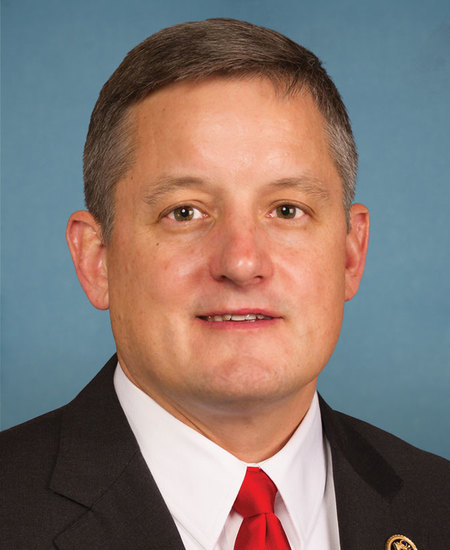
Rep. Bruce Westerman
Total votes
2,837
all sessions
Attendance
99%
23 missed
Higher than 85% of chamber peers
With party
96%
of cast votes
Near the chamber average
Bipartisan score
2%
crosses aisle rarely
Near the chamber average
Sponsored
552
bills & resolutions
Lower than 93% of chamber peers
Committees
5
assignments
552 bills and resolutions
Sponsored bills
Total
552
Primary
47
Co-sponsor
505
This page
552
matching current filters
Save Our Sequoias Act
Save Our Sequoias Act This bill provides for the conservation of giant sequoia trees ( Sequoiadendron giganteum ) in California. Specifically, it provides statutory authority for the Giant Sequoia Lands Coalition and outlines the coalition's duties. The coalition must submit a Giant Sequoia Health and Resiliency Assessment and annually update it. The information from the assessment must be made available so the information can be integrated into certain other plans. The coalition must also create and maintain a website that contains the assessment, educational materials, searchable information about individual giant sequoia groves, and a searchable database to track the status and costs of reforestation and rehabilitation activities. In addition, the bill declares an emergency on certain public lands and allows officials to carry out protection plans during the emergency to respond to the threat of wildfires, insects, and drought. The emergency expires after seven years. The Department of the Interior must develop and implement a Giant Sequoia Reforestation and Rehabilitation Strategy. Finally, the bill establishes a variety of programs and funds to support the conservation of giant sequoias.
Passed Sep 16, 2026
1 co-sponsor
AM Radio for Every Vehicle Act of 2025
Maddy summaryThis bill requires all new passenger vehicles manufactured for sale in the U.S. to include AM radio as standard equipment (not an optional add-on) by 2027-2028, depending on manufacturer size. It mandates that AM radio receivers must be easily accessible to drivers and allows compliance through digital AM broadcast technology. During a transition period, manufacturers must clearly label vehicles without AM radio but cannot charge extra for this feature. The bill also mandates a GAO study on AM radio's role in emergency alerts and includes a 10-year sunset provision for the rule. It preempts state laws regarding AM radio access in vehicles.
Passed Sep 16, 2026
1 co-sponsor
Crossett Experimental Forest Act of 2026
Maddy summaryThe Crossett Experimental Forest Act of 2026 transfers ownership of the Crossett Experimental Forest in Arkansas from the federal government to the state of Arkansas. The transfer is contingent on the state submitting a written request within 180 days and covering all administrative costs associated with the deed. Upon receiving the land, the state must designate it as the Crossett State Forest and maintain its historic mission of supporting research, education, and demonstration activities in coordination with local universities. If the state fails to manage or use the forest according to these requirements, the federal government retains the right to reclaim ownership after a 180-day correction period.
In committee Sep 15, 2026
0 co-sponsors
Supporting the designation of the week of September 14 through September 18, 2026, as "National Clean Energy Week".
Maddy summaryThis House resolution supports designating the week of September 14 through September 18, 2026, as National Clean Energy Week to highlight the growth of zero- and low-emission energy sources. The bill cites a Department of Energy report stating that the U.S. energy sector employed approximately 8.5 million people at the end of 2024 and emphasizes that clean energy jobs are local and cannot be outsourced. It encourages federal, state, and private entities to invest in affordable clean technologies and specifically applauds the work of Department of Energy National Laboratories across multiple states.
EnergySupports EnergyThe bill designates National Clean Energy Week to highlight zero-emission sources and encourages investment in affordable clean technologies.
EnvironmentSupports EnvironmentBill designates National Clean Energy Week to promote zero-emission energy sources and encourage investment in clean technology.
Labor & EmploymentSupports Labor & EmploymentBill highlights clean energy employment growth and encourages investment in sectors that create local jobs, indirectly supporting labor standards.
In committee Sep 14, 2026
1 co-sponsor
Wildfire Reduction Market Expansion Act of 2026
Maddy summaryThe Wildfire Reduction Market Expansion Act of 2026 updates the Clean Air Act to broaden the definition of renewable biomass eligible for carbon credits. It specifically allows materials from forest management, such as slash, storm debris, and wood residuals, to be counted as renewable fuel if they come from sustainably managed lands or public forests designated for fuel reduction. The bill also includes vegetation cleared from defensible space around buildings and from wildfire risk reduction projects in the wildland-urban interface. By clarifying these categories and establishing certification requirements, the legislation aims to increase the supply of biomass available for generating renewable energy credits.
EnergySupports EnergyBill expands renewable biomass eligibility for carbon credits using sustainably managed forest materials, directly advancing renewable energy and clean energy infrastructure.
EnvironmentSupports EnvironmentBill expands renewable biomass definitions to include wildfire reduction materials, promoting carbon credits and forest management to reduce emissions and protect natural resources.
In committee Jul 22, 2026
1 co-sponsor
Pharmacists Fight Back [in Federal Employee Health Benefit Plans Act]
Maddy summaryThis bill requires pharmacy benefits managers (PBMs) administering prescription drug benefits for federal employee health plans to reimburse pharmacies at specific rates, including the national average drug cost plus a small percentage or $50, whichever is lower. It prohibits PBMs from favoring their own pharmacies, restricting patient choice, or reducing pharmacy payments after claims are processed. The bill establishes $10,000 civil penalties for violations, with debarment from federal health plans after 10 penalties in 10 years. This directly affects PBMs, in-network pharmacies, and federal health benefit plans covering millions of federal employees and their families. The law aims to ensure fair reimbursement practices and maintain pharmacy choice under the Federal Employees Health Benefits Program.
HealthcareSupports HealthcareMandates fair pharmacy reimbursement rates in federal health plans, prohibits PBMs from restricting patient choice or favoring own pharmacies, and protects pharmacy access - directly strengthening patient access to medications.
Labor & EmploymentSupports Labor & EmploymentProtects pharmacy workers' compensation by mandating fair reimbursement rates from PBMs in federal health plans, preventing payment reductions that would impact earnings.
In committee Jul 22, 2026
1 co-sponsor
Heat Workforce Standards Act of 2025
Maddy summaryHR 6213, the Heat Workforce Standards Act of 2025, prohibits the U.S. Department of Labor from finalizing, implementing, or enforcing OSHA's proposed "Heat Injury and Illness Prevention" standard (published August 30, 2024). This bill directly blocks the specific regulatory proposal targeting heat safety in both outdoor and indoor work settings. It does not create new requirements or affect workers; it solely prevents the implementation of the existing OSHA proposal. The bill is procedural, focusing on halting a regulatory action rather than establishing new policy.
EnvironmentOpposes EnvironmentBill blocks OSHA heat safety regulations, weakening environmental and worker protection standards related to heat exposure and pollution control.
HealthcareOpposes HealthcareBlocks OSHA's heat safety standard, preventing implementation of workplace health protections for heat-related illness prevention.
Labor & EmploymentOpposes Labor & EmploymentBlocks OSHA heat safety standard, preventing implementation of workplace safety protections for workers.
In committee Jul 21, 2026
1 co-sponsor
Facial Recognition to Protect Children Act
Maddy summaryThis bill requires wagering and prediction market platforms to use facial recognition technology to verify that all users are over 18 years old before allowing them to place bets or orders. To protect user privacy, the law mandates that these platforms collect only the data strictly necessary for age verification and must delete any such data once it is no longer needed. The Federal Trade Commission is given the authority to enforce these age verification rules and can issue penalties for violations. Additionally, the legislation establishes a new Office of the Retail Advocate and an Advisory Council within the Commodity Futures Trading Commission to better protect individual investors and oversee the regulation of event contracts.
In committee Jul 15, 2026
1 co-sponsor
Essential Caregivers Act of 2026
Maddy summaryThe Essential Caregivers Act of 2026 requires nursing homes, long-term care hospitals, rehabilitation facilities, and intermediate care facilities to allow two chosen family members or friends to visit residents during times when regular visitation is suspended. These essential caregivers must agree to follow the facility's existing safety and infection control rules, which are no more restrictive than those applied to staff. While facilities can limit access for the first seven days of a suspension or deny entry if a caregiver shows symptoms of a serious infectious disease, they cannot block visits for end-of-life care. Additionally, the bill mandates that complaints about denied access to essential caregivers be investigated and resolved within three days.
In committee Jul 15, 2026
1 co-sponsor
Ask Maddy
·
AI policy assistant
Ask Maddy about Bruce Westerman
Scope: south-carolina
Hi! I can help you understand Bruce Westerman's legislative record. What would you like to know?
Try one of these
i
Maddy answers using official bill text and legislative records. Always verify before sharing.
Sources cited inline