

Maddy summaryPennsylvania House Bill 2743 amends the Public School Code to establish specific rules for when school terms can begin and how daily sessions are structured. The bill prohibits schools from starting the term before the day after Labor Day or on the same day as a local agricultural fair, though exceptions are available with state approval for emergencies like natural disasters or major construction projects. It also sets a default daily schedule of 9:00 AM to 4:00 PM with designated breaks and requires that professional staff receive at least thirty minutes for lunch without supervisory duties. Existing contracts between school entities and employees that dictate school calendars remain in effect despite these new statutory requirements.
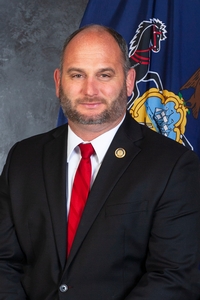
Rep. Eric Davanzo
Sponsored bills
Maddy summaryHB 513 establishes Pennsylvania's official State Plane Coordinate System, standardizing how geographic locations are mapped and described across the state. It defines two layers: a statewide zone for broad government datasets and smaller regional zones for engineering or surveying projects, both based on the National Spatial Reference System. The bill requires all land descriptions, surveys, and maps using this system to specify the coordinate system, zone name, and geodetic datum source. It repeals Pennsylvania’s 1937 coordinate law to align with updated national standards, directly affecting surveyors, government agencies, and land developers who create or use official geographic documents.
Maddy summaryHB 1849 requires public colleges and school districts to explicitly designate all sports activities as "male," "female," or "coed." It directly affects students, athletes, and school administrators by mandating this classification for all team sports. The bill creates legal claims for individuals who suffer harm due to a school's designation of a sport as male, female, or coed. This changes how schools categorize sports and provides a new legal pathway for those impacted by the designation.
Maddy summaryThis bill updates Pennsylvania laws to create new funding accounts and establish taxes on aviation fuels, including traditional jet fuel and emerging alternatives like hydrogen and electricity. It directs specific annual amounts from the Multimodal Fund to the Aviation Restricted Account and sets escalating budget caps for department activities related to aviation programs. The legislation also defines key terms such as alternative aviation fuel and grants the Department of Transportation authority to adopt zoning regulations for airports while addressing issues like abandoned aircraft. Additionally, the bill imposes new taxes on aviation fuels, outlines how distributors must report these taxes, and specifies how the collected revenue will be used and refunded.
Maddy summaryThis House Resolution honors the life of Pennsylvania State Police Corporal Timothy J. O'Connor, Jr., who died in the line of duty in March 2026, and extends condolences to his family. The document details his 15-year career, numerous awards, and community service, while formally recognizing his sacrifice as the 105th state police officer to die in service. It directs that a copy of the resolution be presented to his wife, Casey O'Connor, as a gesture of respect and support.
Maddy summaryHB 2173 updates Pennsylvania's Medical Practice Act of 1985 by adding new definitions and licensing requirements for medical imaging professionals. It specifically creates licensing categories for roles like medical imaging professionals, radiation therapists, radiologist assistants, and trainees, defining their scope of practice (including modalities such as MRI, CT scans, ultrasound, and nuclear medicine). The bill removes outdated provisions about radiologic procedures and education requirements while establishing certification standards through recognized medical imaging certification organizations. This directly affects healthcare workers performing imaging procedures, requiring them to obtain board licenses based on their certified modalities. The changes clarify professional responsibilities and ensure consistent training standards for these healthcare roles.
Maddy summaryThis resolution designates April 18, 2025, as "Lineworker Appreciation Day" in Pennsylvania. It symbolically recognizes Pennsylvania's electrical lineworkers for their critical role in maintaining the state's power grid, without creating new laws or affecting regulations. The resolution honors their work in ensuring reliable electricity delivery, acknowledging their safety-focused efforts in hazardous conditions.
Maddy summaryHB 2371 modifies Pennsylvania's tax code to temporarily exempt mobile telecommunications services from sales and gross receipts taxes for six months starting in 2026. The bill requires providers to report these services separately and mandates that the tax savings be passed directly to consumers through lower bills, with penalties for non-compliance. Additionally, the legislation ensures that a specific transfer of funds from the Alternative Fuels Incentive Act remains consistent with the previous fiscal year.
Maddy summaryThis bill modifies Pennsylvania's gross receipts tax rules for electric, waterpower, and hydro-electric utilities. It establishes a six-month tax holiday where these companies pay no gross receipts tax, starting in July 2026. The legislation requires utilities to pass the savings from this holiday directly to consumers as a reduction in their bills, with penalties for non-compliance. Additionally, the bill mandates that money transferred from the Alternative Fuels Incentive Act for the 2026-2027 fiscal year must match or exceed the amount transferred in the previous year.
Maddy summaryThis bill amends Pennsylvania's Professional Nursing Law to update the legal definitions and scope of practice for certified registered nurse anesthetists (CRNAs). It allows CRNAs to perform anesthesia services under the overall direction of a physician, podiatrist, or dentist who is present and available onsite during the procedure. The legislation grants CRNAs expanded authority to prescribe and administer certain medications, order and interpret diagnostic tests, and manage patient care throughout the anesthesia process, including preoperative preparation, induction, maintenance, and post-anesthesia care. These changes formalize the professional responsibilities of CRNAs within the state's nursing regulatory framework without altering the requirement for collaborative oversight by licensed medical professionals.