

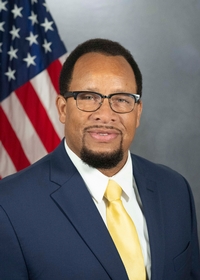
Maddy summaryThis Pennsylvania House Resolution formally honors the memory of Andrew James Carn, a former state representative from Philadelphia County who passed away in July 2026. The text details his legislative service from 1982 to 2000, highlighting his work on neighborhood revitalization, youth development, and economic opportunities for African-American entrepreneurs. It also recognizes his post-legislative roles as a videographer and community leader. The resolution directs that a copy of the document be sent to Mr. Carn's family as a gesture of condolence and appreciation for his public service.

Sponsored bills
Maddy summaryPennsylvania House Bill 2724 modifies state vehicle laws to exempt motorized pedalcycles from the mandatory requirement of a certificate of title. The bill allows owners to voluntarily request a title for these vehicles if they choose, but it is not required for legal ownership. To register a motorized pedalcycle without a title, the Department of Transportation may require a bill of sale that includes the vehicle identification number instead. These changes take effect 60 days after the act is signed into law.
Maddy summaryThis bill authorizes the Pennsylvania Department of General Services to transfer a specific parcel of land and buildings in Millersville to Student Lodging, Inc., a nonprofit organization, for a nominal fee of $1. The property, formerly known as the Witmer Infirmary, includes approximately 0.31 acres with existing structures, and the transfer requires approval from the Governor. The legislation includes conditions that prohibit the use of the land for licensed facilities and allows the state to retain certain easements or add restrictions as it sees fit. If the sale is not completed within 24 months, the property may instead be sold through a competitive bidding process, with any proceeds going to the state's General Fund.
Maddy summaryHB 1102 amends Pennsylvania’s military law to clarify and expand eligibility for the Medical Officer or Health Officer Incentive Program. It updates definitions to explicitly include "behavioral health officers" (requiring specific licenses, insurance, and federal compliance) and clarifies qualifications for physicians, physician assistants, and public health/environmental science officers. The bill affects Pennsylvania National Guard members in military medical roles who qualify for program stipends and incentives. Key changes ensure precise eligibility criteria for financial support, including updated requirements for residency, licensure, and program participation.
Maddy summaryHB 1860 updates Pennsylvania's motor vehicle finance laws to allow dealers and lenders to process vehicle financing applications remotely, such as through digital platforms. It directly affects auto dealers, lenders, and consumers who apply for vehicle loans in Pennsylvania. The key provision removes previous restrictions requiring in-person application processing for motor vehicle sales finance transactions. This change streamlines the loan approval process while maintaining regulatory oversight under the state's commerce statutes.
Maddy summaryHB 2017 amends Pennsylvania's Radiation Protection Act (1984) by updating definitions related to radiation safety and revising fees for nuclear facilities and radioactive material transport. It directly affects nuclear power plant operators and companies transporting radioactive materials by changing how these fees are calculated and collected. The bill clarifies specific terms used in the original law and adjusts fee structures to reflect current operational standards. These changes aim to modernize the regulatory framework governing radiation safety oversight.
Maddy summaryHB 1286 requires human trafficking awareness training for employees at hotels, motels, and similar public lodging establishments (defined as facilities offering >10 rooms for rent) and for workers contracted by third-party providers serving these locations. It also mandates similar training for short-term rental operators (like Airbnb hosts) and platforms listing such rentals. The training must cover identifying trafficking signs, legal definitions, reporting procedures, and differences between labor and sex trafficking in lodging contexts, with records maintained for two years. The Pennsylvania Commission on Crime and Delinquency will approve and list free training programs online to meet these requirements.
Maddy summaryHB 1505 amends Pennsylvania's Public School Code of 1949 to clarify definitions related to early learning programs. The bill specifically updates terminology used in the existing law to better define what constitutes early learning programs within the state's educational framework. This change directly affects school districts, early learning providers, and state education agencies by providing clearer standards for program classification and reporting under the Public School Code. The bill focuses solely on refining definitions, not creating new programs or funding mechanisms.
Maddy summaryThis bill requires individuals receiving state assistance to appear in court to establish paternity and secure child support payments when a responsible relative is absent or a potential father is involved. It creates an exception to this requirement for nonparent relatives, such as grandparents, who can choose not to cooperate if the child's parent has specific issues like addiction, incarceration, or death. The legislation defines these nonparent relatives as blood relatives within a certain degree of kinship and allows them to verify their situation through a self-attestation form. If a recipient fails to cooperate without valid reasons, the department may withhold assistance until they comply with the support enforcement process.
Maddy summaryHB 1961 authorizes Pennsylvania to join the PA Licensure Compact, a mutual recognition agreement with other states. This would allow licensed professionals (like nurses, teachers, and contractors) in participating states to practice across state lines without obtaining separate licenses in each state. The bill establishes the legal framework for Pennsylvania’s participation and outlines responsibilities for the Governor and Secretary of the Commonwealth. The bill passed the House on November 17, 2025, and is now under review by the Consumer Protection & Professional Licensure committee.