

1 co-sponsor
Total votes
2,627
all sessions
Attendance
95%
146 missed
Near the chamber average
With party
98%
of cast votes
Near the chamber average
Bipartisan score
1%
crosses aisle rarely
Near the chamber average
Sponsored
1,013
bills & resolutions
Near the chamber average
Committees
0
assignments
1,013 bills and resolutions
Sponsored bills
Total
1,013
Primary
151
Co-sponsor
862
This page
1,013
matching current filters
1 co-sponsor
1 co-sponsor
An Act amending the act of June 13, 1967 (P.L.31, No.21), known as the Human Services Code, in public assistance, providing for medical assistance coverage for doula services; and, in fraud and abuse control, further providing for third
party liability and for data matching.
Maddy summaryThis bill expands medical assistance coverage to include doula services for eligible recipients during pregnancy, labor, delivery, and for up to one year after childbirth. To oversee this expansion, the legislation requires the creation of a Doula Advisory Board composed of government officials, doula representatives, and community members to advise on best practices and address disparities in maternal health. The state must also seek federal approval or a waiver to implement these changes, with the new coverage provisions taking effect once approved. Additionally, the bill includes provisions for third-party liability and data matching to help prevent fraud and abuse within the program.
Signed into law Oct 29, 2024
1 co-sponsor
An Act amending the act of May 3, 1933 (P.L.242, No.86), referred to as the Cosmetology Law, further providing for definitions, for practice without license prohibited, for eligibility requirements for examination, for limited licenses, for requirements of a school of cosmetology, for practice in licensed salons only, for booth rental prohibited, for fees, for applicability, for duration and renewal of licenses and for penalties.
Maddy summaryThis bill amends Pennsylvania's Cosmetology Law to explicitly include natural hair braiders in its licensing requirements. It mandates that individuals performing natural hair braiding must obtain a cosmetology license and work only in licensed salons, while also prohibiting the rental of booths within those establishments. The legislation clarifies that these rules apply solely to those whose business is dedicated to braiding and does not affect emergency services, medical professionals, or licensed barbers. Additionally, the bill establishes specific eligibility criteria for taking the required examination and outlines the fees and renewal processes for these new licenses.
Signed into law Oct 16, 2024
0 co-sponsors
An Act requiring information relating to perinatal or postpartum mood and anxiety disorders and resources to be provided to pregnant patients; and providing for powers and duties of the Department of Health.
Maddy summaryThis bill requires healthcare providers, including physicians and midwives, to offer pregnant and postpartum patients a standardized screening tool for mood and anxiety disorders in their primary language. It mandates that providers share information about available support resources with patients and, with consent, with their accompanying individuals or designated contacts. The legislation also directs the Department of Health to create a public awareness campaign about perinatal mental health and to maintain an updated list of counseling and assistance services.
Signed into law Oct 16, 2024
1 co-sponsor
An Act amending the act of October 27, 1955 (P.L.744, No.222), known as the Pennsylvania Human Relations Act, further providing for the title of the act, for findings and declaration of policy, for right to freedom from discrimination in employment, housing and public accommodation, for definitions, for unlawful discriminatory practices and for prohibition of certain real estate practices; providing for protection of religious exercise; and further providing for powers and duties of commission and for construction and exclusiveness of remedy.
Maddy summaryThis bill amends the Pennsylvania Human Relations Act to update the list of protected characteristics, explicitly adding sex, sexual orientation, gender identity or expression, familial status, handicap, disability, and the use of support animals to existing categories like race and age. The legislation directly affects employers, employment agencies, labor organizations, and providers of housing and public accommodations by clarifying that discrimination based on these new and existing traits is unlawful. It reinforces the state's policy of ensuring equal opportunity and mandates that the Pennsylvania Human Relations Commission enforce these protections through established procedures and penalties. Additionally, the bill includes provisions to protect religious exercise while maintaining the commission's powers and duties to prevent prejudice and handle complaints.
Passed Oct 8, 2024
1 co-sponsor
An Act amending Title 42 (Judiciary and Judicial Procedure) of the Pennsylvania Consolidated Statutes, in dockets, indices and other records, providing for limited access to eviction information.
Maddy summaryThis bill restricts public access to eviction records in Pennsylvania by automatically placing such files under limited access seven years after the case is filed or once a judgment is satisfied. It prohibits courts, landlords, and consumer reporting agencies from sharing these records with the public or using them in tenant screening reports, while still allowing access to the parties involved, their attorneys, and specific entities like nonprofit researchers. Landlords are required to notify the court within 30 days if a tenant pays a money judgment in full or vacates the property by the agreed date. The legislation also creates a private right of action for tenants, allowing them to seek damages of up to two months' rent or $5,000, whichever is greater, along with attorney fees, if their eviction records are improperly disclosed.
In committee Sep 30, 2024
1 co-sponsor
An Act providing for duties of covered entities to protect the best interests of children that use online services, products or features and for data protection impact assessments; prohibiting certain actions by covered entities; and imposing penalties.
Maddy summaryThis bill, known as the Online Safety Protection Act, requires businesses that provide online services likely to be used by children to prioritize the privacy, safety, and well-being of minors over commercial interests. Companies covered by the law must conduct data protection impact assessments to ensure their products do not cause foreseeable physical, financial, or psychological harm, nor engage in discriminatory practices or use deceptive design tricks called dark patterns. The legislation also defines specific rules for how personal information can be collected and sold, while excluding deidentified data and publicly available information from these restrictions. Penalties are imposed on entities that fail to comply with these duties to protect children's best interests.
In committee Sep 23, 2024
0 co-sponsors
An Act amending the act of September 27, 1961 (P.L.1700, No.699), known as the Pharmacy Act, further providing for authority to administer injectable medications, biologicals and immunizations and for laboratory waiver.
Maddy summaryThis bill expands the scope of practice for pharmacists in Pennsylvania by allowing them to administer injectable medications, biologicals, and immunizations to patients aged three and older. It establishes new requirements for training, parental consent for minors, and reporting procedures while also permitting pharmacists to delegate these tasks to specific healthcare professionals and qualified pharmacy technicians under strict supervision. Additionally, the legislation grants pharmacies with existing federal waivers the ability to perform certain laboratory tests for common illnesses like COVID-19 and the flu without adhering to some state clinical laboratory regulations.
In committee Sep 23, 2024
0 co-sponsors
Ask Maddy
·
AI policy assistant
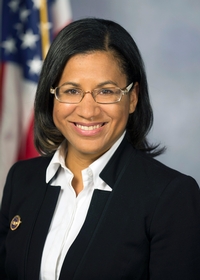
Ask Maddy about Donna Bullock
Scope: pennsylvania
Hi! I can help you understand Donna Bullock's legislative record. What would you like to know?
Try one of these
i
Maddy answers using official bill text and legislative records. Always verify before sharing.
Sources cited inline