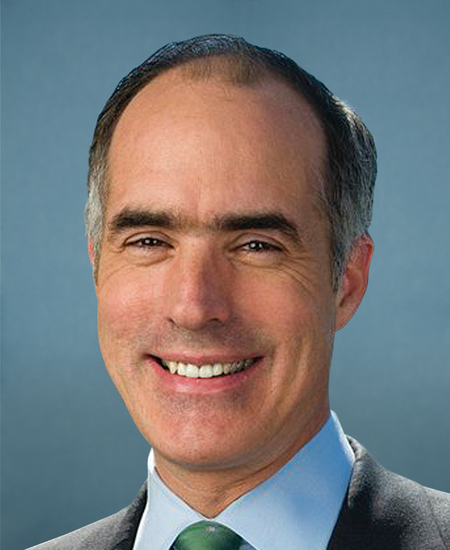
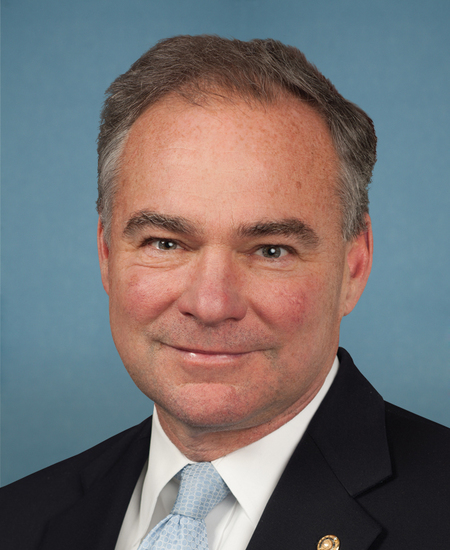
S 138 United States Senate · 118th Congress

Promoting a Resolution to the Tibet-China Dispute Act

The "Promoting a Resolution to the Tibet-China Dispute Act" amends the Tibetan Policy Act of 2002 to clarify US policy regarding Tibet. It directs the US Special Coordinator for Tibetan Issues to counter Chinese disinformation about Tibet's history, culture, and institutions, including claims that Tibet has been part of China since ancient times. The bill specifically defines Tibetan Autonomous Regions for policy purposes and authorizes funds to support these counter-disinformation efforts. It reaffirms that Tibet has a distinct cultural identity and that dialogue between China and Tibetan representatives should occur without preconditions. The bill does not change US diplomatic relations with China but provides specific guidance for US policy implementation.
Bill status signed all 5 stages cleared
Introduction
Jan 2023
Committee Review
May 2024
Senate Passage
May 2024
House Passage
Jun 2024
Signed into Law
Jul 2024
Introduced Jan 30, 2023 Signed Jul 12, 2024
Maddy AI version diff · 1 comparison

What changed between versions

Introduced in Senate Engrossed in Senate · 9 edits · May 23, 2024
MAJOR
The bill was substantially revised between introduction and engrossment, shifting from confrontational framing (calling Tibet an 'occupied country' and China's control 'illegal') to a more diplomatic 'dispute' framework. The most aggressive findings about US historical recognition of Tibetan independence and the 1950 State Department note suggesting possible recognition of Tibet as independent were removed, while new provisions added specific geographic definitions, a dedicated funding source, and coordination requirements with USAID. The overall effect is a bill that maintains pressure on China but uses less legally provocative language.
SCOPE

The bill title changed from 'Tibet-China Conflict Act' to 'Tibet-China Dispute Act,' reframing the issue from an armed conflict to a diplomatic/legal dispute.

Removed findings that called Tibet 'an occupied country under established principles of international law,' referenced 'illegal Chinese occupation,' and cited the 1950 State Department note suggesting recognition of Tibet as an independent state could be considered.

REQUIREMENT

The statement of policy was rewritten to remove explicit references to the Tibetan people's right to self-determination and the claim that 'the legal status of Tibet remains to be determined.' It now focuses on distinct identity, peaceful resolution through dialogue, countering disinformation, and encouraging China to ratify the ICCPR.

Added a requirement that the Special Coordinator for Tibetan Issues work with relevant bureaus of the Department of State and USAID to counter disinformation about Tibet.

Added a new sense of Congress finding that PRC policies are 'systematically suppressing' the ability of Tibetans to preserve their religion, culture, language, history, way of life, and environment.

DEFINITION

The geographic definition of Tibet was expanded from a simple two-part description (Tibet Autonomous Region plus Tibetan areas of four provinces) to a detailed list naming specific prefectures and counties by both Tibetan and Chinese names, using PRC designations as of 2018.

FISCAL

The funding source for disinformation countermeasures was changed from the Asia Reassurance Initiative Act of 2018 to section 346 of the Tibetan Policy and Support Act of 2020, tying it to a more specific and recent authorization.

ELIGIBILITY

Expanded the range of acceptable dialogue partners from 'the Dalai Lama or his representatives' to include 'democratically elected leaders of the Tibetan community,' broadening who can be considered a legitimate negotiating party.

TECHNICAL

Changed 'historically false' to 'historically inaccurate' when describing China's claim that Tibet has been part of China since ancient times, and changed 'ten rounds' to 'nine rounds' of dialogue between 2002 and 2010.

Floor votes · House Jun 12, 2024

How they voted

This bill passed the Senate by voice vote (no roll call recorded).
Full legislative history

Actions timeline

Total actions
21
Key actions
6
Committee
3
Jul 12, 2024
Signed into law
Signed by President.
executive
Jun 12, 2024
Lower · Passed
Passed/agreed to in House: On motion to suspend the rules and pass the bill Agreed to by the Yeas and Nays: (2/3 required): 391 - 26 (Roll no. 252). (text: 6/11/2024 CR H3701-3702)
lower
May 23, 2024
Upper · Passed
Passed Senate with an amendment by Unanimous Consent. (consideration: CR S3898-3899; text of amendment in the nature of a substitute: CR S3898)
upper
May 23, 2024
Upper · Passed
Passed/agreed to in Senate: Passed Senate with an amendment by Unanimous Consent. (consideration: CR S3898-3899; text of amendment in the nature of a substitute: CR S3898)
upper
May 7, 2024
Upper · Passed
Committee on Foreign Relations. Reported by Senator Cardin with an amendment in the nature of a substitute. Without written report.
upper
Apr 16, 2024
Upper · Passed
Committee on Foreign Relations. Ordered to be reported with an amendment in the nature of a substitute favorably.
upper
Jan 30, 2023
Committee
Read twice and referred to the Committee on Foreign Relations.
upper
Jan 30, 2023
Introduced
Introduced in Senate
upper
1 primary · 15 co-sponsors

Sponsors