

Department of Energy Science for the Future Act
Summary
Department of Energy Science for the Future Act This bill supports specified research and development activities of the Department of Energy (DOE) Office of Science. The bill establishes various programs, including a basic energy sciences research and development program; a program of research and development for the application of advanced computing practices to foundational and emerging research problems in chemistry and materials science; a web-based platform to develop and provide access to a database of computed information on known and predicted materials properties and computational tools to accelerate breakthroughs in materials discovery and design; a biological systems science and climate and environmental science research and development program; research and development activities in biomolecular characterization and imaging science; earth and environmental systems science research; a coastal zone research initiative; an initiative focused on the development of engineered ecosystems; a program to implement a strategy for achieving computing systems with capabilities beyond exascale computing systems; a program of fundamental research and development of energy efficient computing and data center technologies relevant to advanced computing applications; a Quantum User Expansion for Science and Technology program or QUEST program; a collaborative research and development program of fusion energy technologies; a research program in elementary particle physics and advanced technology research and development to improve the understanding of the fundamental properties of the universe, including constituents of matter and energy and the nature of space and time; research activities on the nature of the primary contents of the universe, including the nature of dark energy and dark matter; a research program to discover and understand various forms of nuclear matter; a program across the DOE for the production of isotopes, including the development of techniques to produce isotopes, that the DOE determines are needed for research, medical, industrial, or related purposes; a midscale instrumentation program to enable the development and acquisition of novel, state-of-the-art instruments ranging in cost from $1 million to $20 million each that would significantly accelerate scientific breakthroughs at user facilities; and a high intensity laser research initiative. The DOE Office of Science shall continue to leverage U.S. participation in the Large Hadron Collider and prioritize expanding international partnerships and investments in the Long-Baseline Neutrino Facility and Deep Underground Neutrino Experiment. DOE shall support construction of a Facility for Rare Isotope Beams to advance the understanding of rare nuclear isotopes and the evolution of the cosmos. DOE shall expand opportunities to increase the number, diversity, equity, and inclusion of highly skilled science, technology, engineering, and mathematics (STEM) professionals working in DOE mission-relevant disciplines and broaden the recruitment pool to increase diversity, including expanded partnerships with Historically Black Colleges, Tribal Colleges, Minority Serving Institutions, emerging research institutions, and scientific societies. DOE shall establish within the DOE Office of Science, a cross-cutting research initiative to leverage the federal government's innovative analytical resources and tools, user facilities, and advanced computational and networking capabilities in order to prevent, prepare for, and respond to emerging infectious diseases, including COVID-19. DOE may not carry out gain-of-function research of concern.
Bill status
passed
3 of 5 stages cleared
Introduction
May 2021
Committee Review
Jul 2021
House Passage
Jun 2021
Senate Passage
President
Introduced May 28, 2021
Last action Jul 12, 2021
Floor votes · House Jun 28, 2021
How they voted
351–68
Passed · 11 other
Total votes 430
Jun 28, 2021
D
Democratic219
99% Yea
R
Republican211
63% Yea
Vote distribution
All Yea
All Nay
Mixed
No data
Full legislative history
Actions timeline
Total actions
15
Key actions
3
Committee
4
Amendments
3
Jul 12, 2021
Committee
Received in the Senate and Read twice and referred to the Committee on Energy and Natural Resources.
upper
Jun 28, 2021
Introduced
On motion to suspend the rules and pass the bill, as amended Agreed to by the Yeas and Nays: (2/3 required): 351 - 68 (Roll no. 187). (text: CR H3206-3218)
lower
Jun 28, 2021
Lower · Passed
Passed/agreed to in House: On motion to suspend the rules and pass the bill, as amended Agreed to by the Yeas and Nays: (2/3 required): 351 - 68 (Roll no. 187).(text: CR H3206-3218)
lower
Jun 28, 2021
Introduced
Ms. Johnson (TX) moved to suspend the rules and pass the bill, as amended.
lower
Jun 28, 2021
Lower · Passed
Reported (Amended) by the Committee on Science, Space, and Technology. H. Rept. 117-72.
lower
Jun 15, 2021
Introduced
Ordered to be Reported (Amended) by Voice Vote.
lower
Jun 15, 2021
Lower · Passed
Committee Consideration and Mark-up Session Held.
lower
May 28, 2021
Committee
Referred to the House Committee on Science, Space, and Technology.
lower
May 28, 2021
Introduced
Introduced in House
lower
1 primary · 39 co-sponsors
Sponsors
Role
Legislator
Party
State
District
P

Eddie Bernice Johnson
DDemocratic
Co

Ami Bera
DDemocratic
Co

Anthony Gonzalez
RRepublican
Co

Bill Foster
DDemocratic
Co

Brad Sherman
DDemocratic
Co

Brian Babin
RRepublican
Co

Carlos A. Gimenez
RRepublican
Co
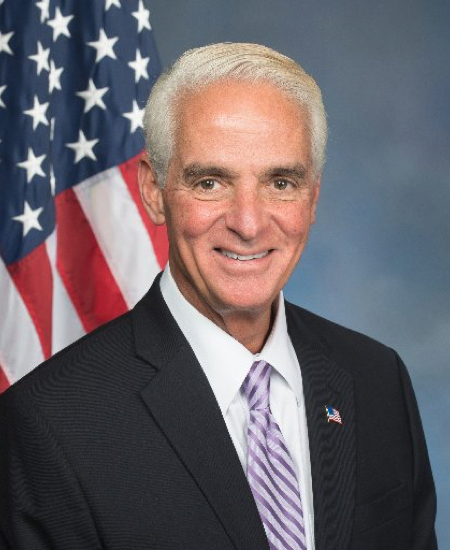
Charlie Crist
DDemocratic
Co

Conor Lamb
DDemocratic
Co

Daniel T. Kildee
DDemocratic
Co

Deborah K. Ross
DDemocratic


























Ask Maddy
·
AI policy assistant
Ask Maddy about HR 3593
Scope: US
Hi! I can help you understand HR 3593. What would you like to know?
Try one of these
i
Maddy answers using official bill text and legislative records. Always verify before sharing.
Sources cited inline