

Maddy summaryHB 133, the NC Farmland and Military Protection Act, bans U.S.-designated adversarial foreign governments from buying, leasing, or holding interests in agricultural land or land within 75 miles of major military installations like Fort Bragg and Camp Lejeune. It directly affects foreign governments identified by the U.S. State Department as adversaries under arms regulations, preventing them from acquiring land critical to food production or near military sites. The law excludes agricultural research leases under 250 acres and makes any violating land transfer legally void. This focuses on restricting foreign control of strategic land without altering existing domestic land transactions.

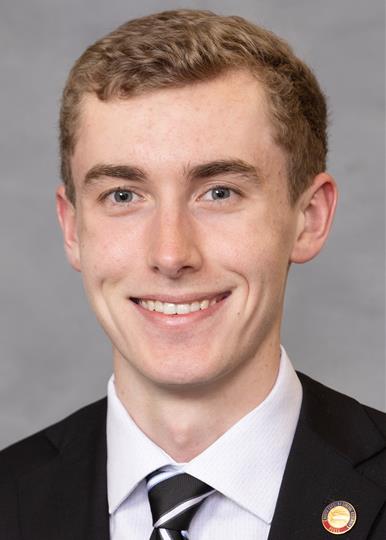
Rep. Wyatt Gable
Sponsored bills
Maddy summaryThis House Resolution honors the life and memory of James Michael "Mike" Clampitt, a former member of the North Carolina House of Representatives from District 119. The bill formally recognizes his extensive background in public service, which included decades as a firefighter and deputy sheriff in North Carolina before his election to the state legislature. It expresses the House's appreciation for his legislative work and extends condolences to his family, with a copy of the resolution sent to them.
Maddy summaryThis House Resolution honors the Carolina Hurricanes hockey team for winning the 2026 Stanley Cup and recognizes their contributions to the state of North Carolina. The bill formally acknowledges the team's historic season, including their record-breaking regular performance and playoff victory, while also praising the owner, management, and coaching staff for their leadership. It directs the Principal Clerk to send a certified copy of the resolution to the team, its owner Tom Dundon, and head coach Rod Brind'Amour. This measure serves as a commemorative gesture rather than establishing new laws or funding.
Maddy summaryThis bill authorizes the University of North Carolina system to finance specific capital improvement projects, such as dormitory renovations and new construction, using non-state funds like gifts, grants, and hospital receipts. It allows the university to issue special obligation bonds to cover these costs and includes a mechanism for the Director of the Budget to adjust project funding if necessary. Additionally, the legislation standardizes the residency determination process for admission to the North Carolina School of Science and Mathematics and revises tuition grant rules for graduates of that school and the UNC School of the Arts. These changes aim to support university infrastructure development and ensure equitable access to specialized science and arts programs for North Carolina residents.
Maddy summaryThis bill requires all members of the Jacksonville City Council to be elected by the entire city population rather than by specific geographic wards. Starting with the 2027 municipal elections, the current system of four ward-based representatives and two at-large members will be replaced so that every council seat is filled by citywide voting. The legislation maintains the existing schedule of staggered four-year terms for council members to ensure continuity in local government. This change directly affects voters in Jacksonville, who will no longer vote only for candidates representing their specific neighborhood but for all council candidates from across the city.
Maddy summaryThis bill proposes a constitutional amendment that would require the North Carolina legislature to establish a statewide limit on how much local property tax levies can increase each year. The measure also mandates that any local government wanting to raise property taxes beyond this limit must first obtain approval from a majority of voters in that specific area. Because this change alters the state constitution, it will not take effect immediately but will instead be placed on the November 3, 2026, ballot for voters to decide whether to adopt. If approved by the public, the amendment would legally bind the General Assembly to create the specific tax increase caps mentioned in the text.
Maddy summaryThis bill, known as the Mike Clampitt 1st Responder Tax Fairness Act, aims to expand tax exemptions for volunteer fire departments and rescue squads in North Carolina. Specifically, it allows these independent groups, which have two or fewer paid employees and are already exempt from state income tax, to avoid paying a highway use tax on specific emergency vehicles like fire trucks, forest firefighting units, and other emergency service vehicles. The change applies to vehicles when a certificate of title is issued on or after July 1, 2026, ensuring these organizations can acquire necessary equipment without incurring this particular tax. By broadening the existing exemption, the legislation directly benefits volunteer responders who operate outside of local government units.
Maddy summaryHB 727 modifies the licensure process for marriage and family therapists and therapy associates in North Carolina. It streamlines the process for professionals licensed in other states to obtain a North Carolina license through reciprocity, making it mandatory for qualified applicants. The bill adjusts experience requirements and expands acceptable examination options to include California's clinical examination. Additionally, it clarifies that all applicants, including those applying via reciprocity, must undergo criminal history record checks. These changes aim to facilitate licensing for out-of-state therapists while maintaining regulatory oversight.
Maddy summaryThis bill establishes a program to provide free hyperbaric oxygen therapy to North Carolina veterans diagnosed with traumatic brain injury or posttraumatic stress disorder. The legislation appropriates $3 million from the state General Fund to a nonprofit organization to deliver approximately 15,000 treatments to an estimated 350 eligible veterans over the 2026-2027 fiscal year. The program includes structured clinical care and requires the provider to submit a detailed report on outcomes and fund usage by June 2027.
Maddy summaryHB 118 modifies North Carolina's property tax exemption for disabled veterans, replacing a flat $45,000 exclusion with a percentage-based system tied to the veteran's VA disability rating. It directly affects veterans with a 50% or higher service-connected disability rating (or surviving spouses under specific conditions), allowing them to exclude a portion of their home's appraised value from property taxes - equal to their disability percentage. For example, a veteran with a 70% disability rating would exclude 70% of their home's value from taxes. The bill takes effect for taxes due in 2025 and prohibits combining this relief with other property tax exemptions.