HR 8958 United States House · 118th Congress

NASA Reauthorization Act of 2024

The NASA Reauthorization Act of 2024 authorizes $25.2 billion in funding for NASA in fiscal year 2025, with specific allocations for exploration, space operations, technology, science, and education. The bill advances the Artemis program for lunar exploration by requiring NASA to partner with U.S. private companies for human lunar landing capabilities while ensuring these companies meet U.S. content requirements. It includes provisions for maintaining the International Space Station through 2031, developing commercial low-Earth orbit capabilities, and continuing Earth science and planetary research. The act requires NASA to submit regular reports on program implementation, cost management, and commercial partnerships to ensure transparency and accountability in the use of federal funds.
Bill status passed 3 of 5 stages cleared
Introduction
Jul 2024
Committee Review
Sep 2024
House Passage
Sep 2024
Senate Passage
President
Introduced Jul 9, 2024 Last action Sep 24, 2024
Maddy AI version diff · 1 comparison

What changed between versions

Introduced in House Engrossed in House · 12 edits · Sep 23, 2024
MAJOR
The engrossed version of HR 8958 (NASA Reauthorization Act of 2024) made several significant policy changes from the introduced version: it removed the mandatory requirement for two crewed lunar landings per year, replaced strict domestic-content eligibility criteria for commercial providers with a more flexible permissive standard, deleted the section restricting international contributions on the critical path for Mars missions, and added new provisions on orbital debris, Chinese space activity restrictions, wildland fire science, and contract flexibility.
REQUIREMENT

The requirement that NASA conduct two crewed lunar landing missions annually after the first crewed landing (former section 203(d)) was deleted entirely.

Section on human-rated lunar landing capabilities now explicitly allows inclusion of uncrewed lunar landing services and requires NASA to seek capabilities from not fewer than two commercial providers (subject to availability of appropriations).

ELIGIBILITY

The strict eligibility criteria for commercial providers supporting lunar exploration (requiring US headquarters, majority US ownership, 50% US components, US launch vehicles, majority US design/manufacturing) were replaced with a permissive provision allowing the Administrator to 'enter into agreements with United States commercial providers' without those specific domestic-content requirements.

SCOPE

Section 202 on international contributions to human exploration was deleted. This section had prohibited placing international contributions on the critical path for Mars missions after January 1, 2025 unless the Administrator determined low risk of non-performance and prepared a mitigation plan with a 30-day advance report to Congress.

Section 302 on microgravity research was deleted. It had amended 51 U.S.C. 40904 to allow NASA to use one or more microgravity platforms beyond just the ISS.

New section 310 adds a restriction on Federal funds relating to certain Chinese space and scientific activities.

New sections 309 (orbital debris research and development) and 307 (risk of losing access to low-Earth orbit) were added to the Space Operations title.

New sections 622 and 623 on wildland fire science technology development and implementation of National Wildland Fire Management Commission recommendations were added to the Science title.

New section 512 on making advancements in commercial hypersonics was added to the Aeronautics title.

New section 810 on contract flexibility and section 812 on a NASA public-private talent program were added to the Policy/NASA title.

DEFINITION

The definition of 'commercial provider' was expanded from providing 'space services' to providing 'space services or space-related capabilities.'

TECHNICAL

The Space Launch System 'other uses' assessment was reframed from assessing 'utility' by non-NASA entities to assessing 'demand' broken out by Federal agency or nongovernment sector, with a shift from recommending actions to identifying potential actions and associated costs.

Floor votes · House Sep 23, 2024

How they voted

36621
Passed · 44 other
Total votes 431
Sep 23, 2024
D Democratic212
197 Yea 15
92% Yea
I Independent1
1 Yea
100% Yea
R Republican218
168 Yea 21 Nay 29
77% Yea
Vote distribution
All Yea All Nay Mixed No data
Full legislative history

Actions timeline

Total actions
15
Key actions
3
Committee
4
Amendments
3
Sep 24, 2024
Committee
Received in the Senate and Read twice and referred to the Committee on Commerce, Science, and Transportation.
upper
Sep 23, 2024
Introduced
On motion to suspend the rules and pass the bill, as amended Agreed to by the Yeas and Nays: (2/3 required): 366 - 21, 1 Present (Roll no. 441). (text: CR H5606-5621)
lower
Sep 23, 2024
Lower · Passed
Passed/agreed to in House: On motion to suspend the rules and pass the bill, as amended Agreed to by the Yeas and Nays: (2/3 required): 366 - 21, 1 Present (Roll no. 441). (text: CR H5606-5621)
lower
Sep 23, 2024
Introduced
Mr. Lucas moved to suspend the rules and pass the bill, as amended.
lower
Sep 23, 2024
Lower · Passed
Reported (Amended) by the Committee on Science, Space, and Technology. H. Rept. 118-701.
lower
Jul 10, 2024
Introduced
Ordered to be Reported in the Nature of a Substitute (Amended) by the Yeas and Nays: 38 - 0.
lower
Jul 10, 2024
Lower · Passed
Committee Consideration and Mark-up Session Held
lower
Jul 9, 2024
Committee
Referred to the House Committee on Science, Space, and Technology.
lower
Jul 9, 2024
Introduced
Introduced in House
lower
1 primary · 3 co-sponsors

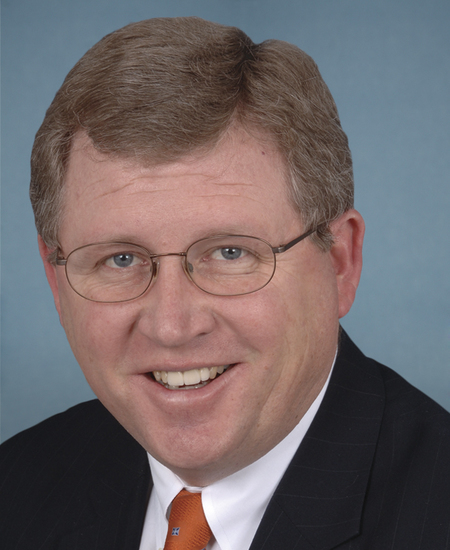
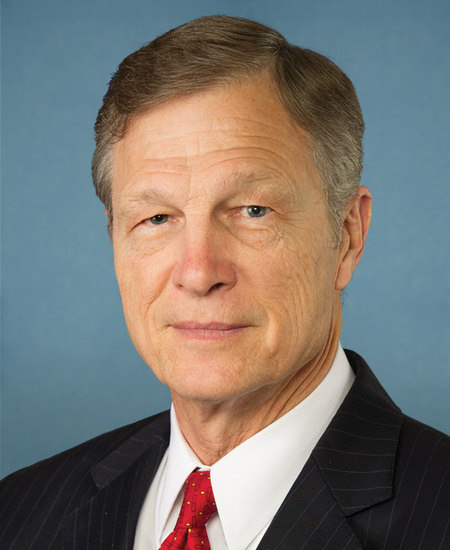
Sponsors