

Maddy summaryThis memorial acknowledges New Mexico residents affected by radiation from the Trinity nuclear test and uranium mining, urging state agencies to help eligible individuals apply for federal compensation under the Radiation Exposure Compensation Act before its December 31, 2027 deadline. It directs the departments of Health, Aging and Long-Term Services, Veterans' Services, and Indian Affairs to collaborate with community organizations and tribal governments to provide outreach, education, and application assistance. The focus is on supporting downwinders, uranium workers, and their families - particularly elders, rural residents, and tribal members - who may need help navigating the federal process. It does not create new benefits but aims to increase awareness and access to existing federal compensation.
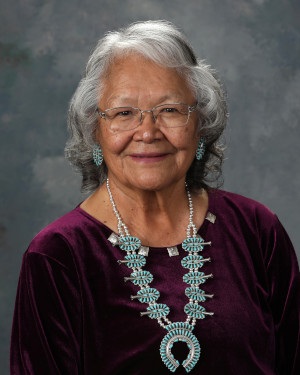
Rep. Martha Garcia
Sponsored bills
Maddy summaryHB 300 appropriates $300,000 from the state general fund to the northwest New Mexico council of governments for managing horses on tribal land in Cibola County. The funds will cover creating herd management plans, using fertility control on mares, humanely relocating up to 60 free-roaming horses, and providing veterinary clinics for domestic horses (including gelding and vaccinations). The money is allocated for fiscal years 2027 through 2029, with any unspent balance reverting to the general fund by the end of 2029. This bill directly affects tribal land horse populations and domestic horse owners in Cibola County by funding specific care and management activities.
Maddy summaryThis House Memorial (HM 15) is a symbolic resolution designating February 5, 2026, as "Gallup/McKinley County Day" in the New Mexico House of Representatives. It honors the cultural, historical, and economic significance of Gallup and McKinley County, including its Native American communities, the Intertribal Indian Ceremonial, and its status as New Mexico's "adventure capital." The resolution has no legal effect beyond recognizing these attributes and will be sent to Gallup's mayor and McKinley County commissioners. As a ceremonial resolution, it does not create new policies or obligations.
Maddy summarySB 435 would appropriate $1 million from the state general fund to the New Mexico Department of Justice for fiscal year 2026. The funds would support a public relations campaign to inform all New Mexico residents about their rights regarding deportation or harassment by federal immigration officers, and create an identification system to verify tribal membership for members of Indian nations, tribes, and pueblos, including a citizenship verification hotline. Unused funds would revert to the general fund by the end of 2026. This bill directly affects tribal members through the ID system and all New Mexico residents through the campaign.
Maddy summarySJR 13 proposes a constitutional amendment to allow all registered New Mexico voters to participate in any state-funded primary election, regardless of their political party affiliation or lack thereof. This would replace current partisan primaries with nonpartisan "open primary" elections, where voters could select candidates from any party's ballot in the primary. The change would directly affect all registered voters in New Mexico by expanding their choice in selecting candidates for the general election ballot. If approved by the legislature and voters, it would amend the state constitution to require this open primary system for all state-funded primaries. The bill is currently pending before committees and was postponed indefinitely in June 2025.
Maddy summaryThis bill would appropriate $2 million from New Mexico's general fund to the Uranium Mining Reclamation Revolving Fund for fiscal year 2026 and beyond. The funds would directly support uranium mine and mill reclamation activities, such as cleaning up abandoned sites and restoring land. Unspent funds would remain in the revolving fund rather than returning to the general fund. The bill aims to provide ongoing funding for environmental cleanup of historic uranium mining operations.
Maddy summarySB 457 appropriates $20 million from New Mexico's general fund to the Civil Legal Services Fund for fiscal year 2026 and future years, specifically to provide civil legal services to low-income residents. The bill directly affects low-income New Mexicans who need assistance with non-criminal legal matters like housing disputes, family law, or debt issues. Key provisions include permanent funding with no requirement for unspent balances to return to the general fund, ensuring sustained support. The bill was passed by committees but was postponed indefinitely on June 3, 2025, meaning it is currently pending and not yet law.
Maddy summarySB 234 creates a permanent "Tribal Education Trust Fund" in New Mexico's state treasury to provide annual funding for tribal education programs. Starting in fiscal year 2027, the fund will disburse at least $12.5 million each year (or 5% of its five-year average value) directly to New Mexico tribes with approved agreements, with funds carrying over annually for tribal use. Tribes must submit annual budget plans and impact reports to the Public Education Department, while the department develops a disbursement formula with a task force. The bill was referred to committees but was postponed indefinitely on June 3, 2025.
Maddy summarySB 308 creates the Office of the Native American Ombud within New Mexico's Indian Affairs Department to address concerns raised by Native Americans. The ombud investigates complaints about state services (like legal aid or healthcare access), maintains strict confidentiality, and issues annual reports with recommendations for improving services. It requires all service providers to prominently display the ombud's contact information and prohibits retaliation against those who file concerns. The bill appropriates $2 million to fund this office and mandates annual reporting on resolved concerns and policy improvements.
Maddy summarySB 436 appropriates $100 million from New Mexico's general fund to the Workforce Solutions Department for fiscal year 2026 and beyond. The funding is specifically intended to cover rising operational costs caused by increased client demand for the department's services. Unspent funds at year-end will not return to the general fund, ensuring continued support for growing service needs. This bill directly affects the department's ability to serve more residents seeking workforce programs like job training and employment assistance.