

Maddy summaryHB 273, the Women's Safety & Protection Act, requires domestic violence shelters, public schools, and juvenile detention facilities in New Mexico to designate separate sleeping quarters and restrooms for males and females. It mandates that these facilities provide reasonable accommodations (like single-occupancy spaces) for individuals who cannot use facilities matching their sex, but prohibits access to opposite-sex areas when others of that sex are present. The bill explicitly allows exceptions for emergencies, medical needs, maintenance, and ADA accommodations, while ensuring facilities remain compliant with federal disability law. It directly affects residents of these facilities, staff, and students in New Mexico's public schools and shelter systems.
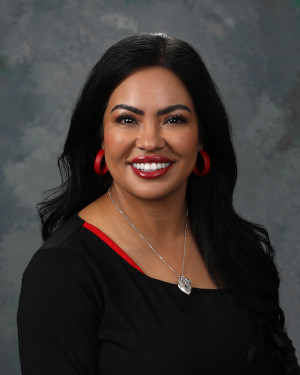
Rep. Nicole Chavez
Sponsored bills
Maddy summaryHB 334 requires courts to obtain specific competency evaluations for children facing delinquency charges, detailing whether a child can understand proceedings and assist in their defense. If a child is deemed incompetent, the evaluation must also assess if they meet criteria for involuntary placement, with courts mandating community-based competency restoration for non-dangerous children. The bill adds a 90-day review hearing requirement after involuntary placement and specifies that competency evaluations must include a qualified professional's opinion on three key criteria: understanding proceedings, ability to consult with a lawyer, and capacity to assist in their defense. This applies to all children in New Mexico delinquency cases, directly affecting youth accused of crimes who may have developmental or intellectual disabilities.
Maddy summaryHB 277 creates a new Scope of Practice Advisory Committee within New Mexico's Department of Health to review proposed changes to healthcare professionals' scopes of practice. The 9-member committee - appointed by the governor and legislative council, including physicians, health experts, consumer advocates, and the Health Secretary - will evaluate requests from licensing boards or legislators. It assesses proposals based on patient safety, workforce training, rural access, costs, and regulatory consistency before voting to endorse, modify, or reject changes. The committee must publish reports detailing its findings and votes within 30 days of decisions, with $200,000 allocated for its 2027 operations.
Maddy summaryHouse Memorial 52 (HM 52) requests New Mexico's Office of Superintendent of Insurance, with the Health Care Authority, to create a study group examining rising health insurance premiums. The group - composed of small employers, business representatives, insurers, and government officials - will study cost drivers (like healthcare claims, administrative expenses, and state taxes) affecting small businesses and individuals in the individual and small-group markets. It will evaluate affordability impacts and recommend solutions to improve premium affordability while maintaining access to quality care. The study group must submit findings to legislative committees by October 1, 2026.
Maddy summaryHB 33, the Psychology Interjurisdictional Compact, would allow licensed psychologists in New Mexico to provide telepsychology services across state lines and offer up to 30 days of in-person practice annually in another participating state without needing a separate license. It establishes mutual recognition of licenses between states that adopt the compact, enabling psychologists to serve clients in other states while ensuring public safety through shared disciplinary records. The compact directly affects licensed psychologists seeking to expand practice across state lines and clients in states with limited local mental health providers. Key mechanisms include standardized telepsychology authorization, temporary in-person practice limits, and a coordinated system for sharing license and disciplinary information among participating states.
Maddy summaryHB 45, the Physician Assistant Licensure Compact, would allow physician assistants licensed in one participating state to practice in other participating states without obtaining separate licenses. It creates a shared data system for states to track license status and disciplinary actions, and requires that physician assistants follow the laws of the state where the patient is located during care. The bill directly affects physician assistants, particularly military families who can more easily practice across state lines with one license, and state licensing boards that must adopt the compact's standards. If enacted, it would streamline licensure for medical professionals while maintaining patient safety through mutual recognition of licenses.
Maddy summaryHB 32 creates the Counseling Licensure Compact, allowing licensed professional counselors in participating states to practice across state lines without obtaining separate licenses. It directly affects licensed counselors and their clients in member states, enabling them to provide in-person or telehealth counseling services where the client is located. Key provisions include mutual recognition of licenses, sharing of disciplinary records between states, and requiring counselors to follow the practice laws of the state where the client is located. The compact also specifically supports military spouses relocating with active-duty service members. This bill does not change existing state licensure requirements but streamlines interstate practice for qualified counselors.
Maddy summaryHB 143 expands tax credits for healthcare providers working in New Mexico's rural underserved areas. It increases the rural health care practitioner tax credit to $15,000 annually for physicians/dentists/optometrists (requiring 1,584+ hours of service) and $9,000 for other providers like nurses, pharmacists, and therapists. The bill also creates a new Medical Residency Loan Repayment Act to award loan repayment assistance to qualifying medical residents and fellows. These provisions directly target healthcare professionals in rural communities to improve provider recruitment and retention.
Maddy summaryHB 78 allows parties to reference sealed juvenile records in specific legal proceedings. It permits referring to the existence and contents of sealed juvenile records in written pleadings for pretrial detention hearings, release condition hearings, or sentencing hearings related to felony charges. This exception applies only when the court has prior notice and is limited to those exact proceedings. The bill does not change the general rule that sealed records should be treated as if they never existed. It directly affects prosecutors, defense attorneys, and courts handling felony cases where a defendant has a sealed juvenile history.
Maddy summaryHB 107 limits damages in medical malpractice claims in New Mexico. It sets a $600,000 cap on recoverable damages (excluding medical costs and punitive damages) for most claims and a $750,000 cap for claims against "independent providers" (like solo practitioners), with annual adjustments based on inflation starting in 2023. The bill also restricts punitive damages, limits attorney fees, and requires payments from the Patient's Compensation Fund to be made as expenses occur. These changes directly affect patients filing malpractice claims, health care providers (especially independent practitioners), and insurers.