

In committee Sep 10, 2026
1 co-sponsor
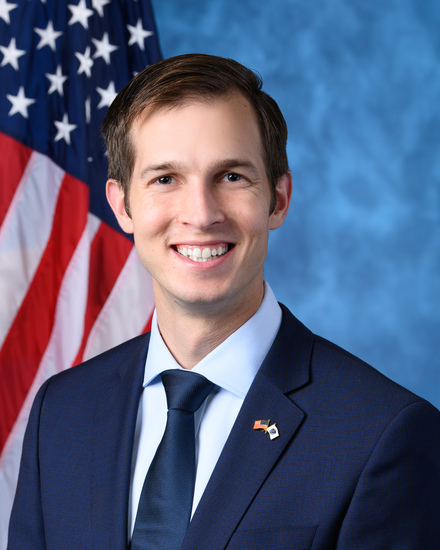
Rep. Jake Auchincloss
Total votes
2,818
all sessions
Attendance
98%
60 missed
Near the chamber average
With party
97%
of cast votes
Near the chamber average
Bipartisan score
1%
crosses aisle rarely
Near the chamber average
Sponsored
1,023
bills & resolutions
Near the chamber average
Committees
4
assignments
1,023 bills and resolutions
Sponsored bills
Total
1,023
Primary
25
Co-sponsor
998
This page
1,023
matching current filters
CCP Fentanyl Sanctions Act
Maddy summaryThe CCP Fentanyl Sanctions Act codifies existing executive sanctions and authorizes the President to impose new financial penalties on foreign persons, including Chinese government entities, ports, online marketplaces, and companies that contribute to the global spread of illicit synthetic narcotics. The bill targets specific activities such as producing or selling precursor chemicals, facilitating drug shipments, and providing material support to sanctioned government bodies, with the primary penalty being the blocking of all property and transactions within the United States. Additionally, the Treasury Department is empowered to restrict access to U.S. banking accounts for foreign financial institutions that knowingly facilitate significant transactions for these designated individuals or entities. The legislation includes provisions allowing the President to waive sanctions for up to 180 days if deemed in the national interest and requires the administration to consider information from congressional committees and international human rights monitors when making determinations.
In committee Aug 24, 2026
0 co-sponsors
Lindsey O. Graham Sanctioning Russia and Iran Act of 2026
Maddy summaryThe Lindsey O. Graham Sanctioning Russia and Iran Act of 2026 imposes comprehensive economic restrictions on the Russian Federation, including blocking assets of government officials, state-owned financial institutions, and entities supporting the defense sector. The bill prohibits new U.S. investments in Russia, bans the purchase of Russian sovereign debt, and restricts the importation of uranium and energy products from the country. Additionally, it authorizes the imposition of tariffs up to 500 percent on goods imported directly from Russia and up to 100 percent on goods from foreign nations that continue to purchase significant volumes of Russian crude oil or natural gas. The legislation also extends the Iran Sanctions Act through 2031 and includes a five-year sunset provision for the new measures, subject to specific humanitarian and safety exceptions.
In committee Aug 10, 2026
1 co-sponsor
Expressing support for the designation of the first week of August as "National Community Health Center Week", and encouraging all Americans to participate by visiting their local community health center and celebrating the important partnership between health centers and the communities they serve.
Maddy summaryThis resolution expresses support for designating the first week of August as National Community Health Center Week to honor the contributions of these facilities. It encourages all Americans to visit their local health centers during this time to celebrate the partnership between these organizations and the communities they serve. The bill highlights how community health centers provide affordable, comprehensive care to millions of people, particularly in rural and underserved areas, while integrating services like dental care, behavioral health, and pharmacy support. By recognizing these centers, the resolution aims to raise awareness of their role in improving public health outcomes and supporting local economies.
In committee Aug 3, 2026
1 co-sponsor
Right to IVF Act of 2026
Maddy summaryThis bill establishes federal protections and funding to expand access to in vitro fertilization and intrauterine insemination for individuals, military service members, and veterans. It requires most private health plans, Medicaid programs, and Medicare to cover these fertility treatments without imposing higher cost-sharing than other medical services. Additionally, the legislation mandates that the Department of Defense and the Department of Veterans Affairs provide specific fertility preservation and treatment benefits to uniformed service members and eligible veterans. The bill also includes preemption clauses that override state laws restricting these procedures and prohibits discrimination based on marital status, sex, or sexual orientation in the provision of care.
In committee Jul 23, 2026
1 co-sponsor
Directing the President, pursuant to section 5(c) of the War Powers Resolution, to remove United States Armed Forces from hostilities with Iran.
Maddy summaryThis concurrent resolution directs the President to withdraw United States Armed Forces from any hostilities against Iran. It specifically invokes the War Powers Resolution, mandating this removal unless Congress formally declares war or provides specific authorization for military force against Iran. The bill clarifies that it does not prevent the U.S. from acting in self-defense, maintaining a defensive troop presence in the region, or continuing intelligence activities related to threats from Iran.
Passed Jul 23, 2026
1 co-sponsor
Accelerating Access to Critical Therapies for ALS Reauthorization Act of 2026
Maddy summaryThis bill reauthorizes and expands the Accelerating Access to Critical Therapies for ALS Act through 2031, extending funding for research into treatments for amyotrophic lateral sclerosis. It requires drug manufacturers to share interim clinical trial data with the FDA to better assess the progress of investigational drugs and clarifies that phase 3 clinical trial definitions include combined phase 2/3 trials and planned trials not yet enrolling participants. The legislation also mandates the FDA to publish an updated five-year action plan for ALS and other rare neurodegenerative diseases, including resource needs and coordination strategies with broader disease communities. Additionally, the bill requires the Government Accountability Office to submit a report on the program's implementation four years after enactment.
Passed Jul 23, 2026
1 co-sponsor
Alzheimer’s Early Detection Act of 2026
Maddy summaryThe Alzheimer's Early Detection Act of 2026 requires private health insurance plans and Medicaid programs to cover specific tests that detect biological markers for Alzheimer's disease. These tests, which can be performed on blood or tissue samples, are intended to help with early detection, diagnosis, and treatment management of the condition. The law mandates that insurers treat these tests like other standard medical benefits, meaning patients cannot face higher costs, separate waiting periods, or step therapy hurdles specifically for this care. Additionally, the bill requires insurance companies to approve requests for these tests within 72 hours and directs the National Institutes of Health to study the value of such testing over three years.
In committee Jul 22, 2026
0 co-sponsors
Pharmacists Fight Back [in Federal Employee Health Benefit Plans Act]
Maddy summaryThis bill requires pharmacy benefits managers (PBMs) administering prescription drug benefits for federal employee health plans to reimburse pharmacies at specific rates, including the national average drug cost plus a small percentage or $50, whichever is lower. It prohibits PBMs from favoring their own pharmacies, restricting patient choice, or reducing pharmacy payments after claims are processed. The bill establishes $10,000 civil penalties for violations, with debarment from federal health plans after 10 penalties in 10 years. This directly affects PBMs, in-network pharmacies, and federal health benefit plans covering millions of federal employees and their families. The law aims to ensure fair reimbursement practices and maintain pharmacy choice under the Federal Employees Health Benefits Program.
HealthcareSupports HealthcareMandates fair pharmacy reimbursement rates in federal health plans, prohibits PBMs from restricting patient choice or favoring own pharmacies, and protects pharmacy access - directly strengthening patient access to medications.
Labor & EmploymentSupports Labor & EmploymentProtects pharmacy workers' compensation by mandating fair reimbursement rates from PBMs in federal health plans, preventing payment reductions that would impact earnings.
In committee Jul 22, 2026
0 co-sponsors
Adams Memorial-Great American Heroes Act
Maddy summaryHR 2306 extends the Adams Memorial Commission's authority until 2032 and authorizes $50 million in federal funds for the memorial, requiring a 1:1 non-federal match and limiting administrative costs to 4% of federal funds. It updates location rules to allow the memorial within a designated area mapped by the Commission. The bill primarily affects the Adams Memorial Commission and entities contributing to the memorial's funding. It makes no new policy changes but adjusts procedural timelines and funding requirements for an existing commemorative project.
Passed Jul 21, 2026
1 co-sponsor
Ask Maddy
·
AI policy assistant
Ask Maddy about Jake Auchincloss
Scope: new-jersey
Hi! I can help you understand Jake Auchincloss's legislative record. What would you like to know?
Try one of these
i
Maddy answers using official bill text and legislative records. Always verify before sharing.
Sources cited inline