

0 co-sponsors
Total votes
1,054
all sessions
Attendance
90%
1 missed
Lower than 80% of chamber peers
With party
96%
of cast votes
Near the chamber average
Bipartisan score
3%
crosses aisle rarely
Near the chamber average
Sponsored
310
bills & resolutions
Near the chamber average
Committees
3
assignments
310 bills and resolutions
Sponsored bills
Total
310
Primary
92
Co-sponsor
218
This page
310
matching current filters
Appropriates $77,406,208 from constitutionally dedicated CBT revenues and various Green Acres funds to DEP for local government open space acquisition and park development projects, and for certain administrative expenses.
Maddy summaryThis bill allocates approximately $77.4 million from dedicated tax revenues and Green Acres funds to the Department of Environmental Protection to support local government projects. The funding is divided between acquiring land for conservation and developing existing parks, with specific amounts designated for planning incentives, standard projects, and areas with high population density. Local municipalities and counties that meet certain population criteria are eligible to receive grants or loans to help them purchase or improve recreational spaces. Any remaining funds after the listed projects are funded may be used for additional approved initiatives with further committee approval.
Budget & TaxesSupports Budget & TaxesBill allocates $77.4M in dedicated revenues to fund park development and open space acquisition, directly increasing funding for public services.
EnvironmentSupports EnvironmentBill allocates $77.4M for open space acquisition and park development, directly conserving natural resources and protecting the environment.
Signed into law Jul 30, 2026
1 co-sponsor
Designates June 10 of each year as "Christina Grimmie Day" in NJ.*
Maddy summaryThis bill designates June 10, 2026, as "Christina Grimmie Day" in New Jersey to honor the late singer and songwriter who grew up in Marlton, New Jersey. The resolution formally requests the Governor to issue a proclamation recognizing the date, which marks the tenth anniversary of Grimmie's passing. While the bill does not alter laws or funding, it serves to acknowledge Grimmie's cultural contributions and her family's foundation that supports families affected by gun violence.
Signed into law Jul 30, 2026
1 co-sponsor
Designates portion of State Highway Route 35 in Laurence Harbor as "James Francisco and Walter Schmidt Memorial Roadway."
Maddy summaryThis bill designates a specific segment of State Highway Route 35 in Laurence Harbor (from milepost 45.37 to 47.26) as the "James Francisco and Walter Schmidt Memorial Roadway" to honor two New Jersey veterans who died in the Vietnam War. It requires the Commissioner of Transportation to install signs bearing this name but prohibits using public funds for the signs. Instead, the bill allows the state to accept private funding from organizations or individuals to cover the costs of producing, installing, and maintaining the signage. The legislation takes effect immediately upon passage.
Signed into law Jul 22, 2026
0 co-sponsors
Authorizes NJ Infrastructure Bank to expend certain sums to make loans for transportation infrastructure projects for FY2027; makes appropriation.
Maddy summaryThis bill authorizes the New Jersey Infrastructure Bank to spend $65.55 million in loans for transportation infrastructure projects during the 2027 fiscal year. The legislation allows the bank to provide funding to local government units for construction costs and includes specific provisions for forgiving up to $1 million in planning and design loans under certain conditions. Additionally, the act permits the bank to use additional funds to cover its own operational expenses, such as bond issuance costs and reserve requirements. While the text lists specific eligible projects, the summary of those details is incomplete in the provided document.
Budget & TaxesSupports Budget & TaxesBill authorizes $65.55M in loans for transportation infrastructure, directly funding essential public services and strengthening state fiscal management.
TransportationSupports TransportationBill authorizes $65.55M in loans for transportation infrastructure projects and covers operational expenses.
Signed into law Jul 8, 2026
1 co-sponsor
Authorizes NJ Infrastructure Bank to expend certain sums to make loans for environmental infrastructure projects for FY2027.
Maddy summaryThis bill authorizes the New Jersey Infrastructure Bank to lend up to $3.85 billion to local governments and public water utilities for environmental infrastructure projects in fiscal year 2027. The legislation allows the bank to use funds from various existing trust accounts to finance the construction of facilities related to drinking water and wastewater treatment. Additionally, the bill outlines how the bank can increase its available loan amounts by including interest earned, fees, and other financial adjustments.
Budget & TaxesSupports Budget & TaxesBill authorizes $3.85B in loans for environmental infrastructure, directly increasing funding for public water and wastewater services.
EnvironmentSupports EnvironmentBill authorizes $3.85B in loans for environmental infrastructure, specifically drinking water and wastewater treatment facilities, directly advancing environmental protection.
Signed into law Jul 8, 2026
1 co-sponsor
Appropriates funds to DEP for environmental infrastructure projects for FY2027.
Maddy summaryThis bill allocates state funds to the Department of Environmental Protection to support environmental infrastructure projects during fiscal year 2027. The money will be used to provide zero-interest or principal forgiveness loans to help finance clean water and drinking water initiatives. Additionally, the legislation authorizes the department to transfer money between different state revolving funds to ensure there is enough capital for these projects. Ultimately, the act aims to expand funding availability for essential water systems without changing the underlying loan terms.
Budget & TaxesSupports Budget & TaxesBill explicitly appropriates state funds to the DEP for environmental infrastructure projects, directly increasing government spending on public services.
EnvironmentSupports EnvironmentBill allocates funds for clean water and drinking water infrastructure, directly supporting environmental protection and conservation.
Signed into law Jul 8, 2026
0 co-sponsors
Establishes minimum qualifications for persons employed on public works contract.
Maddy summaryThis bill requires contractors working on New Jersey public works projects to verify that each craft worker meets specific qualifications. Contractors must register electronically and confirm workers either completed a federally compliant apprenticeship program or have four years of documented work experience in their craft. Workers covered by union collective bargaining agreements (which determine prevailing wages) are exempt from these requirements. The law directly affects contractors and craft workers on state-funded construction projects by setting clear, verifiable standards for employment.
In committee Jun 30, 2026
1 co-sponsor
Establishes minimum qualifications for persons employed on public works contract.
Maddy summaryThis bill requires contractors working on New Jersey public works projects to verify that all craftworkers meet minimum qualifications. Specifically, it mandates that contractors register electronically and provide proof that each journeyperson has either completed a registered apprenticeship program meeting federal standards or has four years of documented work experience (with union members under certain collective bargaining agreements exempt). The law also requires contractors to confirm they participate in approved apprenticeship programs for any craftworkers they employ. These requirements apply directly to contractors bidding on or performing state-funded construction projects.
Passed Jun 30, 2026
1 co-sponsor
Requires school bus drivers and school bus aides to call 911 emergency line in potential life-threatening emergencies; requires certain school buses transporting students with disabilities to be equipped with certain safety features.*
Maddy summaryThis bill requires school bus drivers, aides, and personnel to call 911 during potential life-threatening emergencies involving students. It also mandates that school buses transporting students with disabilities be equipped with specific safety features (though the exact features are not detailed in the provided text). The bill updates training requirements to include recognizing life-threatening emergencies and proper procedures for students with disabilities, requiring twice-yearly training and certification for all personnel. These changes apply to school bus contractors and school districts in New Jersey, with implementation tied to a pending training program update. The bill includes funding (an appropriation) for these requirements.
Budget & TaxesSupports Budget & TaxesBill includes appropriation for school bus safety features and training, funding essential public services related to student safety.
EducationSupports EducationMandates safety features on buses for students with disabilities, requires 911 calls in emergencies, updates training, and appropriates funds - directly enhancing student safety and infrastructure in K-12 education.
TransportationSupports TransportationMandates safety features on school buses (transportation vehicles) and emergency protocols, enhancing transportation safety standards.
Passed Jun 30, 2026
1 co-sponsor
Ask Maddy
·
AI policy assistant
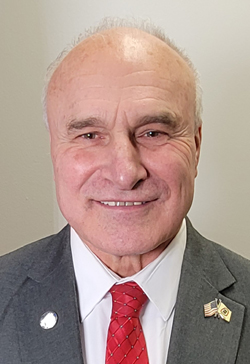
Ask Maddy about Owen Henry
Scope: new-jersey
Hi! I can help you understand Owen Henry's legislative record. What would you like to know?
Try one of these
i
Maddy answers using official bill text and legislative records. Always verify before sharing.
Sources cited inline