S 1807 New Jersey Senate · 2026-2027 Regular Session

Requires municipalities to share certain payments in lieu of property taxes with school districts; informs counties, school districts, and DCA of certain information related to property tax exemptions and abatements.

New Jersey's S 1807 requires municipalities to share certain payments made by businesses (instead of property taxes) with local school districts. The bill also mandates that municipalities provide counties, school districts, and the Department of Community Affairs (DCA) with specific details about property tax exemptions and abatements. Key mechanisms include requiring municipalities to share revenue from tax abatement agreements and report exemption information annually. This directly affects municipalities (who must share funds and report), school districts (who receive shared funds), and county/DCA offices (who receive data). The bill focuses on transparency and revenue sharing related to property tax exemptions.
Bill status in committee 1 of 4 stages cleared
Introduction
Jan 2026
Committee Review
Floor Vote
Governor
Introduced Jan 13, 2026 Last action Feb 5, 2026
Maddy AI version diff · 1 comparison

What changed between versions

Introduced Reprint · 4 edits
MODERATE
The bill moved from its introduced version to a first reprint as reported by the Senate Community and Urban Affairs Committee on February 5, 2026, with three substantive amendments: PILOT revenue use restrictions were made mandatory rather than permissive, negotiation authority was narrowed to only the superintendent (removing the chief executive option), and a new exemption was added for 100 percent low and moderate income senior housing projects from school district remittance requirements. The bill statement was also removed as part of standard committee reporting procedure.
Scope change
The bill now exempts 100 percent low and moderate income senior housing projects (occupants 62+) from the requirement that municipalities remit a portion of PILOT payments to school districts, narrowing the scope of entities subject to those remittance obligations.
REQUIREMENT

The language governing how PILOT revenue may be used changed from 'may be used solely and exclusively' to 'shall be used solely and exclusively,' making it mandatory that the revenue be applied only to reducing the local property tax levy rather than leaving it as a permissive option.

The person authorized to lead negotiations on behalf of the board of education was narrowed from 'the superintendent or chief executive of the board of education' to only 'the superintendent,' removing the chief executive's role in leading these negotiations.

ELIGIBILITY

A new exemption was added stating that school district remittance requirements do not apply to a 100 percent low and moderate income housing project dedicated exclusively to senior citizen occupants aged 62 or older who qualify as low and moderate income households.

TECHNICAL

The entire bill statement (a multi-paragraph summary explaining the bill's provisions) was removed, which is standard when a bill advances from introduction to committee report.

Floor votes

How they voted

No floor votes recorded yet.
Full legislative history

Actions timeline

Total actions
3
Key actions
0
Committee
1
Feb 5, 2026
Committee
Referred to Senate Budget and Appropriations Committee
upper
Jan 13, 2026
Introduced
Introduced in the Senate, Referred to Senate Community and Urban Affairs Committee
upper
2 primary · 1 co-sponsor

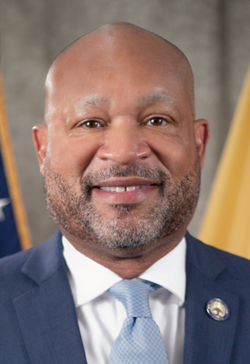
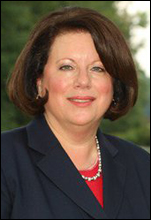
Sponsors