

Requires cost-benefit analyses for long term tax exemption, and requires DCA to create database of exemptions; requires five-year tax exemption and abatement agreements to be filed with certain county officials.
S 4069 requires municipalities in New Jersey to conduct and publicly share cost-benefit analyses for long-term property tax exemptions (exceeding five years) before approving projects like urban renewal developments. It mandates that urban renewal entities include these analyses in applications, and municipal leaders must produce independent analyses for public review. The bill also directs the Department of Community Affairs (DCA) to create a public online database tracking all long-term tax exemptions and five-year tax agreement filings. Municipalities must submit five-year exemption agreements to county financial officers within 10 days of signing and provide annual reports on tax exemptions to county officials. This directly affects municipalities, urban renewal entities, and county governments by increasing transparency around tax exemption impacts on local finances.
Bill status
in committee
1 of 4 stages cleared
Introduction
Jan 2025
Committee Review
Floor Vote
Governor
Introduced Jan 30, 2025
Last action May 12, 2025
Maddy AI version diff · 1 comparison
What changed between versions
Introduced Version
→
Reprint SCU 5/12/25 1R
·
3 edits
MINOR
The Senate Community and Urban Affairs Committee reported this bill with one substantive amendment: an exemption from the cost-benefit analysis requirement for inclusionary developments that are part of a municipality's Fair Housing Act compliance certification or pending request for one. Senator Stack was added as a co-sponsor. The remaining changes are formatting and the standard removal of the explanatory statement upon committee reprint.
Scope change
The bill's scope was narrowed slightly: inclusionary developments tied to Fair Housing Act compliance certifications are now excluded from the cost-benefit analysis requirement that applies to other urban renewal projects seeking long-term tax exemptions.
ELIGIBILITY
Inclusionary developments (as defined in C.52:27D-304(f)) that are part of a municipality's compliance certification or pending request for a compliance certification under the Fair Housing Act (C.52:27D-301 et seq.) are now exempt from the cost-benefit analysis requirement in subsection g. of Section 8.
TECHNICAL
Senator Stack was added as a co-sponsor alongside Senator Wimberly.
The explanatory Statement section at the end of the bill was removed, which is standard practice when a bill is reprinted after committee action.
Floor votes
How they voted
No floor votes recorded yet.
Full legislative history
Actions timeline
Total actions
3
Key actions
1
Committee
2
May 12, 2025
Committee
Referred to Senate Budget and Appropriations Committee
upper
May 12, 2025
Upper · Passed
Reported out of Senate Committee with Amendments, 2nd Reading
upper
Jan 30, 2025
Introduced
Introduced in the Senate, Referred to Senate Community and Urban Affairs Committee
upper
2 primary · 2 co-sponsors
Sponsors
Role
Legislator
Party
State
District
P

Raj Mukherji
DDemocratic
P

Troy Singleton
DDemocratic
Co
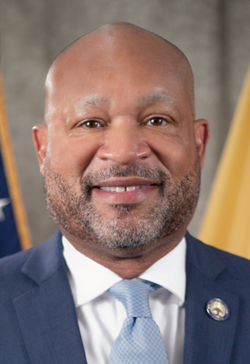
Benjie Wimberly
DDemocratic
Co

Brian Stack
DDemocratic
Ask Maddy
·
AI policy assistant
Ask Maddy about S 4069
Scope: NJ
Hi! I can help you understand S 4069. What would you like to know?
Try one of these
i
Maddy answers using official bill text and legislative records. Always verify before sharing.
Sources cited inline