

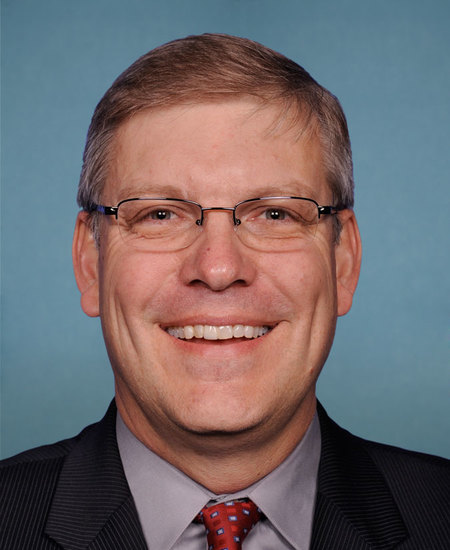
Photo of Barry Loudermilk
R United States House · District 11 · Georgia

Rep. Barry Loudermilk

Compare
Total votes
2,818
all sessions
Attendance
95%
139 missed
Lower than 82% of chamber peers
With party
94%
of cast votes
Higher than 93% of chamber peers
Bipartisan score
3%
crosses aisle rarely
Lower than 93% of chamber peers
Sponsored
557
bills & resolutions
Lower than 81% of chamber peers
Committees
5
assignments
557 bills and resolutions

Sponsored bills

Total
557
Primary
42
Co-sponsor
515
This page
557
matching current filters
Co-sponsor HR 10222
In committee · Nebraska House · Co-sponsor
No HUD Funding for Sanctuary Cities Act

Maddy summaryThis bill would prohibit any state or local government designated as a "sanctuary jurisdiction" from receiving grant funds distributed by the Department of Housing and Urban Development (HUD). A jurisdiction is defined as a sanctuary if it has laws, policies, or practices that restrict officials from sharing information about an individual's immigration status or from complying with federal requests to detain or notify about the release of individuals. The funding restriction would apply to grants distributed 180 days after the bill's enactment. To determine which jurisdictions qualify for this ineligibility, the HUD Secretary is required to consult with the Secretary of Homeland Security.

In committee Sep 2, 2026 1 co-sponsor
Primary HR 1483
In committee · Nebraska House · Lead sponsor
Protecting Investors’ Personally Identifiable Information Act

Maddy summaryThis bill prohibits the Securities and Exchange Commission (SEC) from requiring national securities exchanges, associations, or their members to report investors' personally identifiable information (PII) for consolidated audit trail purposes. It directly affects financial market participants whose personal details - like names, addresses, Social Security numbers, email addresses, or IP addresses - would otherwise be shared under SEC rules. The law specifically blocks the SEC from mandating this PII for order or reportable event reporting under existing regulations. This is a policy change to limit the types of data collected and shared in market transparency systems.

In committee Sep 1, 2026 0 co-sponsors
Co-sponsor HR 10184
In committee · Nebraska House · Co-sponsor
Consumer Financial Protection Accountability and Reform Act of 2026

Maddy summaryThe Consumer Financial Protection Accountability and Reform Act of 2026 significantly restructures the Bureau of Consumer Financial Protection by subjecting it to the regular federal appropriations process and establishing an independent Inspector General appointed by the President. The bill restricts the Bureau's supervisory authority over banks and credit unions with assets under $30 billion, allowing these institutions to elect to remain under their existing prudential regulators instead. It also introduces a safe harbor for small-dollar loans of $3,500 or less that meet specific structural requirements, shielding compliant lenders from civil money penalties and private damages. Additionally, the legislation creates federal standards for earned wage access services, requiring providers to offer a no-cost option for early wage access and prohibiting them from treating these services as credit or debt under federal law.

In committee Aug 31, 2026 1 co-sponsor
Co-sponsor HR 309
In committee · Nebraska House · Co-sponsor
National Law Enforcement Officers Remembrance, Support, and Community Outreach Act

National Law Enforcement Officers Remembrance, Support and Community Outreach Act. [ sic ] This bill temporarily directs the Department of the Interior to award a grant to the National Law Enforcement Officers Memorial Fund for the expenses associated with operating and enhancing the community outreach, public education, and officer safety and wellness programs of the National Law Enforcement Museum.

In committee Aug 20, 2026 1 co-sponsor
Co-sponsor HR 10096
In committee · Nebraska House · Co-sponsor
Task Force on the Impact of the Affordable Housing Crisis Act of 2026

Maddy summaryThe Task Force on the Impact of the Affordable Housing Crisis Act of 2026 establishes a bipartisan, 18-member task force to study how a lack of affordable housing affects various aspects of life and government spending. The group will evaluate impacts on areas such as education, employment, health, and regional economic growth, while also quantifying the costs imposed on federal, state, and local programs due to housing shortages. Members will be appointed by congressional leadership within 180 days of enactment and must submit a final report with recommendations to Congress before the task force terminates two years after all members are appointed.

In committee Aug 13, 2026 1 co-sponsor
Co-sponsor HR 6955
Passed · Nebraska House · Co-sponsor
Main Street Capital Access Act

Maddy summaryThe Main Street Capital Access Act reduces regulatory burdens for smaller banks, particularly those with less than $10 billion in assets. Key provisions include a 3-year phase-in period for new banks to meet capital requirements, lower leverage ratio requirements for rural banks (7.5% for the first 2 years), and a 30-day review process for business plan deviations. The bill also establishes an Office of Independent Examination Review, sets specific timelines for examinations (270 days) and reports (90 days), and creates a "least cost exception" for bank resolutions to prevent excessive concentration of the banking system. These changes aim to promote new bank formation, improve regulatory efficiency, and support community banking while maintaining financial stability.

Passed Jul 22, 2026 1 co-sponsor
Primary HR 5362
Passed · Nebraska House · Lead sponsor
To name the Department of Veterans Affairs multispecialty clinic in Marietta, Georgia, as the "Colonel Michael H. Boyce Department of Veterans Affairs Multispecialty Clinic".

Maddy summaryThis bill names the Department of Veterans Affairs multispecialty clinic at 1263 Cobb Parkway NW in Marietta, Georgia, as the "Colonel Michael H. Boyce Department of Veterans Affairs Multispecialty Clinic." It is a ceremonial resolution with no policy changes or funding impacts - it solely updates the facility's official designation in government records. The clinic itself remains unchanged, and the bill does not alter services, funding, or operations for veterans.

Passed Jul 21, 2026 0 co-sponsors
Co-sponsor HR 3514
In committee · Nebraska House · Co-sponsor
Improving Seniors’ Timely Access to Care Act of 2025

Maddy summaryThis bill requires Medicare Advantage plans to implement electronic pre-approval systems for medical services by 2028 and meet transparency reporting standards starting in 2027. Plans must publicly report data on approval/denial rates, appeal outcomes, response times, and technology use for pre-approval requests, including details on how denials relate to clinical criteria. It establishes a 24-hour response timeframe for certain requests and mandates annual reviews of pre-approval requirements based on data and input from seniors and providers. The law directly affects Medicare Advantage plans, seniors enrolled in these plans, and healthcare providers who submit pre-approval requests. These changes aim to make the pre-approval process faster, more transparent, and more accountable for seniors seeking covered medical services.

In committee Jul 15, 2026 1 co-sponsor
Co-sponsor HR 1181
Passed · Nebraska House · Co-sponsor
Protecting Privacy in Purchases Act

Protecting Privacy in Purchases Act This bill prohibits payment card networks from using merchant codes that distinguish firearms retailers from general-merchandise retailers or sporting-goods retailers. The Department of Justice must enforce this bill and report annually on the resulting investigations and cases.

Passed Jul 15, 2026 1 co-sponsor
Co-sponsor HR 139
Passed · Nebraska House · Co-sponsor
Sunshine Protection Act of 2025

Maddy summaryThe Sunshine Protection Act of 2025 would make daylight saving time permanent across the United States, ending the current practice of changing clocks twice yearly. It repeals the 1966 law requiring seasonal time changes and adjusts time zone offsets to reflect permanent daylight saving time (e.g., shifting from "4 hours" to "3 hours" in historical references). States that currently opt out of daylight saving time (like Arizona and Hawaii) would retain their existing arrangements, while all other states would adopt permanent daylight saving time unless they choose to stay on standard time. This change would directly affect all U.S. residents by eliminating the need to reset clocks in spring and fall.

Passed Jul 15, 2026 1 co-sponsor
Showing 1 to 10 of 557 bills
1 2 3 56 Next