

Maddy summaryHB 861 allocates $1.1 million annually to Montana's Office of Public Instruction and $750,000 to the Department of Labor and Industry for fiscal years 2026 and 2027. The funds will provide statewide access to a K-12 digital toolkit containing state standards-aligned instructional materials across all subjects, including career and technical education resources aligned with Montana industry needs. This bill directly affects Montana public schools and students by expanding access to digital learning tools. It establishes a permanent funding base for these resources, effective July 1, 2025, though it was vetoed and not enacted.

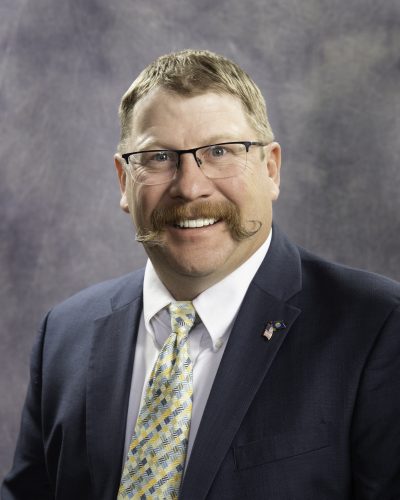
Rep. Eric Tilleman
Sponsored bills
Maddy summaryHB 898 revises laws governing Limited Liability Company (LLC) operating agreements, directly impacting LLC owners (members) and managers. The bill clarifies that operating agreements must be interpreted using general contract law principles and outlines specific member rights and duties, such as the duty of loyalty and care, that cannot be unreasonably restricted or eliminated by an agreement. It also specifies certain significant decisions, like amending the operating agreement or admitting new members, that typically require the consent of all members, unless the company's foundational documents state otherwise. Additionally, the bill allows for the creation of different "series of members" within an LLC, each with potentially distinct rights or duties, and applies retroactively to existing operating agreements as well as new ones.
Maddy summaryHB 624 revises agriculture laws concerning hobbyist beekeepers. It increases the maximum number of beehives a hobbyist may own from five to ten. The bill also expands the number of apiary site registrations allowed for an individual applicant from one to five, and for a family unit from two to ten. This aims to update regulations for individuals managing small-scale beekeeping operations.
Maddy summaryHB 917 generally revises campaign finance laws, affecting individuals and groups involved in political campaigns. The bill updates the definition of "political committee" and other related terms within election statutes. It also revises the timeframes for filing campaign finance reports and clarifies who may sign incidental committee reports. These changes aim to modify the operational and reporting requirements for campaign finance activities.
Maddy summaryHB 745 revises school laws to enhance student safety by requiring new policies and background checks. It mandates that school districts adopt a student protection policy, which includes conducting fingerprint-based national criminal history background checks. These checks are required for any individual, regardless of employment status, who may have unsupervised contact with students. The bill also requires background checks for educator licensure, and non-compliant districts must submit a correction plan to the Superintendent of Public Instruction.
Maddy summaryHB 356 expands Montana's existing livestock loss reduction and mitigation programs to include black bears. This bill allows livestock producers to receive reimbursement for livestock losses caused by black bear predation. It also enables cost-sharing for measures designed to prevent black bear predation on livestock. The Livestock Loss Board will administer these expanded programs, adding black bears to the species covered alongside wolves, mountain lions, and grizzly bears.
Maddy summaryHB 225 revises laws related to home inspections by establishing a state licensing program for home inspectors. The bill requires individuals who perform home inspections for compensation to obtain a license through the Department of Labor and Industry. To qualify, applicants must complete 40 hours of instruction, maintain membership in a national home inspection association, and carry $100,000 in liability insurance. It also sets standards for home inspection reports, requiring them to identify defects and recommend further evaluations, and outlines ethical conduct for inspectors. The Department is authorized to create rules and collect fees to administer this program.
Maddy summaryHB 299 revises the specific purposes for which easements can be granted on state lands and updates the application process for these easements. The bill expands the types of public and private uses allowed, specifically including existing private buildings or sewage systems that encroach on state land, use of navigable riverbeds, and certain private access roads, county roads, and utility facilities constructed prior to October 1, 1997. It also modifies the application requirements for these easements, allowing for survey waivers in some cases where sufficient boundary information is available. These changes affect individuals, organizations, and government entities seeking to establish or formalize access and infrastructure on state-owned property.
Maddy summaryHouse Bill 171 eliminates the Montana Alfalfa Seed Committee and transfers all its duties and responsibilities to the Department of Agriculture. This change affects the alfalfa seed industry by making the Department of Agriculture responsible for regulating alfalfa leaf-cutting bees, including certification, quarantine, and setting standards for bees and equipment. The bill also requires the Department of Agriculture to hold a public meeting every two years to review the continuation of the alfalfa seed assessment.
Maddy summaryHouse Joint Resolution 52 requests an interim study on the Montana cattle industry. This study will explore the implementation of a state assessment on Montana cattle to fund research, promotion, and educational programs for Montana beef and beef products. An interim committee will review similar assessment programs in other states, examine stakeholder interest for a state assessment, and evaluate options for a governing board. The study aims to improve the profitability and marketability of the state's cattle industry. The final results of this study, including any recommendations, are to be reported to the 70th Legislature by September 15, 2026.