

Maddy summaryHR 5267, the American Franchise Act, clarifies when franchisors can be considered joint employers of franchisee employees under federal labor laws. It defines "substantial direct and immediate control" over essential employment terms like wages, benefits, hours, hiring, and discipline - requiring franchisors to actively set these terms to be deemed joint employers. The bill explicitly excludes routine brand standards, training, or minimal safety requirements from constituting such control. This directly affects franchisors and franchisees by limiting joint employer liability to cases where franchisors exert significant, ongoing influence over core employment decisions. The law applies prospectively to new cases after enactment, not past disputes.
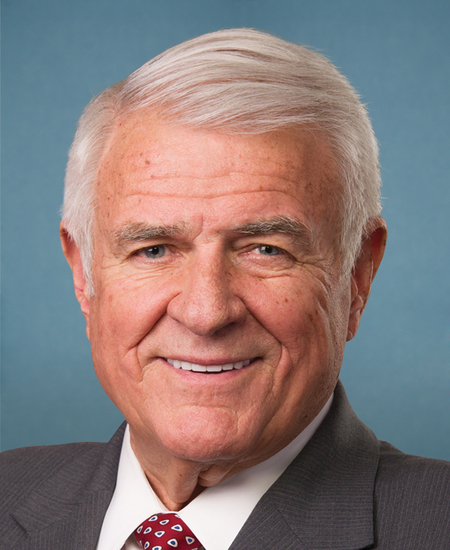
Rep. John R. Carter
Sponsored bills
This bill designates the facility of the United States Postal Service located at 4650 East Rosedale Street in Fort Worth, Texas, as the "Dionne Phillips Bagsby Post Office Building".
This bill designates the facility of the United States Postal Service located at 4450 Oak Park Lane in Fort Worth, Texas, as the "United States Representative Kay Granger Post Office Building".
National Law Enforcement Officers Remembrance, Support and Community Outreach Act. [ sic ] This bill temporarily directs the Department of the Interior to award a grant to the National Law Enforcement Officers Memorial Fund for the expenses associated with operating and enhancing the community outreach, public education, and officer safety and wellness programs of the National Law Enforcement Museum.
Maddy summaryThis House resolution formally honors the life and legacy of the late Representative Kay Granger from Texas, recognizing her historic achievements in public service. The bill highlights her roles as the first woman elected mayor of Fort Worth, the first Republican woman to represent Texas in the U.S. House, and the first Republican woman to chair the House Committee on Appropriations. It also acknowledges her contributions to national defense, including her work on the F-35 fighter jet program and the naming of a Navy ship for Fort Worth. The resolution expresses sympathy to Granger's family and directs the Clerk of the House to send an official copy of the document to her loved ones.
Maddy summaryThis bill reauthorizes and expands the Accelerating Access to Critical Therapies for ALS Act through 2031, extending funding for research into treatments for amyotrophic lateral sclerosis. It requires drug manufacturers to share interim clinical trial data with the FDA to better assess the progress of investigational drugs and clarifies that phase 3 clinical trial definitions include combined phase 2/3 trials and planned trials not yet enrolling participants. The legislation also mandates the FDA to publish an updated five-year action plan for ALS and other rare neurodegenerative diseases, including resource needs and coordination strategies with broader disease communities. Additionally, the bill requires the Government Accountability Office to submit a report on the program's implementation four years after enactment.
Maddy summaryThe TRUTH in Coverage Act of 2026 requires group health plans and health insurance issuers that cover gender-affirming procedures to also cover medical services intended to treat physical and psychological complications resulting from those procedures. This mandate applies regardless of whether the original gender-affirming treatment was covered by the plan and ensures that any required follow-up care faces the same cost-sharing rules and limitations as standard medical benefits. The bill defines "sex-rejecting procedures" broadly to include hormone therapy, surgeries, and puberty blockers, while explicitly excluding treatments for intersex conditions, life-threatening emergencies, and standard puberty suppression for early puberty. These provisions would take effect for plan years beginning on or after January 1, 2027, affecting individuals with access to employer-sponsored or individual health insurance.
Maddy summaryThis resolution honors the late Senator Lindsey Graham and condemns Omar Suleiman for publicly celebrating Graham's death. It also acknowledges that House Democrats invited Suleiman to serve as a guest chaplain in 2019 and highlights his past statements and affiliations. The measure expresses support for the House Republicans' Sharia-Free America Caucus, which aims to protect constitutional principles from what it describes as an ideology incompatible with American life.
Maddy summaryHR 8469 is an appropriations bill that allocates federal funds for military construction, the Department of Veterans Affairs (VA), and several related agencies for the fiscal year ending September 30, 2027. The bill provides substantial funding for military construction projects across all service branches, including new facilities, upgrades, and family housing for military personnel and their families. It also dedicates significant resources to the Department of Veterans Affairs to support a wide range of veterans' benefits, healthcare services (including community care, mental health, and care for toxic exposures), medical research, and the modernization of the veterans' electronic health record system. Additionally, the bill funds national cemeteries, the US Court of Appeals for Veterans Claims, and the American Battle Monuments Commission, while setting administrative rules and conditions for how these funds can be obligated and spent. This legislation directly affects military members, veterans, and their families by providing the financial resources for their infrastructure, healthcare, and benefit programs.
Maddy summaryThe GRACE for Military Survivors Act extends the deadline for contributing military death benefits to Roth IRAs and Coverdell education savings accounts from one year to three years. This change directly benefits families of service members who receive these death benefits, giving them more time to save for retirement or education. The law applies to benefits received after the bill is enacted and includes a special rule allowing contributions made within a specific window for benefits received between 2001 and the enactment date. By amending the Internal Revenue Code, the bill ensures that eligible funds can be deposited into these tax-advantaged accounts without losing their value due to time limits.